Best overall: a solid safety cover for a New England pool that needs debris control and a cover designed for safety when properly installed. Best for easier drainage: a mesh safety cover. Best for a temporary, non-safety covering: a standard winter tarp. The best pool covers for winter in 2026 depend on how you will manage water on the cover, falling leaves, snow and the work of reopening the pool.
- A solid safety cover is the best pool cover for winter when debris control is your priority.
- A mesh safety cover suits homeowners who prefer rain and snowmelt to drain through the cover.
- A standard winter tarp is not a safety cover and needs a separate plan for accumulated water.
- Aqua Turf Solutions provides pool opening and closing service, not a named cover product in this guide.
Why this matters in New England
A winter cover has more than one job. It limits debris, changes where rain and snowmelt go, and affects the work waiting for you when the pool opens. The wrong choice can leave you managing standing water on top of the cover or cleaning debris from the pool beneath it.
A safety cover is not a substitute for a pool barrier or supervision. Ask the seller or installer whether the specific cover and installation meet the applicable safety standard for your pool. Aqua Turf Solutions offers pool opening and closing service for homeowners; its service description does not identify a cover model or claim cover installation.
Water freezes at 32°F (0°C), but a cover decision is not just about cold air. In 2026, choose a way to handle water and debris through the entire closing-to-opening period, rather than judging a cover by how it looks on installation day.
What makes the best pool covers for winter?
Use these criteria before comparing cover types. A cover that fits your neighbor's pool will not necessarily fit your pool shape, anchoring surface or willingness to maintain it.
- Safety designation: Decide whether you need a safety-rated cover. A standard tarp does not become a safety cover because it is pulled tight.
- Water management: Mesh lets water pass through; solid material keeps more of it above the cover. That difference changes what you must monitor after rain and snowmelt.
- Debris control: Consider the leaves and other material around your pool. A cover that keeps debris out can reduce what you find in the water at opening.
- Pool and deck fit: Confirm the cover is specified for your pool's dimensions and shape and that its anchoring method suits the surrounding surface.
- Winter upkeep: Decide whether you will inspect drainage, clear debris and manage accumulated water yourself or arrange help.
- Opening-day work: Consider what can enter the pool over winter and what must be removed from the cover before it comes off.
Do not treat a cover-type label as proof of a particular product's rating. Check the individual cover's documentation and installation requirements before relying on any safety claim.
Best winter pool covers at a glance
| Cover type | Best for | Standout feature | Key limitation |
|---|---|---|---|
| Solid safety cover | Homeowners prioritizing debris control | Blocks more debris from reaching pool water | Water and snowmelt on top need a management plan |
| Mesh safety cover | Homeowners prioritizing drainage through the cover | Lets rain and snowmelt pass through | Fine debris and dirty water can pass into the pool |
| Standard winter tarp | Homeowners needing a non-safety seasonal covering | Covers the water without a safety-cover installation | Not a safety cover; standing water needs attention |
The 2026 ranking is a decision tree, not a claim that one material wins for every pool. Start with safety, then decide whether you would rather manage water above the cover or material that passes through it. The table compares cover types; it does not certify a particular product.
1. Solid safety cover: best winter pool cover for debris control
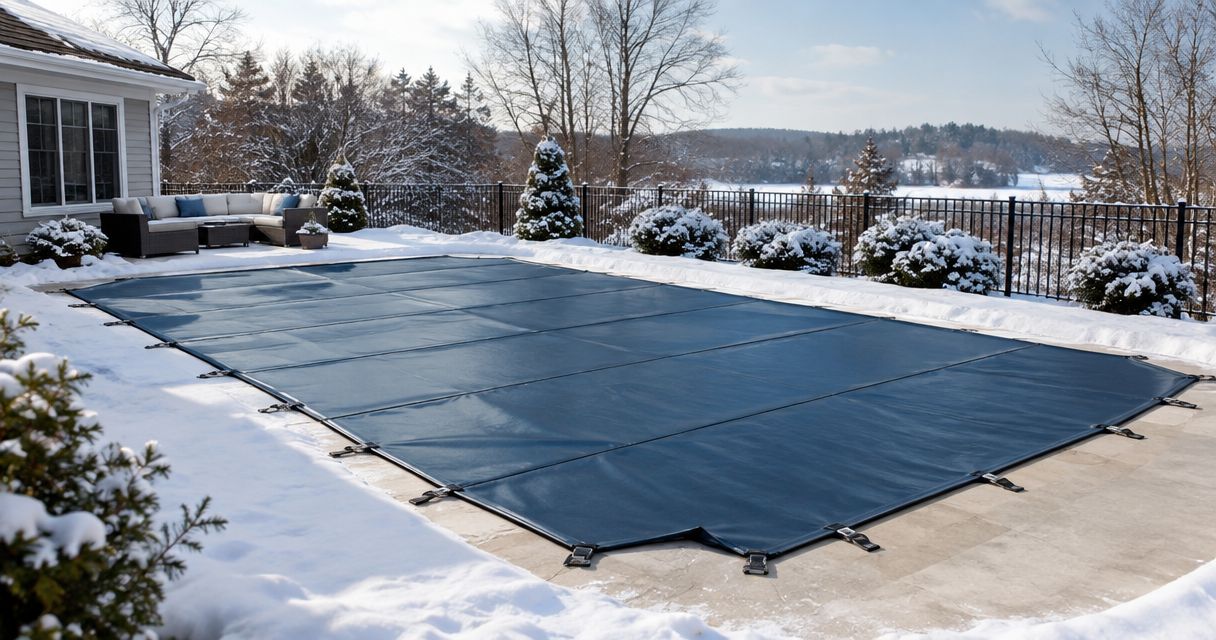
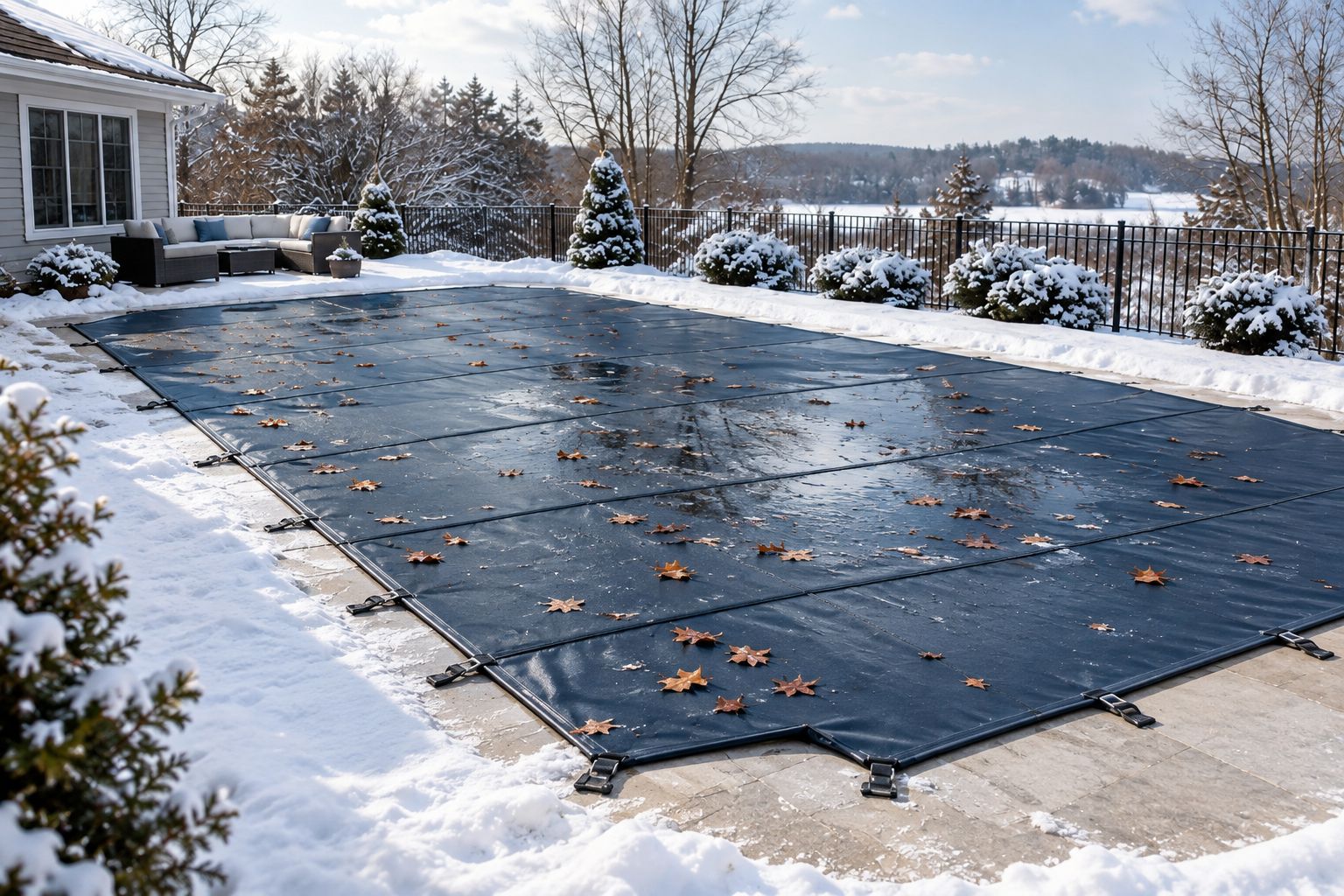
A solid safety cover is the default pick if keeping leaves and other debris out of the water is your main concern. It spans the pool with an anchored system, subject to the specifications of the particular cover. A solid surface also means rain and melting snow stay on top until they are removed or directed away by the cover's designed drainage method.
That trade-off matters after a storm. One gallon of water weighs about 8.3 pounds; accumulated water is not something to ignore while you wait for spring. Follow the cover maker's instructions for water removal and inspection rather than assuming every solid cover uses the same pump or drain arrangement.
Solid safety cover pros:
- Keeps more falling debris above the pool water than a mesh cover.
- Gives homeowners a safety-cover option when the specific product and installation meet the relevant requirements.
- Makes the spring cleanup trade-off visible: debris remains on the cover rather than passing through it.
Solid safety cover cons:
- Requires a plan for water and snowmelt that collect on top.
- Needs a compatible anchoring surface and a fit matched to the pool.
- Still requires inspection; a safety designation does not mean the cover is maintenance-free.
Best for: A homeowner with substantial falling debris who will follow the cover's water-management instructions. Buy a solid safety cover if its documented rating, fit and drainage plan match your pool. Hold if you have not confirmed how water will leave the cover.
For a 2026 closing, ask what happens to water on the cover before choosing a model. A cover that blocks leaves but leaves you without an acceptable water-management routine has not solved your winter upkeep problem.
2. Mesh safety cover: best winter pool cover for drainage
A mesh safety cover lets rain and snowmelt pass through its material instead of holding all of that water above the pool. It can suit a homeowner who does not want routine management of standing water on a solid cover. The other side of that design is straightforward: water, fine debris and material carried by that water can enter the pool.
Mesh safety cover pros:
- Lets precipitation drain through the cover.
- Avoids the same surface-water routine associated with a solid, non-draining cover.
- Provides a safety-cover option when the particular cover and installation meet applicable requirements.
Mesh safety cover cons:
- Does not block fine debris the way a solid surface does.
- Lets rain and snowmelt enter the pool, so the water beneath still needs attention at opening.
- Depends on a suitable fit and anchoring method, just like a solid safety cover.
Best for: A homeowner who prioritizes drainage through the cover and accepts more possible spring cleaning. Buy a mesh safety cover when its documented safety designation, fit and installation requirements are right for your pool. Hold if keeping fine debris out of the water matters more than surface drainage.
In 2026, compare the spring task as well as the winter task. With mesh, you avoid treating every spell of meltwater as water sitting on a solid sheet, but you must be comfortable addressing what passes into the pool. That is the deciding difference between the two safety-cover types.
3. Standard winter tarp: best for a non-safety seasonal covering
A standard winter tarp covers the pool water, but it is not the same product category as an anchored safety cover. Its exact fastening and water-management needs depend on the tarp and pool. If you need a cover you can rely on for a stated safety rating, a tarp is the wrong shortcut.
A tarp also needs a clear plan for what collects on top. Rain, snowmelt and leaves do not stop being a problem because they are out of the pool water. Inspect the covering according to its instructions and address accumulation without stepping onto it.
Standard winter tarp pros:
- Provides a seasonal covering when a safety designation is not the purpose of the cover.
- Gives you another option to discuss if a safety-cover anchoring setup does not suit the pool surroundings.
- Keeps the decision focused on covering the water rather than implying a safety function it does not have.
Standard winter tarp cons:
- Is not a safety cover and must never be treated as one.
- Can require attention to water and debris accumulating on top.
- Its fastening, fit and upkeep must be checked for the specific pool and product.
Best for: A homeowner who understands that the tarp is solely a seasonal covering and maintains separate pool safety measures. Buy only if the product fits your pool and you have a practical upkeep plan. Skip a standard winter tarp if your cover choice depends on a safety-cover designation.
For a 2026 purchase, do not use winter cover and safety cover interchangeably. Read the actual product documentation. That distinction matters more than a product photo or a general claim that a cover is suitable for cold weather.
How we ranked the cover types
The ranking puts a solid safety cover first for a homeowner who wants both a documented safety-cover option and stronger debris separation. Mesh comes next for homeowners who prefer through-cover drainage and accept that material can reach the water. A tarp ranks third because it can cover a pool for the season but cannot take the place of a safety cover.
This is a cover-type ranking, not a test of named products. No dimensions, cover ratings or installation details have been supplied for a particular pool. Confirm those details before ordering: pool shape, measured size, anchoring surface, product documentation and the manufacturer's winter-care instructions all affect whether a cover is appropriate.
If you are also planning the work around closing and reopening, the pool service cost guide addresses that separate service decision. A cover purchase and pool service are not the same choice; keep the scope of each clear when comparing options.
Which winter pool cover should you choose?
Choose a solid safety cover if your priority is keeping more debris out of the water and you have a workable plan for water on top. Choose a mesh safety cover if drainage through the material matters more and you accept that fine debris can enter. Choose a standard winter tarp only when you need a seasonal covering, not a safety-cover function.
Aqua Turf Solutions is best for homeowners who need pool opening and closing service alongside a cover decision, not for choosing a named cover product from this guide. If you already own a cover, make its care instructions part of the closing plan. If you are replacing one, settle the safety designation and water-management question before comparing individual models.
The best pool covers for winter in 2026 are the ones whose documented use matches the job you expect them to do. Do not buy for debris control alone and discover later that you have no plan for surface water. Do not buy for drainage alone and expect a clean pool beneath the cover.
FAQ
What is the best pool cover for a New England winter?
A solid safety cover is the default choice when debris control is the priority and you can manage water on top. Choose a mesh safety cover if drainage through the cover matters more.
Is a mesh safety cover better than a solid safety cover?
A mesh safety cover is better for through-cover drainage, while a solid safety cover keeps more debris out of the water. Check the specific product's documentation and fit before choosing either.
Can I use a regular winter tarp as a safety cover?
No. A standard winter tarp is a seasonal covering, not a safety cover. Maintain separate pool safety measures and verify any safety-cover claim against the specific product documentation.
Do solid pool covers need water removed in winter?
Solid covers need a plan for rain and snowmelt that collect on top. Follow the particular cover's instructions for drainage, removal and inspection rather than assuming every model works alike.
Will snowmelt pass through a mesh pool cover?
Yes, mesh covers are designed to let water pass through their material. Fine debris and dirty water can pass through as well, affecting the work needed when you reopen the pool.
How do I know whether a winter cover fits my pool?
Match the product's specified dimensions, shape and installation requirements to your measured pool and surrounding surface. Do not assume a cover fits because its listed size resembles the pool's dimensions.
Does Aqua Turf Solutions sell a recommended winter pool cover?
No specific winter cover product is identified in the supplied information for Aqua Turf Solutions. Aqua Turf Solutions provides residential pool service, including opening and closing.
One last thing
Before choosing a cover for winter 2026, write down where water will go. On a solid cover, that means following its instructions for water above the surface; on mesh, it means accepting water entering the pool. That one answer separates the two leading choices more clearly than the word winter on a product label.