Best overall for sound concrete: a textured cementitious overlay. Best for a surface refresh: an acrylic deck coating. Best for a patterned finish: a stamped overlay. This 2026 guide compares the best pool deck resurfacing materials by wet-foot traction, existing deck condition, upkeep, and installation requirements—not appearance alone.
- The best pool deck resurfacing materials start with your existing concrete, not a color chart.
- Textured cementitious overlays are the default recommendation for sound concrete needing a new wearing surface.
- Acrylic deck coatings suit surface refreshes; stamped overlays suit homeowners who want a patterned finish.
- Aqua Turf Solutions offers pool deck restoration; confirm the proposed material and repair scope before booking.
Why this matters
A pool deck needs to work when your feet are wet. A finish that looks attractive in a dry sample still needs suitable wet traction, proper drainage, and a firm base beneath it.
Resurfacing replaces or renews the wearing surface; it does not automatically repair the structure underneath. Moving cracks, loose concrete, and drainage problems need an assessment before you choose a finish. Covering those problems hides them rather than resolves them.
For homeowners planning pool work around Acworth, Marietta, Woodstock, Kennesaw, Dallas, Austell, Smyrna, or Douglasville, coordinate deck work with seasonal pool maintenance. Aqua Turf Solutions offers pool deck restoration and pool opening and closing services; ask whether your address and proposed project fall within its service scope.
What makes the best pool deck resurfacing materials?
Use these criteria to compare your 2026 options before choosing a color or pattern:
- Base compatibility: The finish must suit the existing concrete, previous coatings, and any moisture conditions identified during inspection.
- Wet traction: Ask how the completed surface performs when wet, including any sealer applied over it.
- Repair requirements: Separate cosmetic imperfections from cracking, movement, or deteriorated concrete that needs additional work.
- Barefoot comfort: Assess texture and sun exposure together. A light color alone does not establish that a surface stays comfortable.
- Drainage and transitions: Check slopes, drains, coping, doors, and steps before adding material thickness.
- Maintenance: Understand cleaning requirements, finish renewal, and how localized damage will be repaired.
No material wins every category. The best choice is the one that fits the deck you actually have and the maintenance you are prepared to do.
Pool deck resurfacing materials at a glance
These are material categories, not specific products. Individual systems differ, so request the proposed manufacturer's exterior-use requirements before approving work.
| Rank and material | Best for | Standout feature | Key limitation |
|---|---|---|---|
| 1. Textured cementitious overlay | Renewing a sound concrete deck | A new textured wearing surface | Requires a suitable, properly prepared base |
| 2. Acrylic deck coating | Refreshing a stable, otherwise serviceable surface | Renewed color and finish without a thick overlay | Does not correct structural damage or drainage |
| 3. Stamped cementitious overlay | Adding a patterned appearance | Decorative patterns over existing concrete | Texture and sealer need careful selection |
| 4. Exposed-aggregate overlay | Creating a pronounced aggregate texture | Visible stone texture in the wearing surface | Barefoot comfort depends on the finished texture |
| 5. Exterior porcelain tile system | Creating a tile-finished pool surround | Defined tile layout and joints | Requires a suitable base, drainage, and exterior installation details |
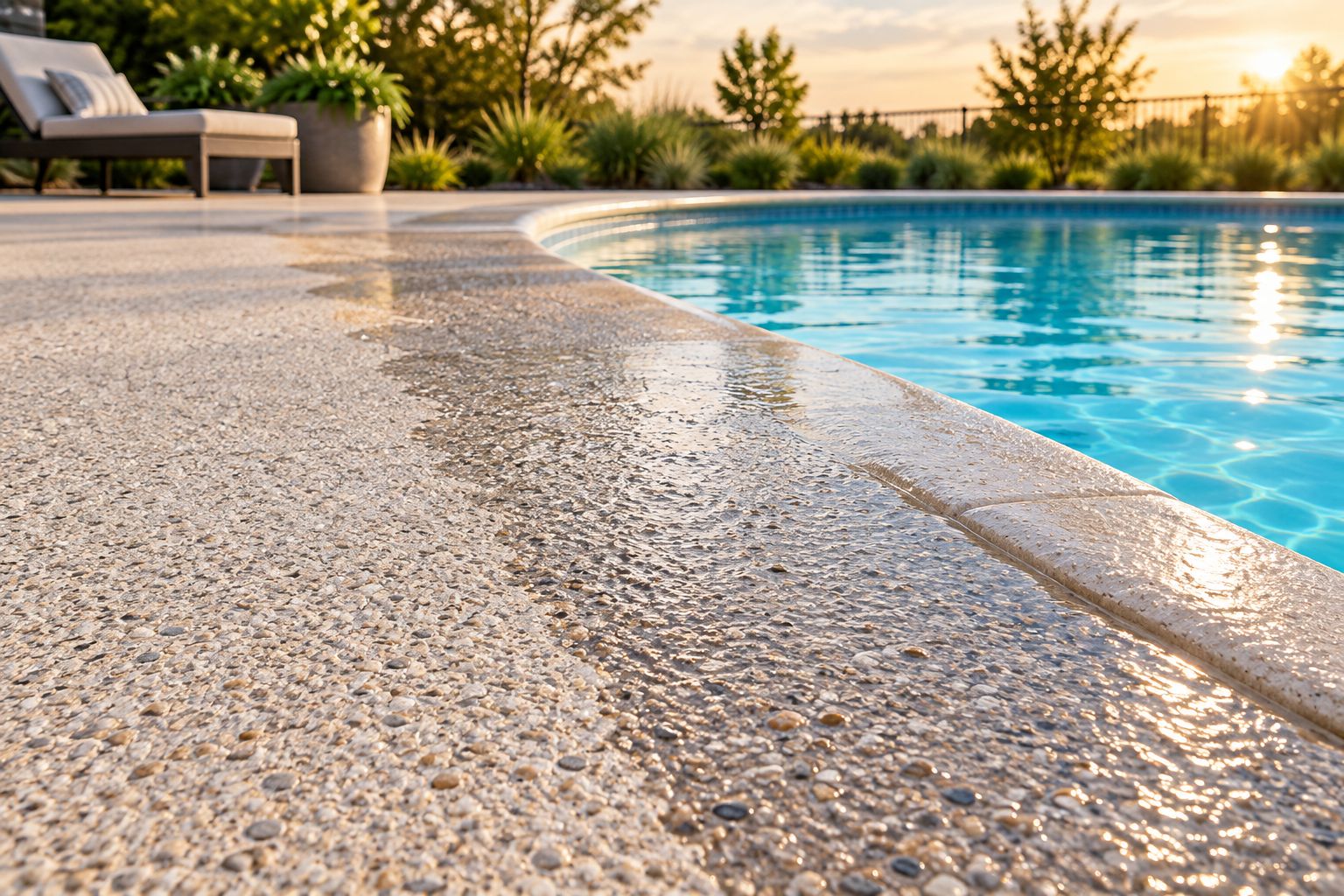
1. Textured cementitious overlay: best for a full surface renewal
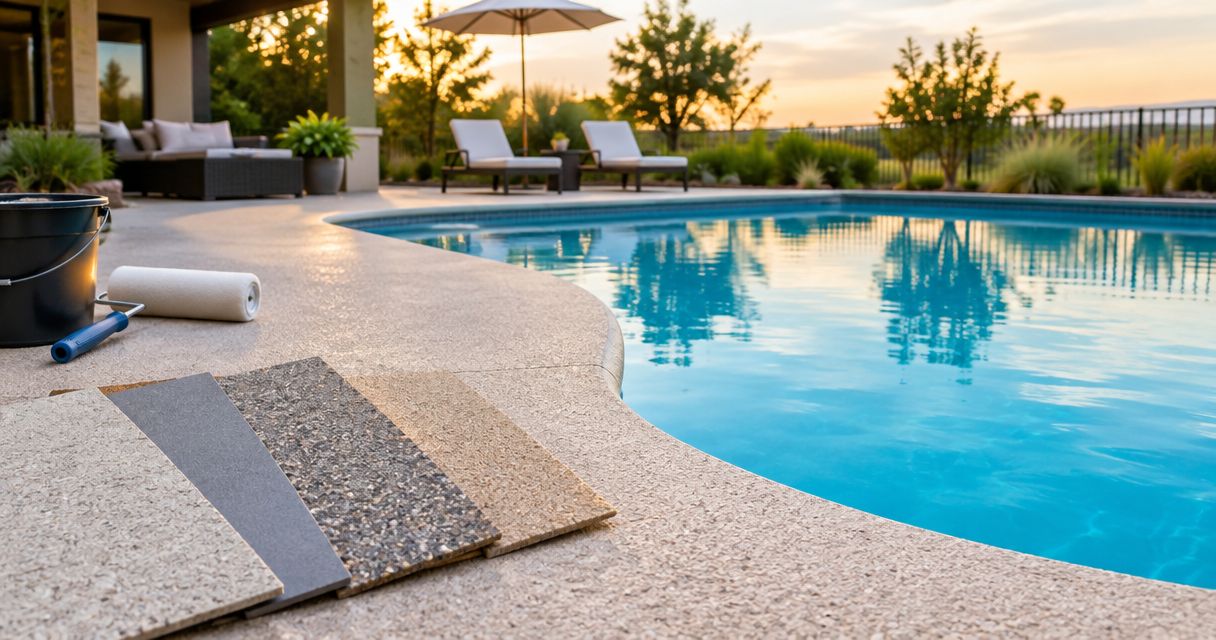
A cementitious overlay creates a new wearing surface over suitable existing concrete. The installer prepares the base, addresses the repairs specified in the scope, and applies the chosen overlay system. Its texture is part of the finish—not a substitute for evaluating wet traction.
Best for: Homeowners with sound concrete who want to replace a worn-looking surface rather than rebuild the deck.
This is the default recommendation because it directly addresses the resurfacing job: renewing the surface while retaining a suitable base. For a 2026 project, ask to see the proposed texture and how the finish handles existing joints, coping, and drains.
Textured cementitious overlay pros:
- Renews the wearing surface over suitable concrete.
- Supports different textures and decorative treatments.
- Keeps the existing deck base when that base is suitable.
Textured cementitious overlay cons:
- Base preparation is essential to adhesion.
- Movement underneath can affect the new finish.
- Repairs and finish renewal still require a maintenance plan.
Ask whether the sample includes the final sealer. An unfinished sample does not show the surface you will walk on after the project is complete.
Verdict: Choose a textured cementitious overlay for sound concrete needing a new wearing surface; skip it as a cover-up for unresolved movement.
2. Acrylic deck coating: best for a surface refresh
An acrylic deck coating renews the finish on a compatible existing surface. Systems differ: some incorporate texture, while others require a specified texture treatment. Confirm that the proposed coating is intended for exterior pool-deck use.
Best for: Homeowners whose deck remains serviceable but needs renewed color or finish.
A coating is not the same scope as a thicker cementitious overlay. If you want to change levels, repair deteriorated concrete, or correct standing water, a coating alone does not answer those needs.
Acrylic deck coating pros:
- Refreshes the appearance of a suitable surface.
- Offers a finish-focused option when major surface rebuilding is unnecessary.
- Allows color selection within the chosen system.
Acrylic deck coating cons:
- Cannot correct structural movement or drainage.
- Compatibility with previous coatings needs verification.
- Wear can require future recoating.
Ask what happens to the existing coating before work begins. Cleaning, removal, and surface preparation are different tasks, and the quote should identify the required approach.
Verdict: Choose an acrylic deck coating for a stable surface refresh; skip it when the deck needs reconstruction or drainage correction.
3. Stamped cementitious overlay: best for a patterned finish
A stamped overlay adds a decorative pattern to a cementitious wearing surface. It offers a patterned appearance without making every visible line a separate paving unit. The finished result depends on pattern depth, texture, color treatment, and sealer.
Best for: Homeowners who want a patterned deck and accept the cleaning and repair considerations that come with it.
For a 2026 pool deck, judge the pattern as a walking surface first. Examine grooves, transitions, and wet traction rather than selecting solely from a photograph.
Stamped cementitious overlay pros:
- Creates a defined decorative pattern.
- Combines pattern and color in the resurfaced finish.
- Retains suitable existing concrete beneath the overlay.
Stamped cementitious overlay cons:
- Decorative grooves require attention during cleaning.
- Local repairs can be difficult to blend into the pattern and color.
- Sealer selection affects the finished walking surface.
Ask how the installer will preserve required joints. A decorative pattern should not conceal the need for movement joints or turn an existing joint into an unplanned repair later.
Verdict: Choose a stamped overlay when pattern matters and the base is suitable; skip a finish selected without checking wet traction.
4. Exposed-aggregate overlay: best for visible stone texture
An exposed-aggregate overlay uses aggregate as part of the visible finished surface. Aggregate size, shape, and exposure influence how it feels underfoot. A sample is especially useful because photographs show appearance better than comfort.
Best for: Homeowners who prefer a pronounced stone texture and want to evaluate that texture before committing.
Do not confuse an overlay with an entirely new poured-concrete deck. Ask which installation method is proposed and whether it suits your existing slab.
Exposed-aggregate overlay pros:
- Creates a visible aggregate finish.
- Provides a textured rather than flat-looking surface.
- Offers appearance choices through aggregate selection.
Exposed-aggregate overlay cons:
- Pronounced texture can feel uncomfortable on bare feet.
- Recesses and texture complicate cleaning.
- Patch appearance depends on matching the aggregate and finish.
Check the sample with bare feet when it is safe to do so. Ask how the installer will prevent loose or poorly bonded aggregate in the finished system.
Verdict: Choose an exposed-aggregate overlay after approving barefoot comfort; skip it if the sample feels too rough for your household.
5. Exterior porcelain tile: best for a tile-finished surround
An exterior porcelain tile system creates a tiled surface over a suitable base. It includes more than the tile: setting materials, joints, edge details, drainage, and movement accommodation all belong in the design.
Best for: Homeowners who specifically want a tile finish and accept a more detailed installation scope.
Not every porcelain tile is appropriate around a pool. Request the manufacturer's intended-use information and slip-resistance documentation for the exact tile, not a general statement about porcelain.
Exterior porcelain tile pros:
- Creates a defined tile layout.
- Offers distinct shapes and surface finishes.
- Allows individual tile replacement where the installation permits it.
Exterior porcelain tile cons:
- Adds thickness that affects edges and transitions.
- Requires suitable exterior setting and joint details.
- Replacement depends on matching tiles and the condition underneath.
For a 2026 project, inspect how the proposed build-up meets coping, drains, and doors. A tile selection is incomplete until those details are resolved.
Verdict: Choose exterior porcelain tile for a deliberately designed tile surround; skip it as a quick covering for an unsuitable slab.
How we ranked these materials
The ranking prioritizes a suitable base, wet traction, repair requirements, barefoot comfort, drainage, and maintenance. Textured cementitious overlays lead for the common resurfacing decision: renewing sound concrete with a new wearing surface.
These are use-case recommendations, not results from a product test. Acrylic coatings address surface refreshes; stamped overlays, exposed aggregate, and porcelain tile serve more specific finish preferences.
Before you request a deck restoration appointment
Give the contractor enough information to define the work. A clear scope matters more than comparing quotes that describe different jobs.
Document the deck
Prepare 3 photos: one wide view, one close-up of the worst damage, and one showing the deck meeting the pool edge or a drain. Add other photos where problems differ.
Mention standing water, loose material, previous coatings, and cracks that have changed. Do not perform a wet walking test on a surface you already consider unsafe.
Compare complete samples
Request 2 finished samples when choosing between your leading options. Compare texture, color, and the final sealer rather than unfinished base material.
Ask what each sample represents. A showroom sample and the proposed installation should not differ in the details that determine comfort and traction.
Confirm the scope
Ask the quote to address 5 scope items: preparation, repairs, finish system, edge and drainage details, and aftercare. Identify what is included and what needs separate assessment.
For Aqua Turf Solutions pool deck restoration, confirm the actual proposed material rather than assuming every category in this guide is offered. Also ask how to request an appointment and what information is needed to assess your deck.
Request a deck restoration assessment
Describe your deck condition and ask about material options, repair scope, and appointment steps.
Coordinate seasonal pool work
If you are also arranging a 2026 pool closing, tell the provider about the deck project. Confirm when workers can access the deck and when a cover can be installed without conflicting with the finish manufacturer's instructions.
Ask for the pool-closing scope separately. Deck restoration does not establish which cleaning, equipment, plumbing, or cover tasks a closing appointment includes.
Which pool deck resurfacing material should you choose?
Choose a textured cementitious overlay unless your deck condition or a specific finish preference points elsewhere. Pick an acrylic coating for a finish refresh, a stamped overlay for pattern, exposed aggregate for stone texture, or exterior porcelain for a planned tile installation.
Aqua Turf Solutions pool deck restoration is best for homeowners seeking a service-based assessment rather than buying a resurfacing material without a defined repair scope. Confirm address coverage, proposed materials, and appointment steps directly.
FAQ
What's the best pool deck resurfacing material in 2026?
A textured cementitious overlay is the default recommendation for sound concrete needing a new wearing surface. A coating, patterned overlay, aggregate finish, or tile system fits a different scope or appearance preference.
Is an acrylic coating better than a concrete overlay?
An acrylic coating is better suited to a surface refresh; a cementitious overlay creates a new wearing surface. Neither choice resolves structural movement or drainage problems by itself.
Can you resurface a cracked pool deck?
A cracked deck needs assessment before resurfacing. The cause and condition of the cracking determine whether repairs and resurfacing are suitable or whether more substantial work is needed.
Which pool deck finish is safest when wet?
Choose a finish with documented suitability for wet pool-deck use, including its final sealer. Material names alone do not establish wet traction; evaluate the exact finished system.
How much does pool deck resurfacing cost?
Pool deck resurfacing cost depends on the assessed deck and quoted scope. Preparation, repairs, material selection, edge details, and drainage work change what the project includes.
Does Aqua Turf Solutions offer pool deck restoration?
Aqua Turf Solutions offers residential pool deck restoration alongside pool repair, maintenance, and opening and closing services. Confirm your address, the proposed restoration method, and how to request an appointment directly.
Should I resurface the deck before closing my pool?
Coordinate resurfacing and pool closing around access requirements and the finish manufacturer's instructions. Ask the provider to define both scopes and confirm when a cover can be installed.
One last thing
Ask what will happen at every existing joint before approving the finish. Joints remain part of the deck's design even when a new surface makes them less noticeable. A quote that explains those details gives you a clearer decision than a color sample alone.