The best pool liners for vinyl pools are custom-fit liners matched to the pool’s measurements and equipment. Best overall: a correctly specified smooth liner; best for a thicker-material requirement: a thicker compatible liner; best for integrated steps: a liner with manufacturer-approved textured step sections. This 2026 guide compares those choices and explains what to ask before authorizing replacement.
- The best pool liners for vinyl pools match the pool’s geometry, attachment system, and manufacturer specifications.
- Choose textured step sections for compatible integrated steps; texture does not replace careful footing.
- Compare liner thickness in mils, not ambiguous gauge labels.
- Aqua Turf Solutions offers pool repair, maintenance, and seasonal opening and closing; ask about your specific liner needs.
Why this matters
A liner is more than the blue surface you see from the patio. Its fit matters around corners, steps, drains, and other fittings. Choosing a pattern before confirming those details puts the decision in the wrong order.
For homeowners in Acworth, Marietta, Woodstock, Kennesaw, Dallas, Austell, Smyrna, and Douglasville, the useful question is not which national brand wins a shopping list. It is which liner specification fits your pool, and what work your replacement quote actually covers. Confirm service coverage for your address before arranging an appointment.
Aqua Turf Solutions offers residential pool repair, maintenance, and seasonal opening and closing. Aqua Turf Solutions is a pool-service option for homeowners who need repair, maintenance, or seasonal care. When discussing pool liners with Aqua Turf Solutions, describe the problem and ask whether the requested work is available.
What makes the best pool liners for vinyl pools?
Use these criteria before comparing colors or thickness:
- Measured fit: The liner must match the pool’s shape, depth transitions, corners, and any liner-covered steps.
- Attachment compatibility: Confirm the liner’s attachment profile matches the existing receiving track or the planned replacement system.
- Material specification: Request the thickness and manufacturer documentation rather than relying on a product nickname.
- Step treatment: Confirm whether integrated steps need a separate textured section and how that section is specified.
- Installation scope: Identify who handles measurements, removal, surface preparation, fittings, installation, and startup.
- Care requirements: Read the liner manufacturer’s instructions for water chemistry, cleaning, and seasonal shutdown.
These criteria are the same for a 2026 replacement and a repair assessment. A thicker sheet does not correct inaccurate measurements, and a new liner does not resolve an unrelated equipment leak.
Pool liner choices at a glance
These are liner configurations, not a manufacturer leaderboard. A single custom liner can combine thicker material, textured steps, and a decorative pattern. Select the features your pool needs rather than treating them as competing brands.
| Ranked choice | Best for | Standout feature | Key limitation |
|---|---|---|---|
| Custom-fit smooth liner | Routine replacement without a special surface requirement | Specification centered on the pool’s measured shape | Smooth material does not provide a dedicated textured step surface |
| Thicker compatible liner | A replacement specification that calls for thicker vinyl | Greater stated material thickness | Thickness alone does not establish fit or service life |
| Textured-step liner configuration | Pools with compatible liner-covered steps | Texture specified for the step area | Does not make steps slip-proof |
| Pattern-focused custom liner | An appearance-led replacement after fit is settled | Coordinated wall border and floor design | Pattern does not establish material quality |
1. Custom-fit smooth liner: best for routine replacement
A custom-fit smooth liner is the default choice when your pool needs a replacement without a separate textured surface requirement. The specification starts with the pool’s dimensions and attachment details, then addresses material and appearance.
Best for: Homeowners replacing an existing liner while keeping the same pool configuration.
For a straightforward 2026 replacement, start here rather than assuming you need the thickest material offered. Ask the installer to identify any changes since the previous liner was fitted, including altered steps, repaired surfaces, or replacement fittings. Old paperwork is useful, but it is not a substitute for confirming the current pool.
Custom-fit smooth liner pros:
- Keeps measured fit at the center of the decision.
- Allows appearance choices after structural details are settled.
- Avoids adding textured sections where they are not needed.
Custom-fit smooth liner cons:
- Does not provide a dedicated textured surface on steps.
- Still depends on accurate measurements and suitable surface preparation.
- Does not address leaks originating in plumbing or equipment.
Ask for the liner specification and installation responsibilities in writing. Buy: Choose a custom-fit smooth liner when it meets the pool’s documented requirements and you do not need a specialized step surface.
2. Thicker compatible liner: best for a specified thickness requirement
A thicker liner uses vinyl with a greater stated thickness. That is a material difference, not proof that the liner fits better or will last a particular number of seasons.
Best for: Homeowners whose replacement plan specifies thicker vinyl compatible with their pool.
Thickness terminology deserves a careful check. A mil is one-thousandth of an inch: 20 mil is 0.020 inch, and 30 mil is 0.030 inch. These are unit conversions, not recommendations that either thickness suits every inground pool. Ask what the stated measurement applies to, particularly when floor and wall specifications differ.
Do not treat an unexplained gauge label as interchangeable with mils. Request the actual thickness measurement and supporting product documentation.
Thicker compatible liner pros:
- Provides a clearly measurable material distinction.
- Lets you compare written thickness specifications directly.
- Can be considered alongside custom dimensions and step details.
Thicker compatible liner cons:
- Does not correct poor fit or damaged supporting surfaces.
- Does not establish a specific lifespan by itself.
- Requires confirmation that the selected configuration suits the pool.
For your 2026 quote, ask why the proposed thickness was selected. Hold: Do not authorize a thicker liner solely because the description makes it sound longer-lasting; confirm the specification and installation plan first.
3. Textured-step liner: best for compatible integrated steps
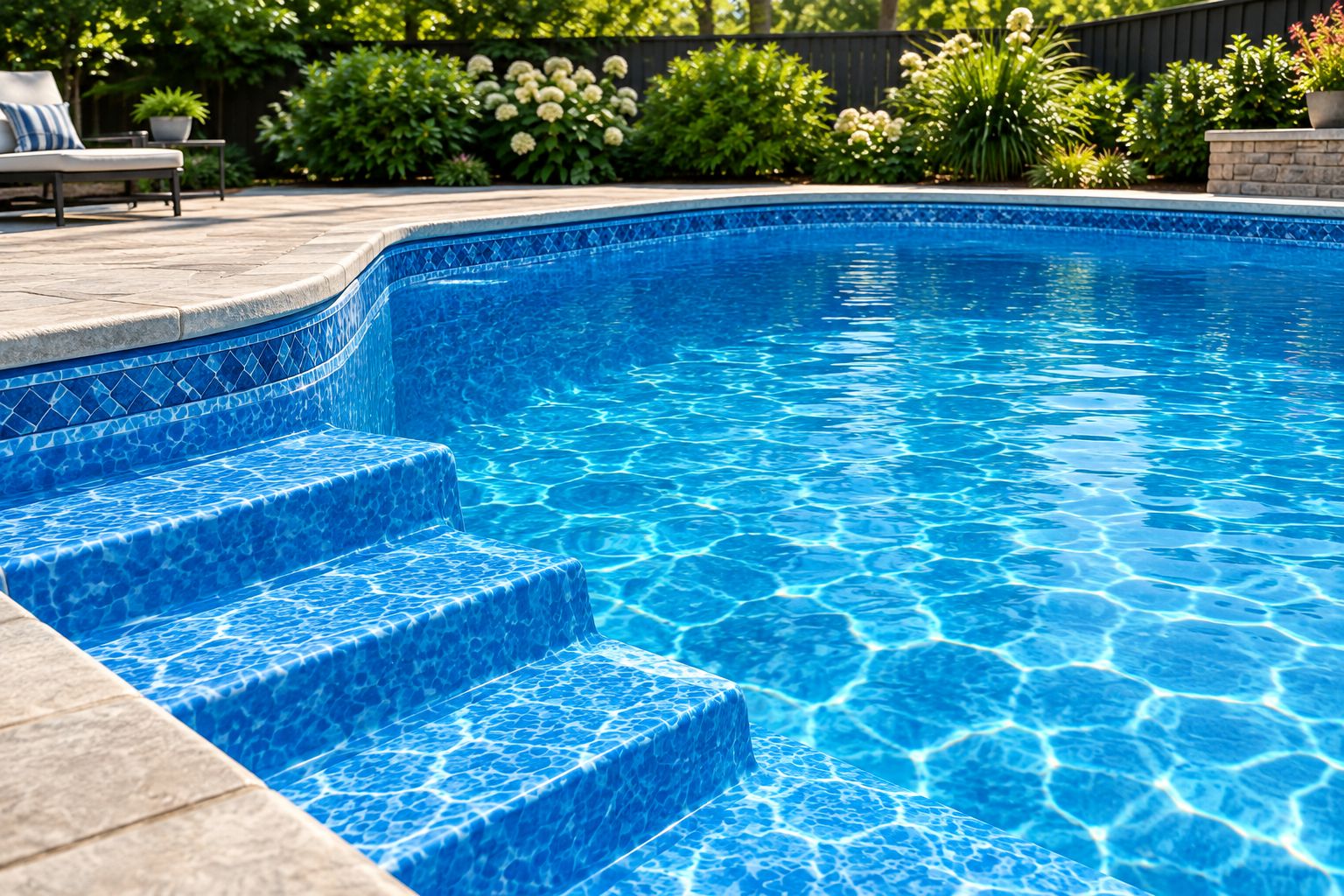
A textured-step configuration places a specified textured liner section over compatible liner-covered steps. It addresses the walking surface where people enter and leave the pool.
Best for: Pools with integrated steps that require a compatible textured liner treatment.
Step geometry is part of the liner measurement, not an accessory detail. The installer needs to account for the step shape and the manufacturer’s fitting requirements. A pool with separate molded steps presents a different specification question from one with liner-covered steps.
Textured-step liner pros:
- Addresses the step surface separately from the pool floor.
- Makes step details an explicit part of the order.
- Can be combined with other compatible liner features.
Textured-step liner cons:
- Texture does not eliminate slipping or the need for careful footing.
- Compatibility depends on the step construction and liner specification.
- Requires suitable cleaning methods under the manufacturer’s instructions.
Ask where texture will appear, not just whether the liner has it. Buy: Select manufacturer-approved textured step sections when they match your integrated steps and the specified installation method.
4. Pattern-focused custom liner: best for an appearance-led replacement
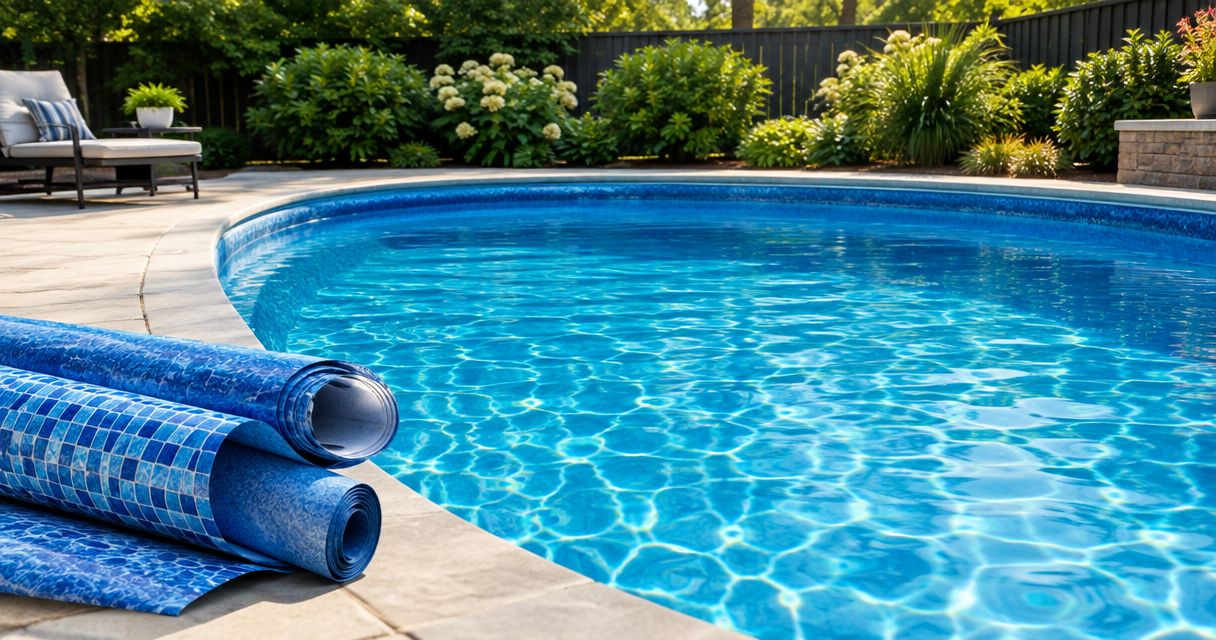
A pattern-focused liner puts the visual choice first only after fit, attachment, and material requirements are resolved. Wall borders and floor designs change how the finished pool looks, but they are not evidence of better construction.
Best for: Homeowners replacing a liner whose main remaining decision is appearance.
Compare physical samples when available. View them in daylight and distinguish the border pattern from the floor pattern; a small screen image does not show the whole pool. Keep the approved design attached to the written order so the appearance decision stays separate from the technical specification.
Pattern-focused custom liner pros:
- Helps coordinate the pool’s appearance with its surroundings.
- Separates visual preferences from material requirements.
- Gives you a specific design to confirm before ordering.
Pattern-focused custom liner cons:
- Attractive patterns do not prove durability or correct fit.
- Samples and screen images do not show the complete installed appearance.
- A decorative choice cannot resolve an underlying leak.
Buy: Choose the pattern you prefer after the installer confirms the pool-specific specification. Skip: Reject any recommendation that uses appearance as the only reason to select a liner.
How these liner choices are ranked
The ranking puts measured fit and compatibility ahead of thickness, step treatment, and appearance. It is a decision order: establish the correct liner configuration, add any required surface features, then select the pattern.
There is no universal manufacturer winner here. For 2026, the strongest default is a correctly specified custom liner—not a brand name without a pool-specific installation plan.
Before replacement: check what actually needs repair
A torn liner and a leaking pool are not automatically the same diagnosis. Water loss requires an assessment of the liner, fittings, plumbing, and equipment before you commit to replacement.
Give the service provider a clear description: where you see damage, whether the water level changes, and whether the problem occurs with the equipment running. Photograph accessible areas from the deck. Do not drain the pool to inspect the liner yourself; draining changes the loads on the pool and requires a professional plan.
Look at corners, transitions, and steps from a safe position. Report visible wrinkles or separation without assuming the cause. The repair recommendation should explain whether the issue calls for a localized repair, further investigation, or replacement.
Get a clearly defined replacement or closing scope
A useful quote tells you what work is planned and what remains your responsibility. Do not assume that liner replacement, leak diagnosis, equipment repair, and seasonal closing are one appointment or one scope.
Describe the problem
Explain whether you need a liner assessment, a repair, seasonal closing, or a combination. Include photographs and any existing liner paperwork. Tell the provider about known equipment issues before requesting a date.
Confirm the tasks
For replacement, ask who handles measurements, removal, underlying surface inspection, fittings, installation, and startup. Request clarification about how newly discovered damage will be addressed before additional work is authorized.
For closing, ask whether the proposed scope covers cleaning, water testing and treatment, equipment shutdown, plumbing winterization, and cover installation. These are tasks to discuss, not a statement that every closing service includes them. The correct procedure depends on the pool and equipment instructions.
Separate the work
Keep repair needs distinct from seasonal closing. Closing does not fix an existing tear or equipment fault. Likewise, installing a liner does not establish that the pool is ready for winter shutdown.
Request an appointment
Use the website’s inquiry or booking route to describe the work you need. Confirm that your address is served, ask for a defined scope, and agree on the homeowner preparation required before the visit.
For pool liners, Aqua Turf Solutions should receive the same specific description you would provide for any pool repair request. Ask which services apply to your pool rather than assuming liner supply or installation is included.
Request your pool service scope
Describe your liner concern or seasonal closing needs and confirm the work before scheduling.
Which pool liner should you choose?
Choose a custom-fit smooth liner as your starting point, then add thicker material or textured step sections only when the pool-specific specification supports them. Make the pattern decision last.
If you are undecided in 2026, request a written recommendation explaining fit, attachment, thickness, step treatment, and installation scope. A clear explanation is more useful than a claim that one liner is best for every backyard.
FAQ
What's the best liner for a vinyl inground pool?
The best liner is a custom-fit liner that matches the pool’s dimensions, attachment system, and manufacturer requirements. Choose thickness, step texture, and pattern after confirming those details.
Is a thicker pool liner always better?
A thicker pool liner is not automatically the better choice. Thickness does not correct inaccurate measurements, unsuitable supporting surfaces, or an incompatible attachment profile.
What does mil mean on a pool liner?
A mil is one-thousandth of an inch. A 20-mil liner measures 0.020 inch in the stated material specification; ask whether the measurement applies to the floor, walls, or both.
Do I need a textured liner on my pool steps?
Textured step sections are an option for compatible liner-covered steps. Confirm the step construction and manufacturer requirements; texture does not make wet steps slip-proof.
Does a leaking vinyl pool always need a new liner?
A leaking vinyl pool does not always need a new liner. The assessment must identify whether water loss comes from liner damage, fittings, plumbing, or equipment before replacement is recommended.
What should I ask before booking a pool closing?
Ask for a written closing scope covering the tasks proposed for your pool and equipment. Confirm homeowner preparation, cover responsibilities, and whether existing repairs need a separate appointment.
Can Aqua Turf Solutions help with seasonal pool care?
Aqua Turf Solutions offers residential pool maintenance, repair, and seasonal opening and closing. Use the website to request service and confirm coverage for your address and the scope of your specific job.
One last thing
Do not let a closing appointment become a substitute for diagnosing liner damage. Report the issue when you request service, and ask whether it needs attention before shutdown. That keeps the liner decision and the seasonal-care decision in the right order.