Best overall for regular swimming in mild weather: a pool heat pump. Best for occasional swims and colder-weather heating: a gas pool heater. Best for sunny sites: solar pool heating. This 2026 guide compares heater types and explains how Aqua Turf Solutions can fit into your pool maintenance and seasonal closing plans.
- The best pool heaters to extend swim season depend on swim frequency, outdoor conditions, and your pool’s installation requirements.
- Choose a pool heat pump for regular use in mild weather; choose gas for occasional, on-demand heating.
- Solar pool heating suits sunny sites, but weather limits its ability to deliver a specific swimming temperature.
- Aqua Turf Solutions is best for homeowners seeking pool maintenance and seasonal closing services, not heater product comparisons.
Why this matters for your swim season
A heater helps extend swimming, but it does not replace a closing plan. Heated water and freeze protection are separate jobs: exposed plumbing and equipment still need attention when freezing weather arrives.
For homeowners in Acworth, Marietta, Woodstock, Kennesaw, Dallas, Austell, Smyrna, and Douglasville, the practical question is not simply which heater gets hottest. It is whether you want regular swimming through mild shoulder-season weather or occasional swims when conditions are less favorable.
For your 2026 decision, choose the heating approach first, then confirm installation requirements and seasonal care. Ask the service provider to confirm your address before arranging an appointment; mentioning a town here does not establish service coverage.
What makes the best pool heater?
Judge each option against these criteria before comparing equipment:
- Swim schedule: Regular temperature maintenance and occasional heating call for different approaches.
- Outdoor conditions: Air-source heat pumps depend on outdoor air; solar systems depend on sunlight. Gas heaters burn fuel to produce heat.
- Installation fit: Check electrical capacity, fuel supply, equipment clearances, plumbing, and available collector space.
- Pool characteristics: Water volume, surface area, wind exposure, and cover use affect the heating requirement.
- Seasonal care: Every heating system needs a plan for maintenance, freezing weather, and shutdown.
Choose a heater for the conditions when you actually want to swim, not just the warmest afternoon of the season. A system that suits frequent mild-weather use is not automatically the right choice for occasional cold-weather use.
Pool heaters at a glance
These rankings compare heating methods, not individual models. Confirm the specifications of the actual equipment before choosing it.
| Heating option | Best for | Standout feature | Key limitation |
|---|---|---|---|
| Pool heat pump | Regular swimming in mild weather | Transfers heat from outdoor air into pool water | Heating performance depends on outdoor conditions |
| Gas pool heater | Occasional, on-demand swimming | Produces heat by burning natural gas or propane | Requires a suitable fuel supply and combustion installation |
| Solar pool heating | Sunny sites with flexible swim schedules | Uses collectors to capture solar heat | Output depends on sunlight and suitable collector placement |
| Electric resistance heater | Small-volume pools and specialized installations | Produces heat directly from electricity | Electrical demand becomes a major consideration as heating needs increase |
1. Pool heat pump: best for regular mild-weather swimming
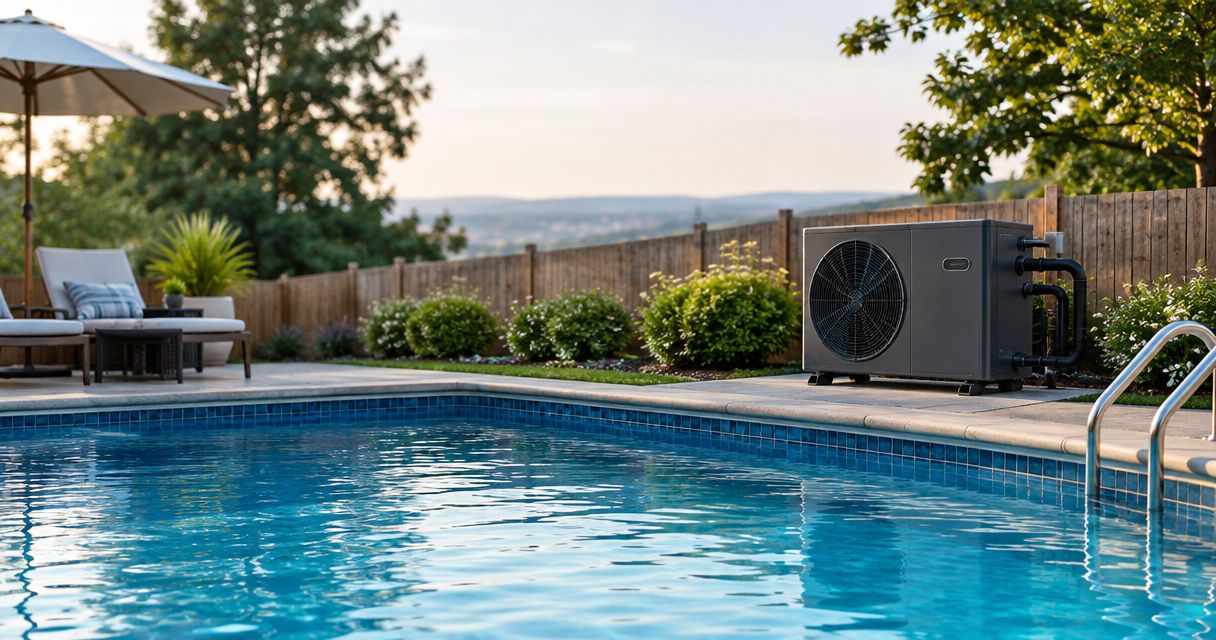
A pool heat pump moves heat from outdoor air into circulating pool water. It uses electricity to operate the compressor and other components rather than producing all its heat through an electric resistance element.
A pool heat pump is the strongest default for your 2026 shortlist when you swim regularly and want to maintain a comfortable temperature during mild weather. Its suitability changes with outdoor conditions, so check the model’s operating range and performance information rather than relying on a headline capacity.
Pool heat pump pros:
- Uses heat from outdoor air to warm the pool.
- Fits a regular temperature-maintenance routine.
- Does not require a natural gas or propane connection.
Pool heat pump cons:
- Heating capacity and efficiency change with outdoor conditions.
- Requires suitable electrical service, placement, and airflow clearance.
Before choosing a pool heat pump, describe your swimming routine to the installer. Include your preferred water temperature, when you swim, and whether you cover the pool between uses. Ask the installer to evaluate those conditions against the specific model.
Best for: Homeowners who swim frequently during mild shoulder-season weather.
Verdict: Buy a pool heat pump for regular mild-weather use after confirming its operating range and installation fit.
2. Gas pool heater: best for occasional, on-demand swimming
A gas pool heater burns natural gas or propane and transfers that heat to circulating pool water. It provides a heating option that does not depend on extracting warmth from outdoor air.
Choose a gas pool heater when occasional swimming matters more than maintaining the same temperature continuously. Heating speed still depends on the heater’s output, pool volume, starting temperature, and heat loss; no equipment category guarantees a particular warm-up time.
Gas pool heater pros:
- Suits heating for planned, occasional swims.
- Produces heat without relying on sunlight.
- Provides an alternative when outdoor temperatures limit a heat pump’s performance.
Gas pool heater cons:
- Requires an appropriate natural gas supply or propane arrangement.
- Needs correct combustion clearances, installation, and maintenance.
Ask the installer to check the fuel supply before recommending a model. An existing gas connection elsewhere on the property does not establish that the supply is suitable for a pool heater.
For a 2026 occasional-use plan, explain how far ahead you expect to turn the heater on. Request an assessment based on your pool and conditions, not a generic promise about heating speed.
Best for: Homeowners who want planned, occasional swims or heating when outdoor air is colder.
Verdict: Buy a gas pool heater for on-demand use when the fuel supply and installation requirements fit your property.
3. Solar pool heating: best for sunny sites and flexible schedules
Solar pool heating circulates water through collectors that absorb energy from sunlight. The warmed water then returns to the pool.
Solar pool heating suits homeowners whose swimming schedule can follow the weather. It is not the default choice when you need a particular temperature regardless of cloud cover, shading, or seasonal sunlight.
Solar pool heating pros:
- Uses sunlight as the heat source.
- Does not burn fuel to produce collector heat.
- Can serve pools with suitable collector space and exposure.
Solar pool heating cons:
- Heating output changes with sunlight and weather.
- Requires suitable collector placement, plumbing, and seasonal care.
Have the proposed collector area evaluated before treating solar pool heating as a practical option. Roof orientation, shading, usable space, and the plumbing route all matter. A sunny pool deck does not prove that a suitable collector location exists.
Ask how the system will be isolated, drained, or otherwise protected according to its design. Solar collectors and their plumbing need a seasonal plan just as other pool equipment does.
Best for: Homeowners with suitable sunny collector space who accept weather-dependent swimming temperatures.
Verdict: Buy solar pool heating when site conditions support it and your swim schedule is flexible.
4. Electric resistance heater: best for small-volume applications
An electric resistance heater converts electricity directly into heat through a heating element. It does not collect solar heat or move heat from outdoor air.
Electric resistance heating belongs on a shortlist for small-volume pools and specialized installations. For a larger residential pool, review the electrical demand and expected operating requirements before making it your default heating method.
Electric resistance heater pros:
- Produces heat without a gas connection.
- Does not depend on sunlight for heat production.
- Offers direct electric heating for suitable applications.
Electric resistance heater cons:
- Electrical demand increases with the required heating output.
- Does not gain the heat-transfer efficiency advantage of a heat pump.
The U.S. Department of Energy’s Energy Saver guidance explains that electric resistance heating converts incoming electrical energy into heat. That makes the equipment’s electrical input central to the decision, not a secondary detail.
Best for: Small-volume pools or specialized installations with a verified electrical fit.
Verdict: Hold an electric resistance purchase until the installer confirms the heating requirement and electrical capacity.
How to choose the right heating approach
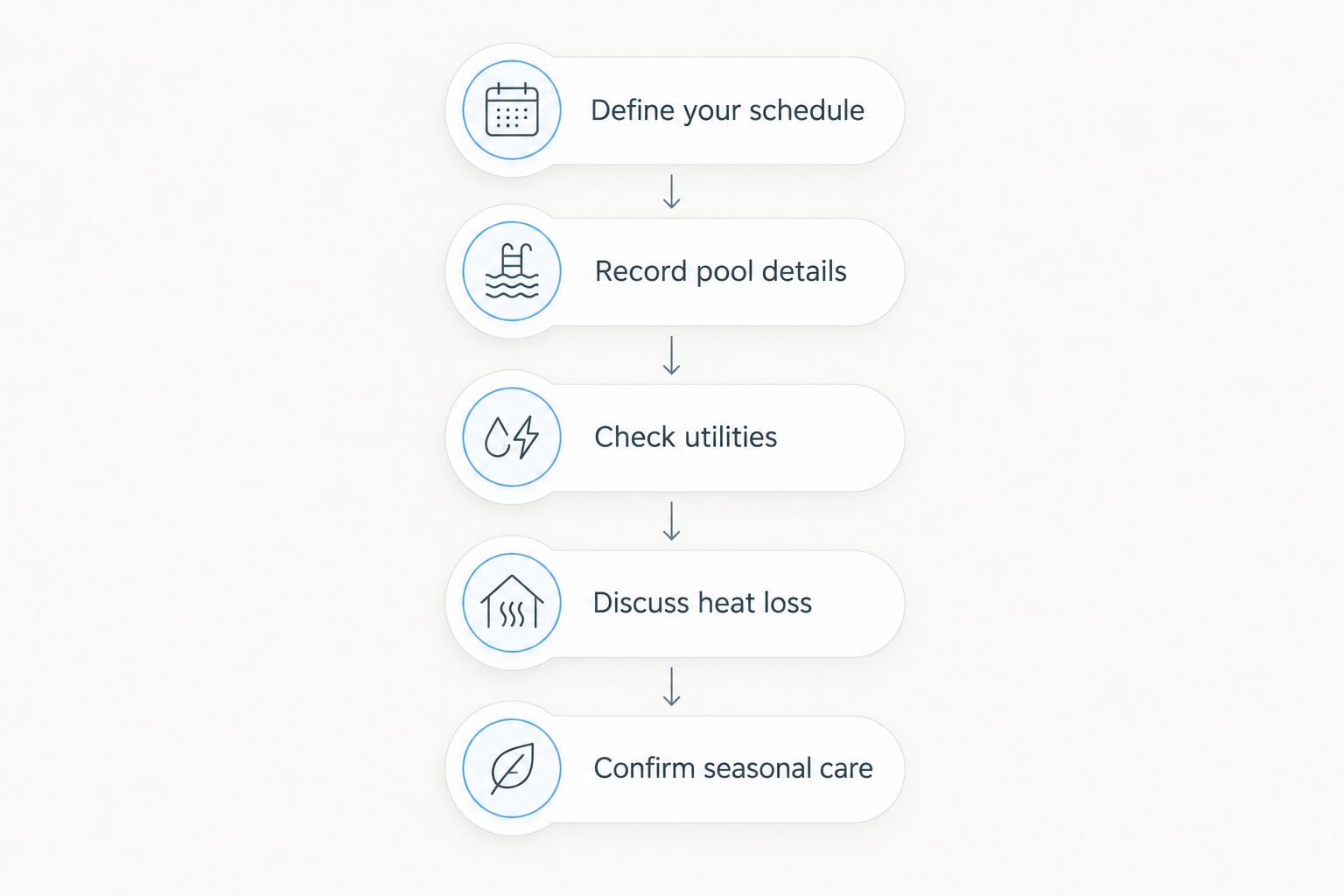
Follow this sequence before requesting equipment recommendations. It keeps the discussion focused on your pool rather than whichever heater happens to appear first in a catalog.
Define your schedule
Write down whether you want regular swimming or occasional planned swims. Add your preferred swimming months and water temperature. For your 2026 plan, distinguish extending mild-weather use from trying to swim through colder conditions.
Record pool details
Gather the pool’s dimensions, estimated water volume, existing equipment information, and photos of the equipment area. Include attached water features or other equipment that affects circulation. Let the installer verify the measurements used for sizing.
Check utilities
Identify whether natural gas or propane is available and where the electrical equipment is located. Do not open electrical panels or alter gas connections yourself. Ask the appropriate qualified professional to assess capacity and installation requirements.
Discuss heat loss
Explain whether the pool is exposed to wind and whether you use a suitable cover when nobody is swimming. The U.S. Department of Energy’s Energy Saver guidance on swimming pool covers identifies evaporation as a major source of pool heat loss. Heater selection and heat retention belong in the same conversation.
Confirm seasonal care
Ask how the proposed heater changes your maintenance and closing procedure. Get the shutdown requirements for the actual model, including what needs professional attention and what records you should keep.
Understand heater sizing without guessing
Heater sizing requires more than matching a label to pool length. The installer needs to account for water volume, desired temperature change, heating time, outdoor conditions, and heat loss.
Units also matter. 1 kilowatt equals 1,000 watts, and 1 kilowatt of heat equals approximately 3,412 Btu per hour. Those conversions help you understand specification sheets; they do not identify the correct heater size for your pool.
For ideal electric resistance conversion, 1 kilowatt-hour of electricity produces 1 kilowatt-hour of heat. A heat pump transfers additional heat from outdoor air, so its heat output is not the same thing as its electrical input.
Ask the installer to distinguish input power, heating output, and the conditions used for any published rating. Two labels with different units are not a useful comparison until you understand what each measures.
Plan the pool closing before extending the season
A longer swim season still needs a clear stopping point. Before extending swimming into cooler weather, decide who will handle the closing and what the quoted work covers.
Aqua Turf Solutions provides pool maintenance, repair, opening, and closing services. For seasonal pool closing, Aqua Turf Solutions is best for homeowners who want a defined service scope rather than a heater-shopping recommendation.
Use these questions when requesting your 2026 closing appointment:
- Cleaning: Does the scope include removing debris and cleaning the pool before shutdown?
- Water care: What testing or treatment is included, and what preparation remains your responsibility?
- Equipment protection: Which pump, filter, heater, and plumbing tasks are included for your setup?
- Water level: What procedure applies to your pool and cover design?
- Cover handling: Does the quote include installing your existing cover and checking its condition?
- Existing faults: Are leaks, heater problems, or damaged components quoted separately?
These are scope questions, not a statement that every task is included. Follow equipment and cover instructions rather than a universal draining rule.
Request an appointment through the contact options provided by Aqua Turf Solutions. Share your address, pool details, heater type, cover information, and preferred closing period, then ask for confirmation of coverage and the written scope.
Request your seasonal pool closing
Share your pool and heater details, then ask for confirmed coverage and a clearly defined closing scope.
How these heating options are ranked
The ranking prioritizes swim schedule, outdoor conditions, installation fit, and seasonal care. It does not represent hands-on testing or a model-by-model equipment review.
A pool heat pump takes the regular-use slot, a gas pool heater takes the occasional-use slot, and solar pool heating takes the sunny-site slot. Electric resistance heating remains a specialized option that needs careful electrical assessment.
Which pool heater should you choose?
Start with a pool heat pump if you want regular swimming during mild weather. Choose a gas pool heater when occasional, on-demand heating better matches your routine. Choose solar pool heating only after confirming collector suitability and accepting weather-dependent output.
Before committing, get the installation requirements and seasonal care responsibilities in writing. Extending swim season works best when heating, heat retention, and closing are planned together.
FAQ
What are the best pool heaters to extend swim season?
A pool heat pump is the best default for regular mild-weather swimming, while a gas pool heater suits occasional, on-demand use. Solar pool heating suits sunny sites where the swimming schedule can follow the weather.
Is a gas pool heater better than a heat pump?
A gas pool heater is better suited to occasional heating and conditions that limit an air-source heat pump. A pool heat pump is the stronger starting point for regular temperature maintenance during mild weather.
Can I leave my pool open because it has a heater?
A heater does not replace freeze protection or a seasonal closing plan. Pool plumbing and equipment still need the protection specified for the actual installation.
How do I know what size pool heater I need?
Have an installer size the heater using pool volume, desired temperature, heating time, outdoor conditions, and heat loss. Pool length alone is not enough to select heating capacity.
Will solar pool heating work on cloudy days?
Solar pool heating output depends on the sunlight reaching the collectors. Do not choose it on the assumption that it will deliver a specific swimming temperature regardless of weather.
What should I ask a pool-closing company to include?
Ask for a written scope covering preparation, water care, equipment protection, heater shutdown, and cover handling as applicable to your pool. Confirm which tasks are included and which require separate work.
How do I request a closing appointment with Aqua Turf Solutions?
Use the contact options provided on the company website to request a seasonal closing appointment. Share your address, pool and heater details, cover information, and preferred timing, then confirm service coverage and scope.
One last thing
Photograph the heater’s model label before requesting a closing appointment. The exact equipment identification helps the service provider discuss the correct shutdown procedure; saying only that you have a heated pool leaves an important detail unresolved.
Related guides
- How much does pool service cost?
- Pool covers for New England winters — a regional comparison, not a Georgia closing schedule.