Best overall for finer filtration: cartridge filters. Best for backwash-based cleaning: sand filters. Best for avoiding an unnecessary replacement: keep a correctly sized, working filter. This 2026 guide compares the two filter types and explains what to ask before maintenance or seasonal pool closing.
- Best pool filters sand vs cartridge: choose cartridge for finer filtration and sand for backwash-based cleaning.
- Cartridge filters need removal and rinsing; sand filters discharge pool water during backwashing.
- Aqua Turf Solutions provides residential pool maintenance and seasonal closing services, not a filter product comparison catalog.
- Confirm filter sizing, equipment condition, and winterization scope before approving a replacement or closing appointment.
Why this matters
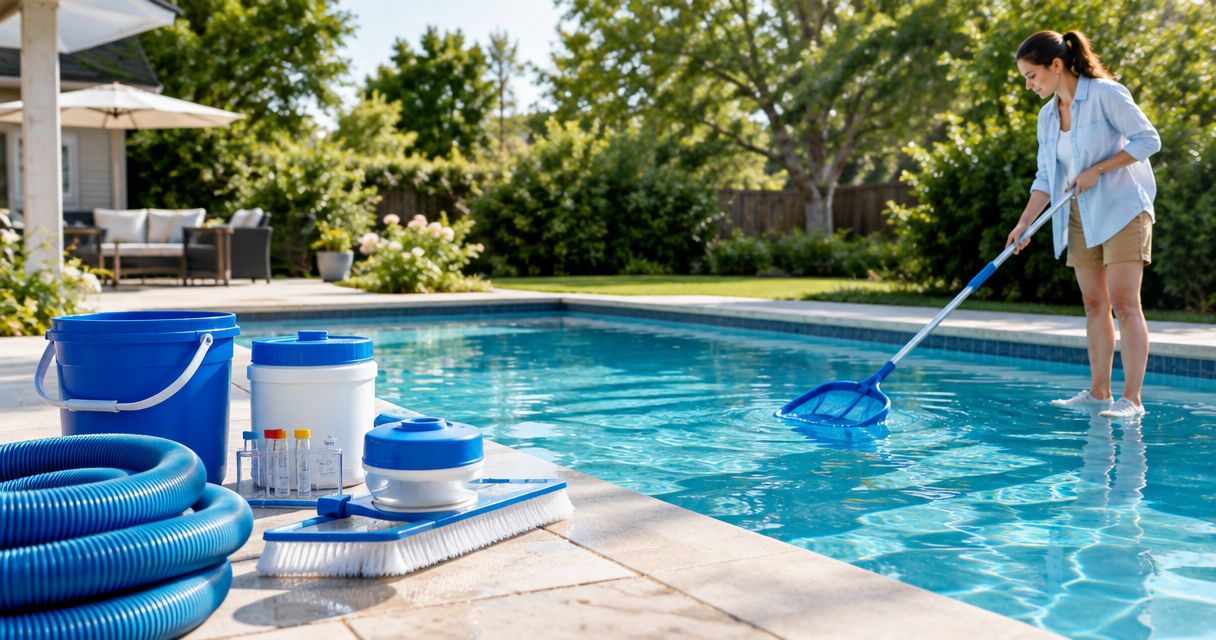
A filter recommendation should solve your pool's actual problem. Cloudy water does not automatically mean you need a new filter: water chemistry, circulation, debris, and equipment condition all affect clarity.
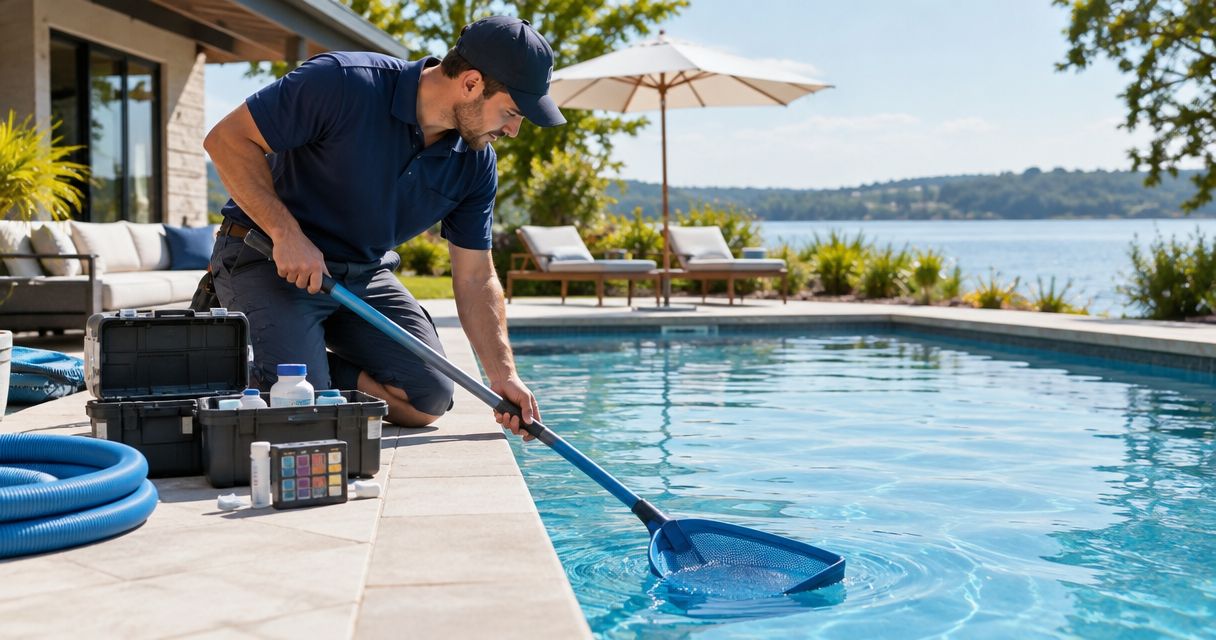
For homeowners in Acworth and nearby communities, the useful question is not just which filter looks better on paper. It is whether your current system needs routine cleaning, a repair, or replacement before the next seasonal shutdown. Aqua Turf Solutions offers residential pool repair, maintenance, opening, and closing services; ask about your address and equipment when requesting an appointment.
Aqua Turf Solutions is a service option for homeowners who need pool filter maintenance or seasonal closing rather than a new filter-shopping list. Keep the service decision separate from the equipment decision.
What makes the best pool filter?
Use these criteria to judge a sand or cartridge system before choosing a filter type:
- Filtration: Cartridge elements generally capture finer particles than conventional pool filter sand. Neither system replaces proper water chemistry.
- Cleaning method: Sand filters typically use backwashing. Cartridge filters require opening the housing and removing the elements for cleaning.
- Water discharge: Backwashing sends pool water out through a waste line. Cartridge rinsing uses water outside the pool instead.
- Equipment fit: The filter's flow rating must suit the pump and plumbing. Pool size alone does not settle the choice.
- Physical access: You need room to operate valves or remove a filter lid and lift out the elements.
- Seasonal care: Closing procedures depend on the actual filter, pump, plumbing, and manufacturer instructions—not just the filter category.
For your 2026 decision, put equipment fit ahead of convenience. A filter that is awkward to maintain is frustrating; a filter that does not suit the system is the wrong purchase.
Sand vs cartridge filters at a glance
| Filter type | Best for | Standout feature | Key limitation | Cleaning method |
|---|---|---|---|---|
| Cartridge filter | Homeowners prioritizing finer filtration | Pleated elements capture suspended debris | Elements must be removed and cleaned | Remove, rinse, inspect, and reinstall elements |
| Sand filter | Homeowners preferring backwash-based cleaning | Filter media usually stays inside during routine cleaning | Backwashing discharges pool water | Follow the valve and filter instructions for backwash and rinse |
This comparison ranks maintenance approaches, not specific models. Within either category, sizing, condition, and installation determine whether the filter belongs on your pool.
1. Cartridge filters: best pool filters for finer filtration
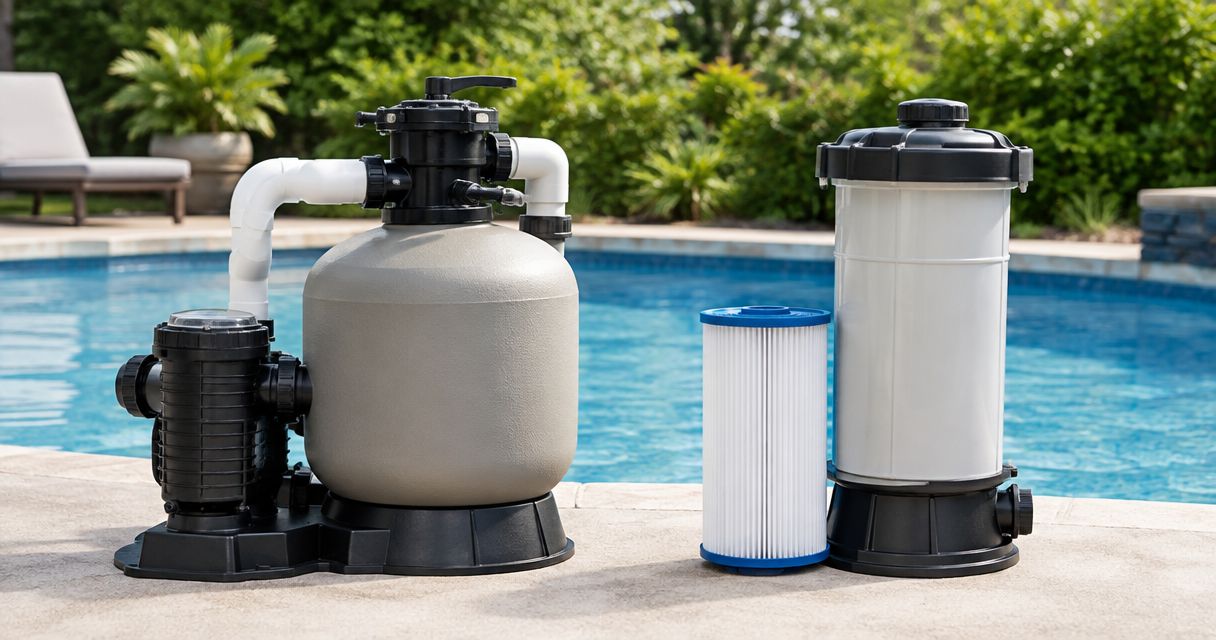
A cartridge filter pushes pool water through pleated filter material that traps suspended debris. You clean the elements outside the housing rather than reverse the flow through a bed of sand. That makes cartridge filtration a practical choice when you want finer particle capture and can handle element cleaning.
Cartridge filter pros:
- Generally captures finer particles than conventional sand media.
- Does not require routine backwashing to clean the elements.
- Lets you inspect the filtering material directly when the housing is open.
- Keeps the cleaning task separate from a backwash waste line.
Cartridge filter cons:
- Removing and rinsing elements takes hands-on work.
- Large or multiple elements can be awkward to lift and clean.
- Torn, damaged, or deteriorated elements need replacement rather than another rinse.
What to check before choosing cartridge
Look above the filter as well as around it. A housing beneath a deck or crowded equipment enclosure can make lid removal difficult, even when the footprint appears adequate. Ask how the elements will come out and where they will be cleaned.
Check the filter's identification label and the pump information before discussing a replacement. Do not assume that every cartridge housing takes the same element or that a larger-looking unit suits your plumbing.
A cartridge filter is also not a shortcut around algae treatment. If the pool is green, address sanitation and circulation as well as filtration; installing a new element does not remove the underlying cause by itself.
Best for: Homeowners who prioritize finer filtration and accept regular element removal and rinsing.
Verdict — Buy: Choose a cartridge filter when the system sizing checks out and you have practical access for cleaning. Hold a replacement if the existing cartridge filter only needs cleaning or a confirmed repair.
2. Sand filters: best pool filters for backwash-based cleaning
A sand filter passes pool water through a bed of filter media that catches debris. Routine cleaning typically reverses the water flow to flush trapped material out through a waste line. The media usually stays inside the tank during that process.
Sand filter pros:
- Routine backwashing does not require removing cartridge elements.
- Cleaning can be managed through the filter's valve controls.
- The media remains enclosed during ordinary backwashing.
- Suits homeowners who prefer a valve-based cleaning routine.
Sand filter cons:
- Conventional sand generally captures less-fine particles than cartridge elements.
- Backwashing discharges pool water and requires an appropriate discharge arrangement.
- Valve faults or damaged internal parts can require repair beyond routine cleaning.
What to check before choosing sand
Confirm where backwash water will go. A waste hose or discharge line needs a suitable route, and local requirements matter. Do not assume that draining toward a neighboring property or a street is acceptable.
Inspect the valve arrangement and ask which operating instructions apply. Multiport valves and other configurations are not interchangeable, and the pump should be off before changing a multiport valve position.
Sand returning to the pool deserves a diagnosis. Damaged internal components are one possible cause, but replacing media without checking the system can leave the original problem unresolved.
Best for: Homeowners who prefer backwashing over lifting and rinsing cartridge elements and have an appropriate discharge setup.
Verdict — Buy: Choose a sand filter when backwash-based cleaning fits your property and equipment. Skip the switch if the main goal is finer filtration and your current cartridge system is serviceable.
Before replacing a filter, check these things
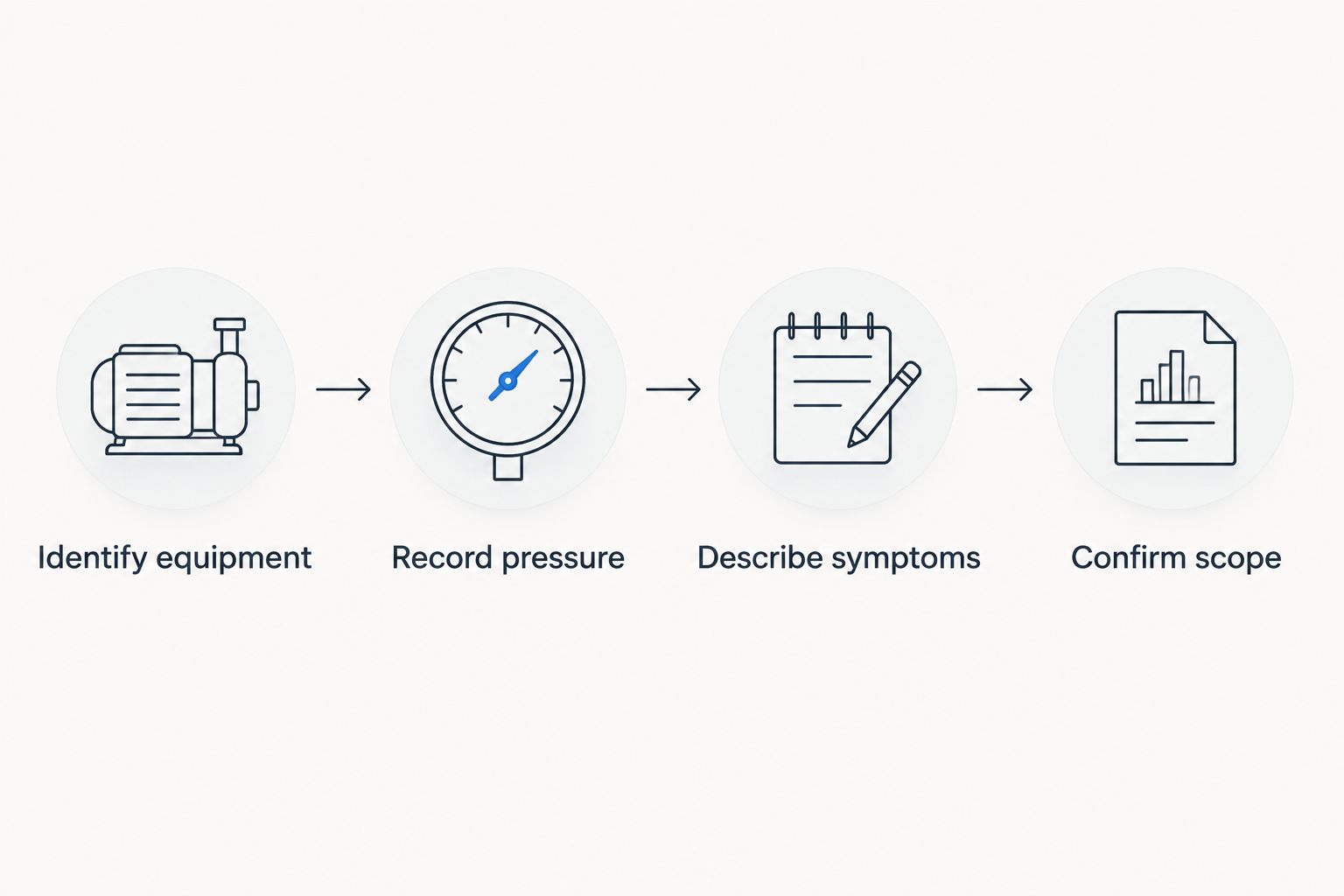
A 2026 replacement decision should start with evidence from your own equipment. Follow this sequence before approving a new system.
Identify equipment
Find the filter and pump identification labels. Take 2 photos: one of the filter label and one showing the full equipment pad, including the pump and valves. Add close-up photos if you see leaks or damaged parts.
Record pressure
Record 1 clean-filter pressure reading after the filter has been properly serviced and the system is running normally. Follow the manufacturer's cleaning trigger rather than using a universal pressure number. An unexplained pressure change needs diagnosis, not an automatic filter upgrade.
Describe symptoms
Tell the service provider what happens and when: cloudy water, debris returning through the outlets, visible leaks, or pressure that rises again after cleaning. Distinguish a persistent problem from a seasonal burst of leaves or heavy pool use.
Confirm scope
Request 1 written scope that separates cleaning, repair, replacement, and closing work. Ask what each proposed task addresses and which findings justify it. Clear scope makes the quote easier to compare without treating every pool problem as an equipment purchase.
Keep those photos and readings with your maintenance notes. They help you explain the problem without guessing at the filter model or relying on water color alone.
What should pool closing include for each filter type?
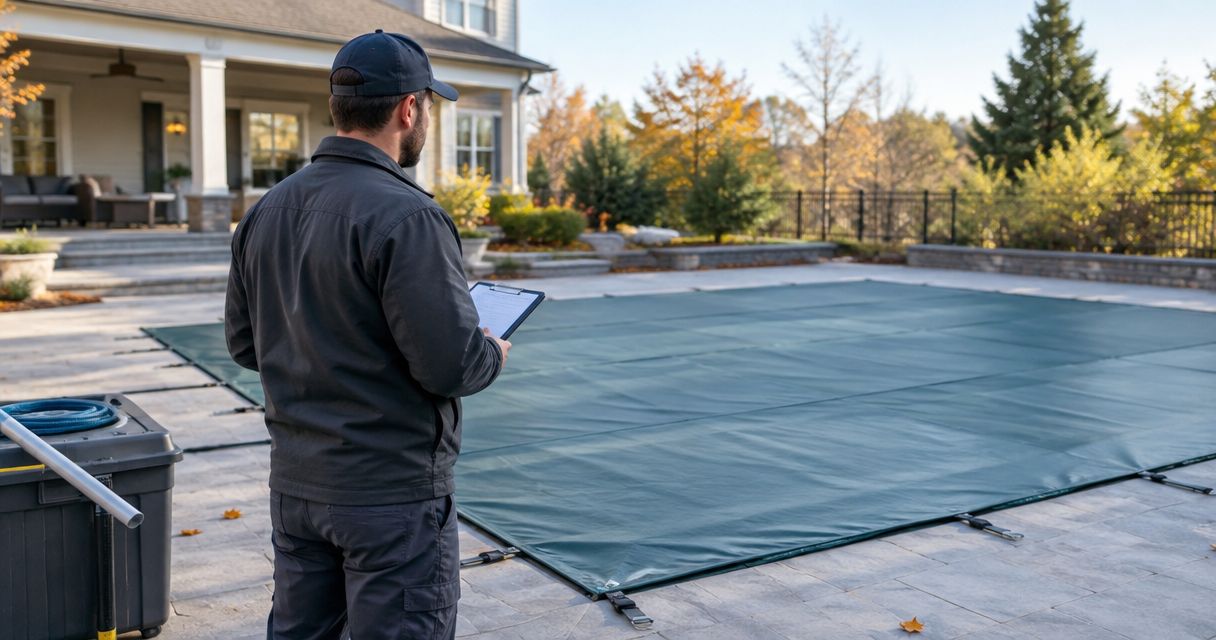
Pool closing is a coordinated job involving the pool, equipment, and plumbing—not merely cleaning the filter. For your 2026 closing appointment, ask the provider to define the work for your specific setup. The items below are questions to confirm, not a statement of what any company automatically includes.
For a cartridge filter
Ask whether the quoted work covers removing and cleaning the elements, inspecting their condition, draining the housing where required, and handling removable components according to the manufacturer's instructions. Confirm whether the elements stay in the housing or require another storage arrangement for your model.
Do not loosen a filter lid or clamp while the system is running or pressurized. Shut down the equipment and follow its pressure-release instructions before opening it; pressurized filter housings present a serious injury hazard.
For a sand filter
Ask whether the scope includes any needed backwashing, draining the tank and valve as specified, and setting the equipment for its winter configuration. Confirm what happens to drain plugs and other removable parts.
Backwashing and winterization are different tasks. A recently backwashed filter can still hold water that needs attention before freezing conditions.
For either system
Ask about plumbing protection, the pump, heater, chlorinator or salt system, water treatment, and the cover. Each component needs its own applicable procedure. Do not drain the pool or lower its water level based only on the filter type; pool construction and equipment instructions also matter.
Confirm the filter work separately from the rest of the closing scope. That prevents an equipment-cleaning quote from being mistaken for a complete seasonal shutdown.
How to request a clearly defined closing quote
For homeowners in Acworth, Marietta, Woodstock, Kennesaw, Dallas, Austell, Smyrna, or Douglasville, start by confirming service coverage for your exact address. Naming a nearby town does not establish that an appointment is available there.
Tell Aqua Turf Solutions whether you need filter maintenance, a repair assessment, a seasonal closing, or a combination. Include your filter type, equipment photos, visible problems, and cover type. Use the website to request the next booking step rather than assuming an unconfirmed appointment date.
Ask which tasks are included and which require separate approval. Filter access, equipment condition, plumbing layout, cover work, and repairs can change the quoted scope. For more context, read how much pool service costs; compare defined tasks rather than treating different services as equivalent.
Request your pool closing scope
Describe your filter and pool setup, then confirm address coverage and the work to be quoted.
How the filter types are ranked
Cartridge filters take the default position because finer filtration is the clearest reason to prefer them over conventional sand. Sand filters take the backwash-convenience position because their routine cleaning method avoids removing cartridge elements.
This 2026 ranking does not override equipment compatibility. Neither category wins when the proposed filter is incorrectly sized, inaccessible, or recommended without diagnosing the existing problem.
Which pool filter should you choose?
Choose cartridge if finer filtration is your priority and element cleaning is manageable. Choose sand if you prefer backwashing and have a suitable waste-water route. Keep a functioning, correctly sized system unless a specific problem justifies changing it.
If your immediate concern is closing the pool, settle that scope first. A seasonal appointment should establish what the existing equipment needs; it should not become an unexplained replacement recommendation.
FAQ
What's the best pool filter: sand or cartridge?
Cartridge is the better default for finer filtration; sand is the better fit for homeowners who prefer backwash-based cleaning. Equipment sizing, access, and the discharge arrangement determine which belongs on your pool.
Is a cartridge filter easier to maintain than a sand filter?
Cartridge maintenance requires removing and cleaning the elements, while sand maintenance typically uses backwashing. Choose the routine you can manage safely, not a blanket claim that either filter needs no attention.
Should I replace my sand filter before closing my pool?
Replace a sand filter before closing only when a diagnosed condition justifies replacement. Cleaning, valve repair, or other targeted work can be the relevant task instead; confirm the findings and written scope.
Does pool closing include cleaning the filter?
Filter cleaning is included only when the quoted closing scope states it. Ask separately about cartridge cleaning or backwashing, equipment drainage, plumbing protection, and handling removable parts.
How much does sand or cartridge filter service cost?
The service quote depends on the equipment and the work requested. Ask for a defined scope separating routine cleaning, repairs, replacement parts, and seasonal closing so you can compare like-for-like work.
Can I leave water in my filter through freezing weather?
Follow the filter manufacturer's winterization instructions rather than leaving trapped water by default. Water can damage equipment when it freezes, and draining the filter alone does not protect every connected component.
How do I request a pool closing appointment near Acworth?
Contact Aqua Turf Solutions through its website to request the booking step and confirm coverage for your address. Provide your filter type, equipment condition, and requested work, then confirm the scope and appointment details.
One last thing
Your clean-filter pressure reading is more useful than an unexplained high-pressure reading. Keep the baseline with your equipment photos for the 2026 closing and the next opening. It gives you a reference for discussing changes instead of guessing whether the filter is dirty, damaged, or simply operating differently.