New homeowners’ pool maintenance is the routine of checking water, removing debris, and caring for equipment so your swimming pool stays ready for use. This 2026 guide explains what to do yourself, when to request help, and how to arrange a seasonal closing without guessing what the appointment includes.
- Pool maintenance for new homeowners starts with water testing, equipment records, and a clear seasonal plan.
- Aqua Turf Solutions offers pool maintenance and seasonal opening and closing services for homeowners.
- Choose a pool-closing appointment by its written scope, not an assumed list of included tasks.
- Clear water does not replace sanitizer testing, and a saltwater pool still needs chlorine checks.
Why pool maintenance matters for new homeowners
A house purchase gives you a pool, but not necessarily the instructions for running it. An unfamiliar valve, missing equipment manual, or undocumented repair makes an ordinary task harder than it needs to be.
For homeowners in Acworth, GA, and nearby Marietta, Woodstock, Kennesaw, Dallas, Austell, Smyrna, and Douglasville, the practical question is whether to keep maintaining the pool through cooler weather or arrange a closing. Do not stop circulation and assume the pool is winterized. A shutdown needs a plan for the water, plumbing, equipment, and cover.
Aqua Turf Solutions pool service is best for homeowners seeking help with maintenance and seasonal opening or closing. Start with Aqua Turf Solutions to request an appointment and confirm whether your address is served; proximity alone does not establish service coverage.
The goal is straightforward: understand your pool before changing settings, and get the closing scope in writing before approving the work.
Build your pool-care routine
1. Identify your equipment before changing anything
Begin with a walk around the pool and equipment pad. Photograph the pump, filter, heater if present, sanitizer equipment, and valve positions. Find model labels rather than relying on the previous owner's description.
Ask for manuals, service records, and instructions for any installed cover. A saltwater system produces chlorine; it does not remove the need to test chlorine. Different filter types also require different cleaning procedures.
Create a 2026 pool record that someone else can understand without your explanation. Include unresolved problems instead of treating every inherited setting as correct. Leave unfamiliar valves alone until their purpose is established.
- Save equipment model names and manual copies.
- Photograph normal valve positions and control settings.
- Identify the filter type and its cleaning procedure.
- Record past repairs and unresolved leaks.
- Locate electrical shutoffs without opening electrical equipment.
2. Test the water before adding chemicals
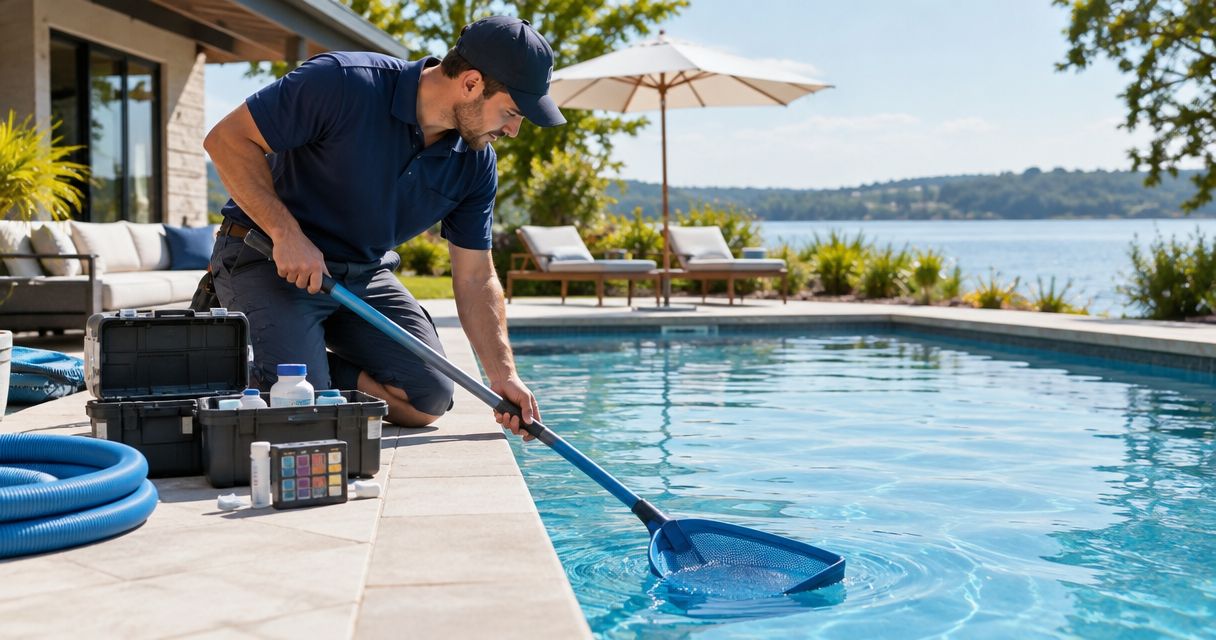
Start with a suitable home test kit and follow its sampling instructions. Take a reading before deciding what to add. Water color alone cannot tell you whether sanitizer is adequate.
For your 2026 routine, CDC Healthy Swimming guidance recommends at least 1 ppm free chlorine in pools, or 2 ppm when cyanuric acid is used, and a pH of 7.0–7.8. CDC also recommends testing chlorine and pH at least 2 times per day, with more frequent checks during heavy use. These are public-health reference points, not chemical dosing instructions for your particular pool.
Record results and follow chemical labels and equipment instructions. Never mix pool chemicals together. If readings remain outside the appropriate range, stop guessing and ask for help before swimming.
Use the guide to pool water testing kits for homeowners to understand testing options, rather than buying a kit solely because it has the longest feature list.
- Measure free chlorine and pH using the kit instructions.
- Check whether your sanitizer introduces cyanuric acid.
- Record results before and after corrective treatment.
- Follow each chemical's label for handling and application.
- Keep chemicals secured and separated as directed.
3. Remove debris and check circulation
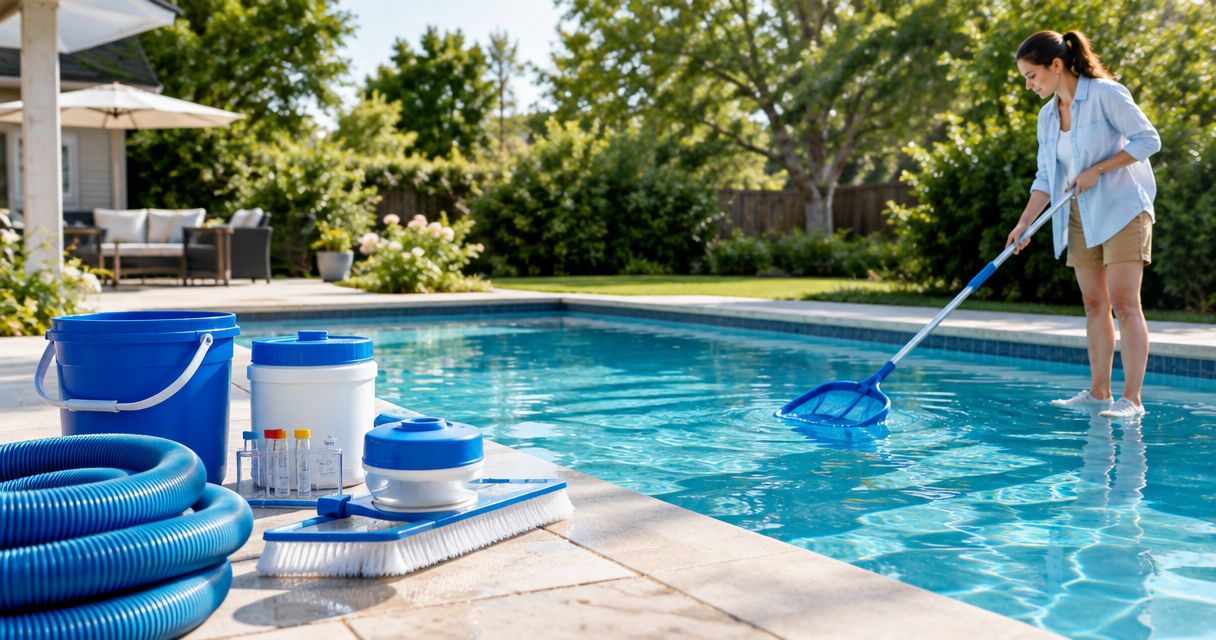
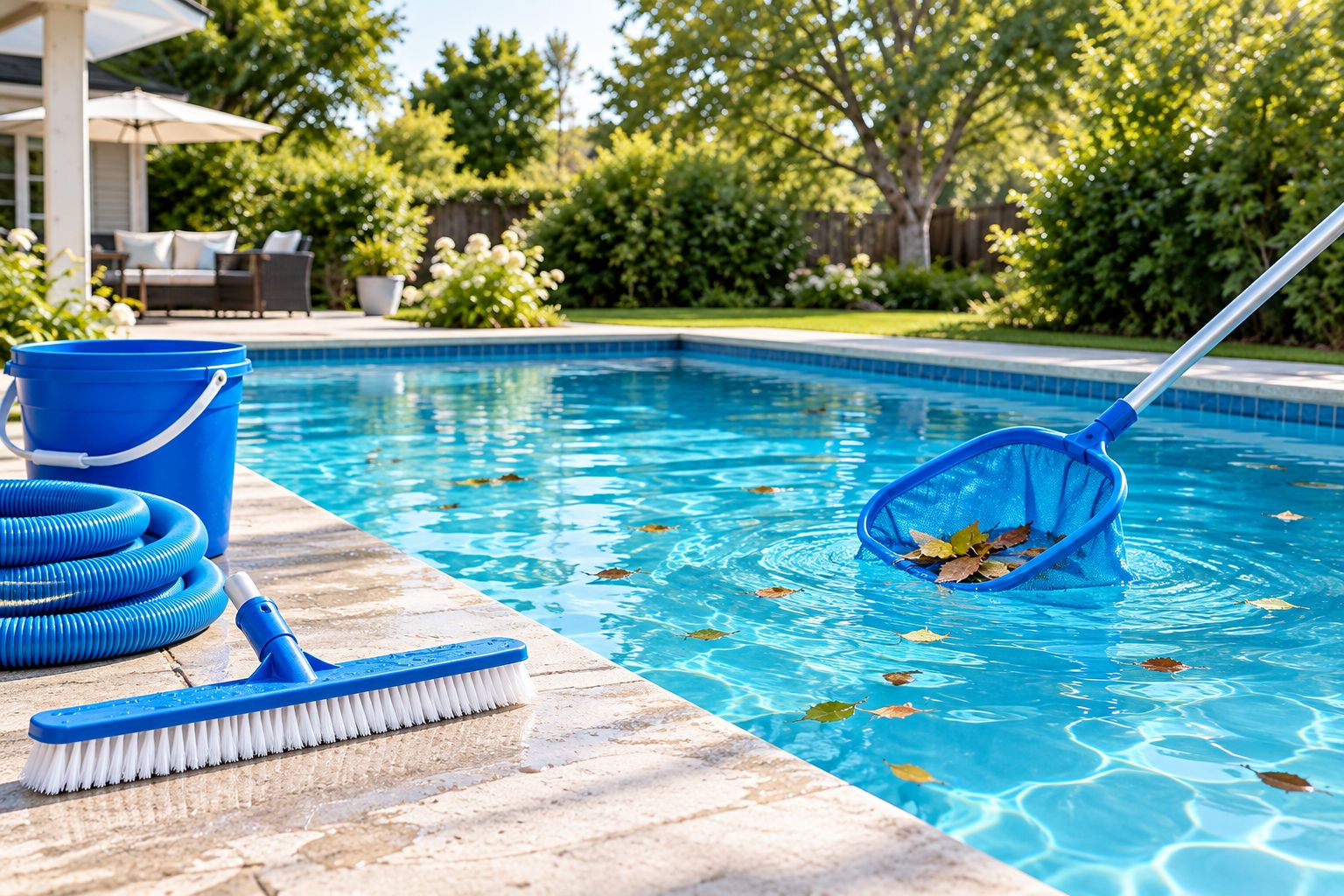
Use a hand skimmer and pool brush for the basic work. Empty accessible baskets according to the equipment instructions, and look for changes in circulation while the system runs normally.
A vacuum removes settled debris, but it does not correct water chemistry or a malfunctioning pump. Likewise, longer pump operation is not a substitute for diagnosing weak flow. There is no universal runtime that fits every pool and season.
Aqua Turf Solutions provides pool maintenance and repair services. If routine cleaning exposes persistent circulation problems, request help and describe the symptoms rather than changing several settings at once.
- Skim floating leaves and other visible debris.
- Brush surfaces with a tool suitable for the pool finish.
- Remove settled debris using an appropriate vacuum.
- Clean accessible baskets following equipment instructions.
- Record unusual sounds, leaks, or changes in return flow.
4. Inspect the pool before planning a shutdown
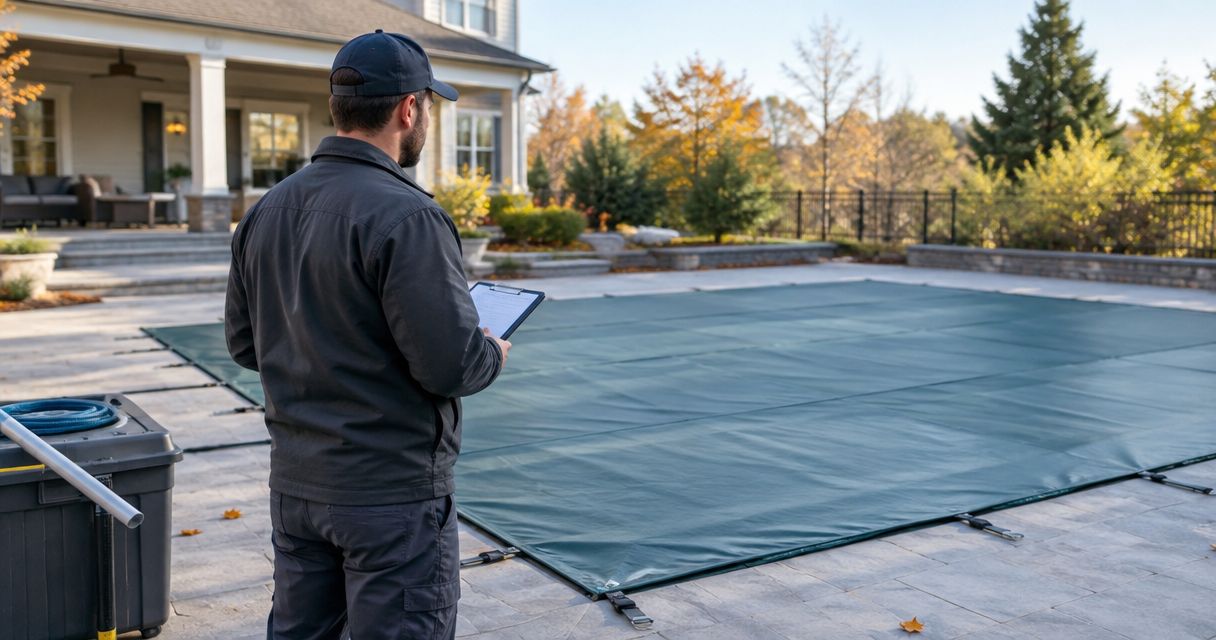
Walk the pool edge and equipment area before asking for a closing appointment. Look for damaged cover anchors, loose fittings, damp areas around equipment, and deck defects that affect safe access.
A closing appointment is not automatically a repair appointment. Report known problems beforehand so the provider can explain whether they require separate work. Cover damage, for example, matters before a cover is needed, not after equipment has been shut down.
Keep observations factual. A falling water level is a symptom, not proof that a particular pipe is leaking. Tell the provider what changed and when you noticed it.
- Photograph damaged fittings, covers, and anchors.
- Note water-level changes and visible equipment leaks.
- Check that the equipment area is accessible.
- Report loose or damaged deck surfaces near the pool.
- Separate repair requests from routine closing questions.
5. Choose a seasonal plan before colder weather
For your 2026 seasonal plan, decide between maintaining an operating pool and arranging a proper closing. Base that decision on your equipment, intended use, and ability to keep checking the property—not on a national calendar date.
Keeping a pool open means continuing the necessary water care and equipment checks. Closing means preparing the system for its inactive period according to its design. A cover alone is not a complete closing plan.
Ask how your installed equipment needs protection during freezing conditions. Do not rely on unfamiliar automated settings without confirming how they work and what happens during a power interruption. Never drain a pool solely because the swimming season has ended; the appropriate water level depends on the pool and closing method.
- Decide whether you will continue swimming and maintaining the pool.
- Identify who will check the property when you are away.
- Review equipment instructions for freezing conditions.
- Confirm the cover type and its installation requirements.
- Ask how the seasonal plan affects plumbing and water level.
6. Define the closing scope before requesting a quote
Write down what you need before contacting a provider. A useful pool-closing quote explains the work, exclusions, and homeowner preparation. It should also distinguish seasonal tasks from repairs.
Ask whether the proposed scope covers cleaning, water treatment, equipment shutdown, plumbing preparation, and cover handling. These are questions to resolve, not a promise that every closing appointment includes every task. Pool design and equipment determine the appropriate procedure.
For a 2026 closing request, send your address, equipment details, cover type, photographs, and known problems. Ask how the quoted scope changes if damaged parts or additional work are discovered. Fair pricing is easier to assess when you can compare the same work, rather than two totals describing different jobs.
- Request a written list of included closing tasks.
- Ask which cleaning or water-treatment work is excluded.
- Confirm how the plumbing and installed equipment will be handled.
- Clarify who supplies, inspects, and installs the cover.
- Identify repairs that require separate authorization.
- Ask what preparation you must complete before arrival.
7. Request the appointment and keep the handoff record
Use the booking path available through the company's site to request service. Aqua Turf Solutions offers seasonal opening and closing, but confirm your address, requested scope, and appointment details directly. A submitted request is not the same as a confirmed appointment.
After the closing, keep the work record and any follow-up instructions. You need to know what remains your responsibility, including cover checks and any ongoing equipment operation specified for your pool.
Save those instructions with your equipment photographs. When opening season arrives, an accurate record helps you explain what was shut down, what was repaired, and what still needs attention.
- Provide your address and preferred appointment timing.
- Describe the pool, equipment, cover, and existing problems.
- Confirm the agreed scope before approving the appointment.
- Arrange safe access to the pool and equipment area.
- Keep the completion record and follow-up instructions.
Request your seasonal pool appointment
Describe your pool and confirm service coverage, closing scope, and appointment details.
Compare your pool-care options
Choose the option that matches both your confidence and the work required. Doing routine checks yourself gives you direct knowledge of the pool; professional help addresses tasks you cannot safely identify or complete. Neither approach removes the need for a clear handoff.
| Option | Best for | Main advantage | Key limitation |
|---|---|---|---|
| Homeowner-led routine care | Owners comfortable following equipment and chemical instructions | Direct control over testing, cleaning, and records | You must recognize problems and arrange specialist help when needed |
| Professional maintenance | Owners who want help with recurring pool care | A defined service scope reduces uncertainty about assigned tasks | Visit frequency, responsibilities, and exclusions need confirmation |
| Professional seasonal closing | Owners unfamiliar with shutdown procedures | Closing work can be planned around the installed pool system | Repairs, cover work, and treatment are not automatically included |
| Shared homeowner and professional care | Owners handling routine checks but requesting seasonal or repair work | Responsibilities can match your skills and available time | Gaps occur unless both sides know who handles each task |
Choose by responsibility, not by an assumed package. For example, professional maintenance does not automatically mean someone checks the water between visits. Seasonal closing does not automatically include opening the following season.
Common mistakes new pool homeowners make
Treating clear water as proof of safe water
Clear water still needs sanitizer and pH testing. Record the results instead of judging the pool by appearance, especially after heavy use or a change in treatment.
Copying the previous owner's settings without checking them
Inherited settings describe how someone used the pool, not whether that setup fits your plans. Identify the equipment and understand each setting before changing or adopting it.
Buying equipment before identifying the problem
A new cleaner cannot fix inadequate sanitizer or a plumbing leak. Describe the symptom first, then decide whether you need cleaning, maintenance, repair, or replacement.
Assuming a nearby town is automatically covered
Homeowners in Acworth and surrounding communities should confirm service coverage using their actual address. A nearby location does not establish that a provider accepts appointments there.
Comparing closing quotes without comparing scope
One quote can describe a different job from another. Ask about cover handling, water preparation, equipment shutdown, exclusions, and separate repairs before deciding which offer fits.
FAQ
What's the first thing I should do after buying a house with a pool?
Identify the equipment and test the water before changing settings or adding chemicals. Save model labels, manuals, and service records so you can describe the pool accurately when requesting help.
How often should a new homeowner test pool water?
CDC recommends checking pool chlorine and pH at least twice daily, with more frequent testing during heavy use. Follow your test kit instructions and record results rather than relying on water appearance.
Does a saltwater pool still need chlorine testing?
Yes, a saltwater pool still needs chlorine testing because its sanitizer system produces chlorine. Check the water independently of the control panel and follow the equipment instructions.
What does a professional pool closing include?
A professional pool closing includes the tasks stated in the agreed scope. Ask specifically about cleaning, water treatment, equipment shutdown, plumbing preparation, cover handling, and any work that requires a separate repair authorization.
When should I close my pool in Acworth, Georgia?
Choose a closing date based on your intended use, equipment requirements, and plan for freezing conditions. Confirm the timing with your service provider rather than assuming every local pool needs the same calendar date.
How is the cost of a pool closing determined?
A pool-closing quote depends on the work specified for your pool, equipment, cover, and existing condition. Compare written scopes and clarify exclusions before approving the appointment.
Can I just put the cover on and turn off the pump?
No, covering the pool and turning off the pump does not establish that the system is properly closed. Confirm the required water, plumbing, equipment, and cover procedures before shutting anything down.
How do I request a closing appointment with Aqua Turf Solutions?
Use the booking path available through Aqua Turf Solutions' site to request a seasonal closing. Provide your address and pool details, then confirm coverage, scope, and appointment details directly.
One last thing
Before your 2026 closing appointment ends, ask one question: What still needs my attention after you leave? A closed pool is not necessarily a pool you can ignore. Keep the answer with your closing record so cover checks, water-level instructions, and any continuing equipment responsibilities stay clear.