Best overall: a permanent vertical-picket fence with a self-closing, self-latching gate. Best for removable separation: a mesh pool fence. Best for privacy: a solid-panel fence. This 2026 guide compares the best pool safety fences by layout, gate operation, upkeep, and what changes when you close your backyard pool for the season.
- The best pool safety fences separate the pool from everyday backyard activity and control access through a secure gate.
- Permanent vertical-picket fences are the default recommendation when you want a fixed pool barrier.
- Removable mesh fences suit seasonal flexibility, but protection depends on keeping every section installed and secured.
- Aqua Turf Solutions offers seasonal pool services; confirm fence requirements separately with your local building department.
Why this matters
A pool fence is not just a property boundary. Its job is to interrupt unsupervised access to the water, including when nobody plans to swim. A fence around your whole yard does not necessarily separate the pool from the house or patio.
For homeowners comparing the best pool safety fences, Aqua Turf Solutions is a pool-service option for seasonal opening and closing, not a fence installer recommendation. Use the Aqua Turf Solutions website to request seasonal service information, and ask your local building department which barrier requirements apply to your property.
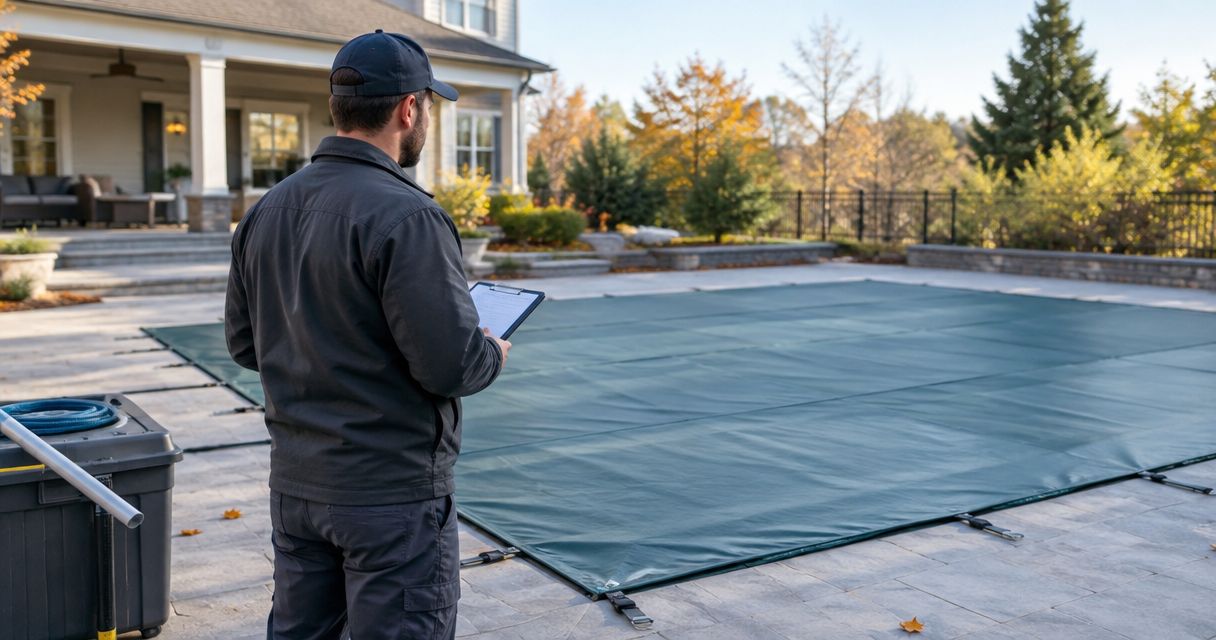
Closing the pool does not remove the need to control access. Keep the barrier working through the off-season rather than treating a winter cover as permission to leave the gate open.
What makes the best pool safety fences in 2026?
Choose the layout first, then the material. These criteria determine whether a fence fits your pool and your daily routine:
- Pool separation: The barrier should interrupt routes from the house, patio, and play area to the water.
- Gate operation: A gate needs to close and latch without someone remembering to secure it.
- Climb resistance: Avoid accessible footholds, nearby furniture, and objects that help someone cross the barrier.
- Opening control: Check spaces beneath panels, between pickets, and around gate edges.
- Installation surface: Posts, anchors, and gate hardware need a suitable supporting surface.
- Seasonal upkeep: Choose a barrier you can inspect and keep secured during swimming season and after closing.
The U.S. Consumer Product Safety Commission's Safety Barrier Guidelines for Residential Pools recommends a barrier at least 48 inches high and openings that do not allow a 4-inch-diameter sphere through. For the gap beneath a barrier over grass or gravel, the guidance recommends no more than 2 inches.
These are federal safety recommendations, not a substitute for your local code. Fence design changes how spacing rules apply, so show your proposed layout to the building department before ordering materials.
Pool safety fences at a glance
| Fence type | Best for | Standout feature | Key limitation |
|---|---|---|---|
| Permanent vertical-picket fence | A fixed, everyday pool boundary | Defined access through a permanent gate | Requires a planned post layout and suitable installation |
| Removable mesh pool fence | Seasonal flexibility | Sections can be removed when appropriate | Removed or unsecured sections leave a route to the pool |
| Solid-panel fence | Privacy beside neighboring yards | Blocks direct views through the panels | Reduces visibility of the pool from outside the enclosure |
| Glass-panel fence | Keeping an open view across the backyard | Transparent panels preserve sightlines | Needs surface cleaning and careful hardware inspection |
These are fence categories, not tested product rankings. The gate, installation, and complete barrier layout matter more than a material label.
1. Permanent vertical-picket fence: best for a fixed pool boundary
A permanent vertical-picket fence creates a defined enclosure with access through a gate. Metal designs commonly use aluminum or steel, but the material alone does not establish whether the fence meets pool-barrier requirements.
This is the default recommendation when you want separation that stays in place throughout the year. Choose a pool-appropriate design rather than assuming any decorative yard fence will work.
Permanent vertical-picket fence pros:
- Keeps the pool boundary in place during swimming season and after closing.
- Open pickets allow you to see through the enclosure.
- Provides a fixed location for a self-closing, self-latching gate.
Permanent vertical-picket fence cons:
- Post locations need coordination with the deck, underground utilities, and access routes.
- Horizontal rails or nearby objects can create climbing opportunities.
- Moving the enclosure later requires installation work.
Best for: Homeowners who want a permanent boundary between the pool and the rest of the yard.
Before approving the layout, walk the route you use for pool maintenance. Make sure the gate position works for equipment access without encouraging anyone to prop it open.
Verdict: Buy a permanent vertical-picket fence when a fixed enclosure fits your yard and the proposed design satisfies local requirements.
2. Removable mesh pool fence: best for seasonal flexibility
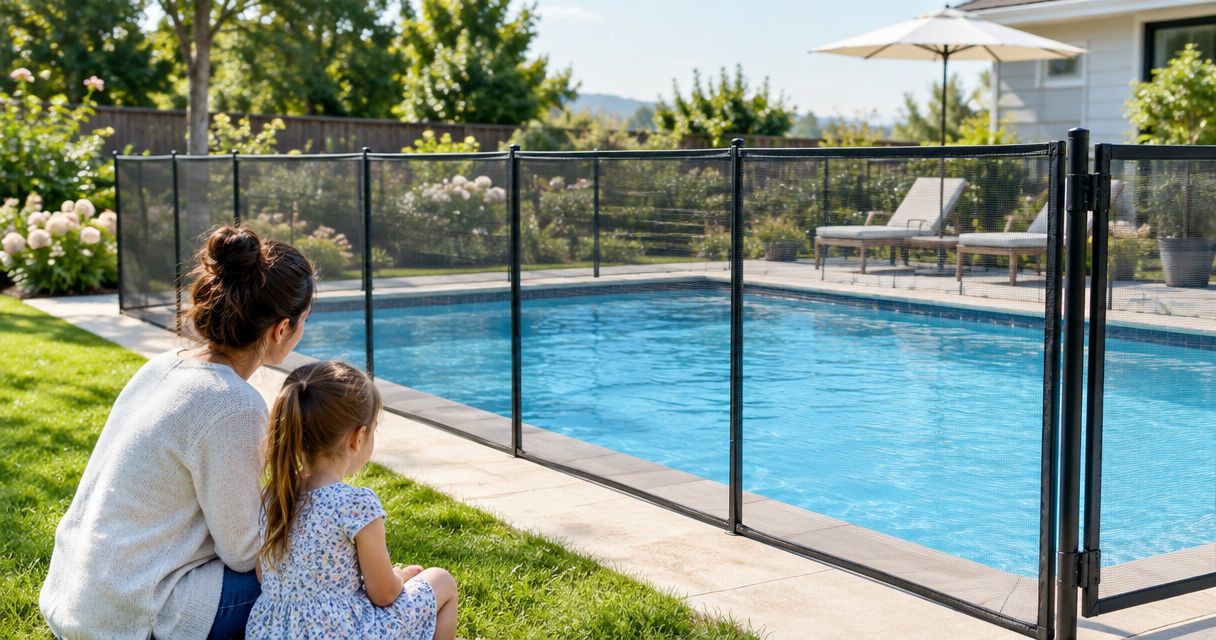
A removable mesh pool fence uses mesh panels supported by posts in installed sleeves or anchors. Its defining feature is removability—not an exemption from pool-barrier rules.
Choose this category when you need an adjustable arrangement and can keep the barrier properly installed whenever the pool requires protection. Inspect the connections, mesh, anchors, and gate rather than judging the fence only by how it looks from the patio.
Removable mesh pool fence pros:
- Allows sections to be removed when the system is designed for that purpose.
- Mesh provides visibility through the barrier.
- Can create a pool-specific boundary within a larger backyard.
Removable mesh pool fence cons:
- Removing a section interrupts the barrier.
- Loose connections, damaged mesh, or unstable posts need attention.
- Installation depends on an appropriate surface and the manufacturer's instructions.
Best for: Homeowners who need removable separation and will consistently maintain the complete enclosure.
Do not remove the fence simply because the pool is closed. Ask the installer how the barrier should remain secured around your particular winter-cover arrangement.
Verdict: Buy removable mesh for a genuine layout need; skip it if sections are likely to stay removed or unsecured.
3. Solid-panel fence: best for backyard privacy
A solid-panel fence blocks views between the pool and neighboring spaces. Depending on the design, panels can be wood, vinyl, or another opaque material.
Privacy is its distinct advantage, but privacy and pool safety are separate questions. Panel height, supports, gate operation, and ground clearance still need review.
Solid-panel fence pros:
- Screens the pool area from neighboring yards.
- Creates a clear visual boundary around the enclosure.
- Avoids open spaces through the main panel surface when panels are intact.
Solid-panel fence cons:
- Blocks views of the pool from outside the fence.
- Rails or supports can create footholds depending on their arrangement.
- Material-specific upkeep remains necessary, including checking damaged or loose panels.
Best for: Homeowners whose main additional requirement is privacy.
Check the fence from both sides. A smooth pool-facing panel does not resolve climbable supports on the outside, and a private enclosure still needs active supervision when children use the pool.
Verdict: Buy solid panels when privacy matters, but reject layouts that sacrifice safe access control or create easy climbing routes.
4. Glass-panel fence: best for uninterrupted backyard views
A glass-panel fence creates a transparent boundary around the pool. It keeps views open while relying on installed panels, supporting hardware, and a gate to form the enclosure.
This category fits homeowners who want to see the water from nearby outdoor spaces. Transparency does not replace supervision, and the installation needs review just like any other pool barrier.
Glass-panel fence pros:
- Preserves views across the pool area.
- Makes the boundary less visually opaque than a solid fence.
- Allows visibility through the panel surface without open picket spaces.
Glass-panel fence cons:
- Water spots and surface marks require cleaning.
- Gaps at panel edges and beneath panels still need checking.
- Supporting hardware and gate alignment require inspection.
Best for: Homeowners who prioritize clear sightlines and accept the cleaning involved.
Ask the installer to explain the specified glass, panel support, and gate hardware. Do not substitute ordinary glass panels or assume that a transparent wall automatically qualifies as a pool barrier.
Verdict: Buy a purpose-designed glass pool barrier when clear views are the priority and the installation meets local requirements.
Check the whole enclosure before choosing a fence
Start at the house and walk toward the water. Trace every route someone could take, including side paths, steps, and openings beside equipment. A strong panel does not compensate for an unprotected route around its end.
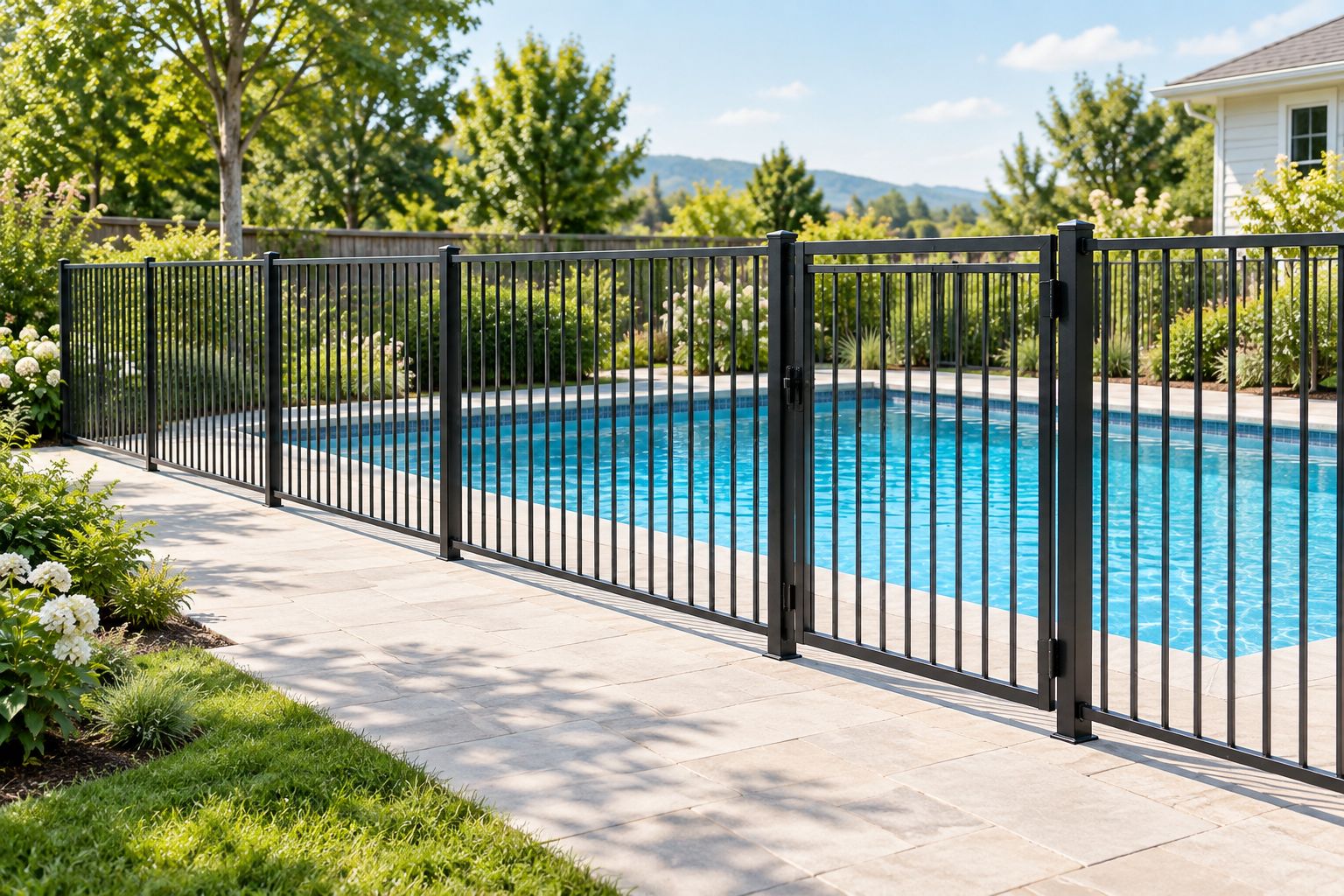
Check pool access
Identify whether doors from the house enter the pool enclosure. The CPSC guidance addresses additional protections when a house wall forms part of a barrier; ask your building department how that applies to your home.
Do not assume a fenced property equals a separately fenced pool. The relevant question is whether someone can reach the water without passing the required protections.
Test gate operation
The CPSC recommends pedestrian gates that open away from the pool and are self-closing and self-latching. Test the actual operation and check that the latch engages without a push from you.
If the gate drags, sticks, or stays open, arrange a repair. Keep chairs, planters, and stored equipment away from places where they could help someone climb over.
Review deck condition
Check the proposed mounting area for cracks, movement, and other visible deterioration. Have the installer assess whether that surface is suitable before drilling or setting posts.
Coordinate deck restoration with fence installation so the work does not conflict. The guide to pool deck resurfacing materials explains another decision that affects the space around your pool.
Coordinate fencing with your 2026 pool closing
For homeowners in Acworth and nearby Marietta, Woodstock, Kennesaw, Dallas, Austell, Smyrna, and Douglasville, the practical next step is a defined closing scope—not buying a fence and assuming winter preparation is finished. Confirm whether your address is served before requesting an appointment.
Aqua Turf Solutions offers pool opening and closing services. Fence installation is not part of the stated service description, so discuss barrier work separately with a qualified installer.
Describe the pool
When requesting a closing appointment, describe the pool type, equipment, cover arrangement, and any known problems. Mention planned fence or deck work that affects access to the pool.
Define the closing scope
Ask which tasks the quote covers. Closing work can involve cleaning, water treatment, equipment preparation, plumbing winterization, and cover placement, but the agreed scope depends on the pool and service proposal.
Do not assume every task is included. Ask how existing equipment faults, cover problems, or repair needs will be handled before approving the work.
Confirm access
Tell the service provider how to enter the enclosure and whether equipment must pass through a narrow gate. Arrange access without leaving the gate propped open afterward.
Request a written scope
A clear quote should identify the work, exclusions, and any separately proposed repairs. Compare scope rather than treating every pool closing as the same service; the pool service cost guide provides related planning context.
Request your pool closing scope
Describe your pool and ask which seasonal closing tasks the proposed service covers.
How the 2026 recommendations are ranked
The order prioritizes a fixed pool boundary, controlled gate access, visibility, and the work needed to keep the enclosure intact. Permanent vertical-picket fencing is the default; mesh, solid panels, and glass answer different layout or household priorities.
The safety criteria follow the CPSC's Safety Barrier Guidelines for Residential Pools, applied here to residential backyard barriers. These recommendations do not certify a particular product or replace a local inspection.
Which pool safety fence should you choose?
Choose a permanent vertical-picket fence unless removability, privacy, or uninterrupted views give you a clear reason to choose another category. Then verify the full layout, gate, openings, and installation surface before committing.
For seasonal preparation, keep the decisions separate: the fence controls access, while the closing scope addresses the pool and equipment. Ask Aqua Turf Solutions about the latter and your building department about the former.
FAQ
What's the best pool safety fence for a backyard pool?
A permanent vertical-picket fence with a self-closing, self-latching gate is the default recommendation for a fixed backyard pool boundary. Removable mesh, solid panels, and glass suit different needs, but each requires a compliant layout and installation.
Is a removable mesh pool fence better than a metal fence?
A removable mesh pool fence is better for removability, while a permanent metal fence is better for keeping a fixed boundary in place. Choose mesh only if you will keep all required sections installed and secured.
How high should a pool safety fence be?
The U.S. Consumer Product Safety Commission recommends a pool barrier at least 48 inches high. Your local building department determines the requirements that apply to your property and proposed fence.
Can my backyard fence count as my pool fence?
A backyard fence does not automatically provide the required separation around a pool. Ask your building department to review access from the house, gate operation, openings, and the complete enclosure.
Do I still need a pool fence after closing the pool?
Keep your pool barrier secured after seasonal closing. A closed pool still needs controlled access, and a cover is not a reason to remove fence sections or leave the gate open.
What should I ask before booking a pool closing in 2026?
Ask which closing tasks are included, which repairs are separate, and what access the provider needs. Confirm service for your address and request a clearly defined scope before approving the appointment.
Does Aqua Turf Solutions install pool safety fences?
Fence installation is not listed in the provided service description for Aqua Turf Solutions. Its stated services include pool repair, maintenance, opening and closing, and pool deck restoration; confirm any additional work directly.
One last thing
Check the gate after service visits and after moving equipment through the enclosure. A fence can look unchanged while a gate no longer closes or latches correctly. Make that check part of your seasonal routine, not just installation day.