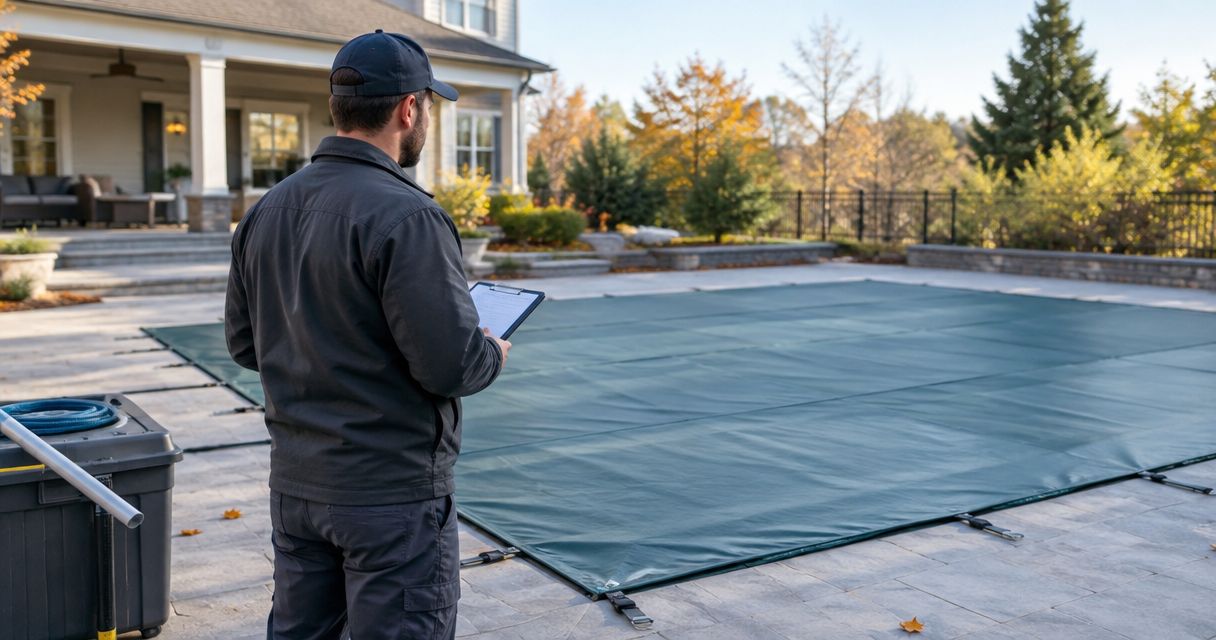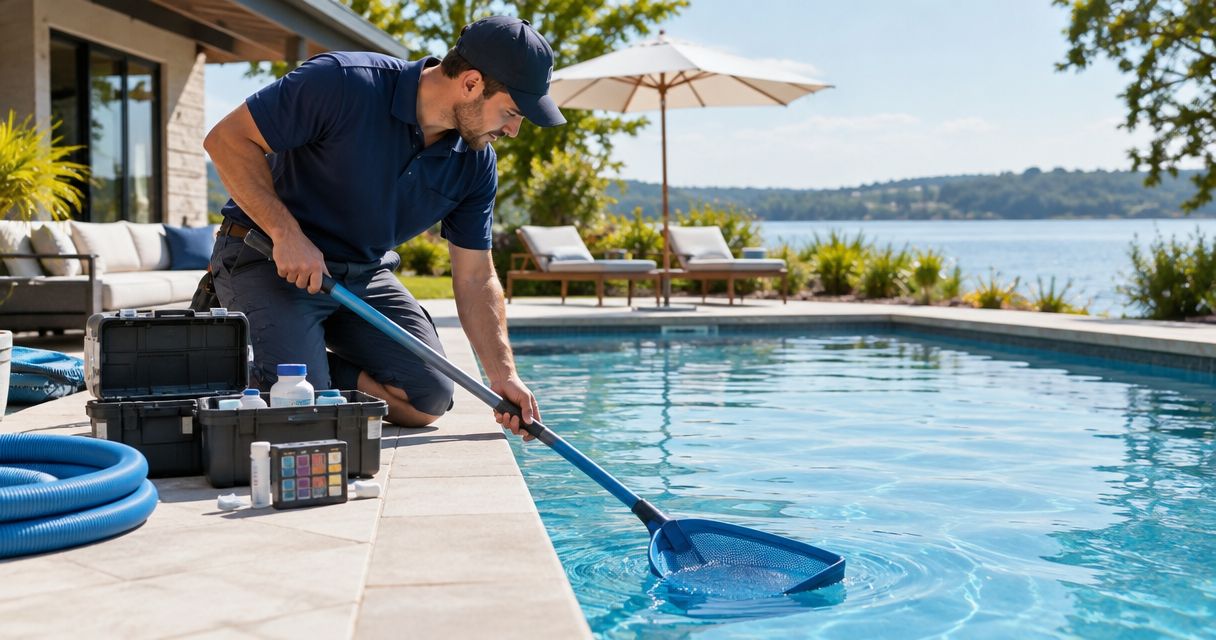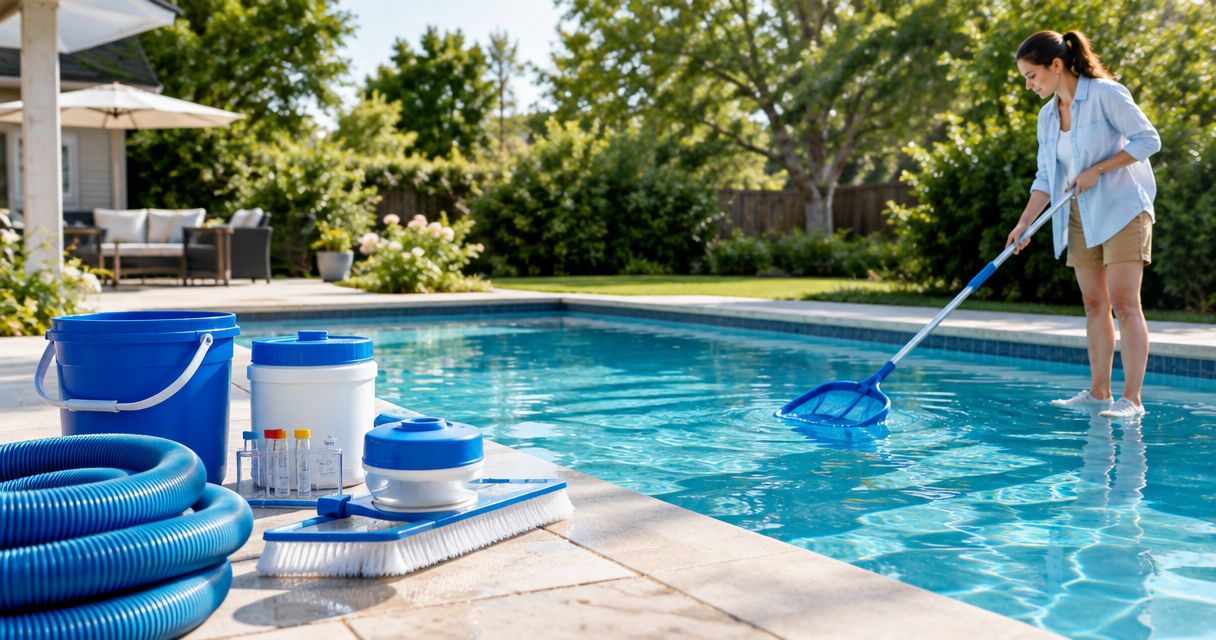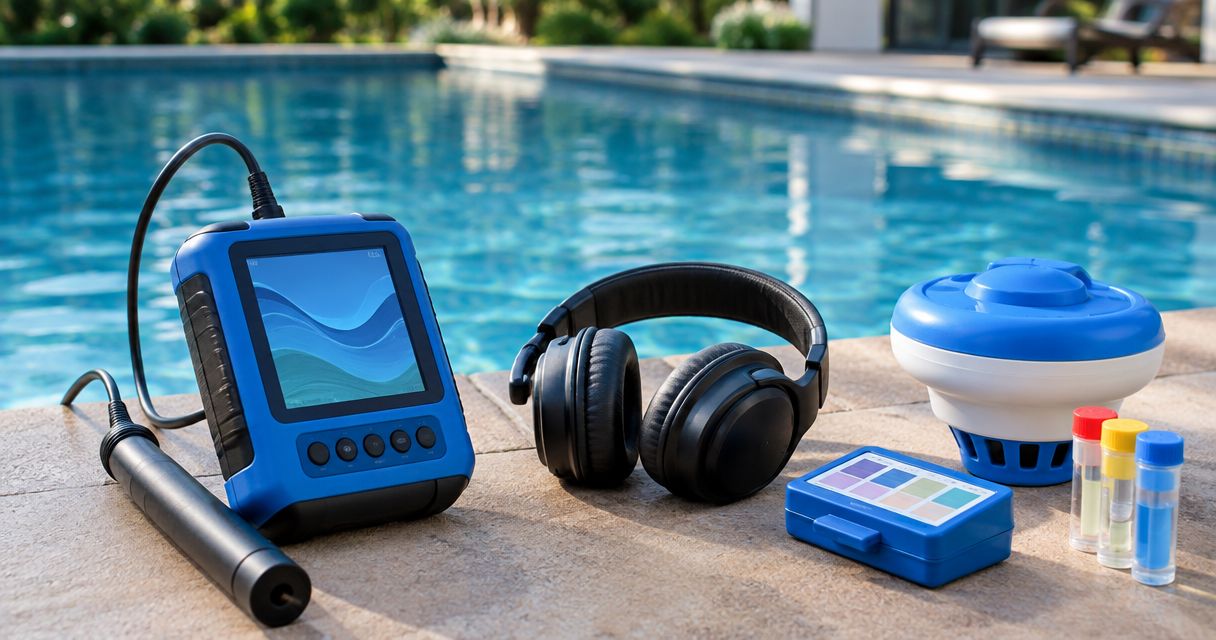
Best overall: a bucket-test setup. Best for checking a visible suspect spot: pool leak detection dye. Best low-equipment option: a flashlight for visual inspection. This 2026 guide explains the best pool leak detection tools for homeowners and how to turn your findings into a clear repair request before seasonal pool closing.
- A bucket-test setup leads the best pool leak detection tools for separating evaporation from unexplained water loss.
- Pool leak detection dye checks a suspected opening; it does not search underground plumbing.
- A flashlight and inspection mirror help document visible problems without dismantling pool equipment.
- Aqua Turf Solutions offers pool repair and seasonal closing; ask for a written scope before authorizing work.
Why this matters before pool closing
A falling water level raises two different questions: is the pool losing water beyond evaporation, and where is that water going? Buying a tool for the second question before answering the first creates unnecessary work. Start with observation, then narrow the problem.
For homeowners in Acworth, Marietta, Woodstock, Kennesaw, Dallas, Austell, Smyrna, and Douglasville planning a 2026 closing, document unexplained water loss before discussing the appointment. Aqua Turf Solutions offers residential pool repair, maintenance, opening, and closing. Use the website to request an appointment and confirm service for your address.
Aqua Turf Solutions is a service option for homeowners seeking pool repair and seasonal closing rather than another detection gadget. Describe the symptoms when you inquire; do not assume specialized leak testing is included.
What makes the best pool leak detection tools?
Choose tools by the question they answer, not by how technical they look.
- Clear purpose: Distinguish a water-loss check from a test that locates a suspected opening.
- Safe homeowner use: Favor observation over pressurizing pipes, dismantling equipment, or handling electrical components.
- Repeatable observations: Record water levels, weather, and operating conditions so your results have context.
- Pool compatibility: Check product directions for your pool surface and equipment.
- Useful handoff: Gather information a service technician can review without treating it as a confirmed diagnosis.
No single homeowner tool does all of these jobs. A bucket test compares water loss; dye investigates one accessible location. Neither proves that buried plumbing is sound.
Pool leak detection tools at a glance
This 2026 ranking puts simple screening first and specialized testing last. The order reflects usefulness for a homeowner deciding what to check before requesting service, not measured product performance.
| Tool or setup | Best for | Standout feature | Key limitation |
|---|---|---|---|
| Bucket-test setup | Separating evaporation from unexplained loss | Compares pool and bucket water levels | Does not locate a leak |
| Pool leak detection dye | Checking an accessible suspect opening | Makes local water movement visible | Moving water makes interpretation difficult |
| Flashlight | Finding visible clues around accessible equipment | Illuminates drips, moisture, and surface damage | Cannot inspect buried plumbing |
| Inspection mirror | Viewing awkward equipment angles | Shows areas outside your direct sightline | Requires safe, accessible space |
| Professional pressure-testing equipment | Investigating isolated plumbing lines | Tests a defined plumbing section | Requires trained use and suitable equipment |
1. Bucket-test setup: best for checking unexplained water loss
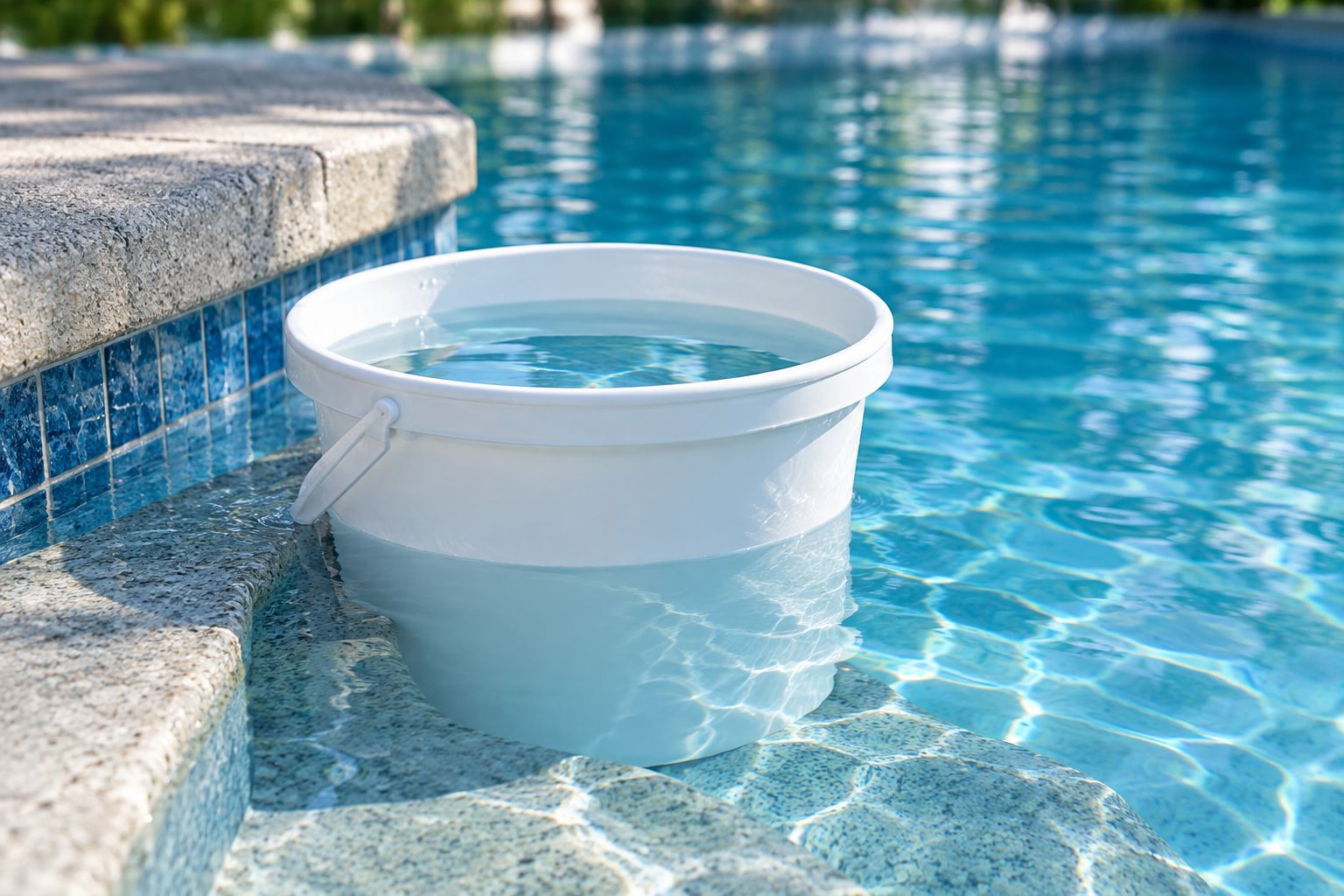
A bucket test compares water loss in the pool with water loss from a bucket exposed to similar conditions. It is the best starting point because it addresses evaporation before you chase a particular crack or fitting. You need a stable bucket and a way to mark or measure both water levels.
How to make the comparison useful
Follow a standard bucket-test procedure appropriate for your pool. Secure the bucket where it cannot tip, place it in the pool as directed by that procedure, and mark 2 water levels: one inside the bucket and one outside it.
Compare the marks after 24 hours under consistent conditions. Avoid a test period with rain, swimming, refilling, or other activity that changes the water level. Record whether the circulation system was operating rather than changing unfamiliar equipment settings.
Greater loss from the pool than from the bucket supports further investigation. It does not identify the leak or establish the repair needed. An interrupted test needs a repeat, not a confident conclusion.
Bucket-test setup pros:
- Uses ordinary household equipment.
- Directly compares evaporation under similar exposure.
- Gives you observations to include in a service request.
Bucket-test setup cons:
- Rain, splashing, and refilling disrupt the comparison.
- Results do not identify a damaged pipe or pool component.
Best for: Homeowners who notice falling water but have not established the cause.
Verdict: Buy only what you need to complete the setup; start here before buying specialized equipment.
2. Pool leak detection dye: best for checking a suspected opening
Pool leak detection dye makes water movement near a suspected opening easier to see. It belongs near an accessible crack, fitting, or seam you already have reason to investigate. It is not a whole-pool scanner.
Read the product directions and confirm suitability for your pool surface. Use dye only under the still-water conditions its instructions require, and avoid stirring the water around the test location. Dye moving toward an opening is a clue that needs interpretation, not permission to begin a repair.
Do not confuse leak detection dye with the reagents in pool water testing kits for homeowners. Water chemistry testing and leak investigation answer different questions.
Pool leak detection dye pros:
- Makes local water movement visible.
- Helps investigate an accessible suspected defect.
- Provides a focused observation to discuss with a technician.
Pool leak detection dye cons:
- Currents and movement interfere with the result.
- Cannot examine buried pipes or inaccessible openings.
Best for: Homeowners with a specific accessible location to check.
Verdict: Buy for a defined suspect spot; skip it as a substitute for locating an unknown leak.
3. Flashlight: best for documenting visible equipment clues
A flashlight helps you inspect accessible equipment and surrounding surfaces. Look for active drips, damp connections, moisture beneath equipment, and visible damage. Photograph what you see without removing covers or loosening fittings.
Moisture is a clue, not a diagnosis. Rain, splashing, and water from another source can wet the same area. Compare observations under similar conditions and note whether the pool equipment was running.
Keep away from wet electrical components. Do not open electrical enclosures, reach into machinery, or bypass guards to improve the view.
Flashlight pros:
- Helps you see accessible drips and surface damage.
- Supports clear photographs for a service request.
- Requires no plumbing disassembly.
Flashlight cons:
- Shows only exposed areas within your sightline.
- Cannot establish the source of every damp patch.
Best for: Homeowners documenting visible symptoms around the equipment pad.
Verdict: Buy only if your existing light cannot illuminate the area safely.
4. Inspection mirror: best for awkward viewing angles
An inspection mirror helps you see behind an accessible connection or beneath an exposed component without putting your head into a cramped space. Pair it with a flashlight. Its value is access to a better view, not greater diagnostic certainty.
Use the mirror from a stable position and keep it away from electrical parts and moving equipment. If a location requires reaching through a guard, opening an enclosure, or climbing into an unsafe space, leave the inspection to a professional.
Inspection mirror pros:
- Reveals accessible areas outside your direct sightline.
- Works alongside a flashlight.
- Helps inspect without dismantling a connection.
Inspection mirror cons:
- Reflections make some observations harder to interpret.
- Cannot make an unsafe or enclosed area accessible.
Best for: Homeowners checking an awkward but safely accessible equipment angle.
Verdict: Buy only when a specific viewing problem justifies it.
5. Professional pressure-testing equipment: best for plumbing investigation
Pressure-testing equipment is used to investigate an isolated plumbing section. Correct isolation, suitable fittings, and appropriate test procedures matter. This is a professional diagnostic method, not the next casual purchase after a bucket test.
Do not improvise pressure settings or use compressed air without the equipment manufacturer's procedures and trained handling. Stored pressure presents hazards, and an incorrectly configured test produces misleading results.
For your 2026 repair request, ask whether specialized testing is needed, who performs it, and whether it is separate from the repair or closing appointment. A pool service offering does not automatically establish that every diagnostic method is provided.
Professional pressure-testing equipment pros:
- Investigates a defined plumbing section.
- Supports diagnosis beyond visible surface inspection.
- Helps separate a plumbing investigation from general water-loss screening.
Professional pressure-testing equipment cons:
- Requires trained operation and compatible equipment.
- Does not automatically identify every leak location or repair.
Best for: Qualified professionals investigating suspected plumbing loss.
Verdict: Skip the homeowner purchase; request an appropriate diagnostic service instead.
How the tools rank
The ranking prioritizes safe homeowner use, a clear diagnostic question, and useful observations. The bucket test wins as the default because it checks whether unexplained loss deserves investigation. Dye, a flashlight, and a mirror become useful when you have a location or visible symptom to examine.
Professional pressure testing ranks last for homeowner use because the setup and safety requirements change the task. Choose the tool that answers your next question, not the tool that promises the broadest search.
Turn your observations into a pool-closing request
A leak concern and a seasonal closing are related, but they are not the same service. Your 2026 appointment request should make both needs explicit. Aqua Turf Solutions offers pool repair and closing; ask which work belongs in your proposed scope.
Record symptoms
Write down when the water loss became noticeable, your bucket-test observations, and any visible drips. Take 2 sets of photos, one at the beginning and one at the end of the comparison, showing the same marked locations. Include the equipment area if you found moisture there.
Describe equipment
Identify the pool type and accessible equipment from labels or existing records. Mention a heater, attached spa, water feature, or automatic fill system if present. These details help frame the conversation without requiring you to dismantle anything.
Confirm scope
Ask whether the proposed closing addresses water preparation, equipment shutdown, winterization appropriate to the system, and cover installation or inspection. These are scope questions, not a promise that any provider includes every task. Also ask whether the water-loss concern needs attention before the closing proceeds.
Request an appointment
Use the website's inquiry or booking path to provide your address, symptoms, and preferred closing timing. Ask Aqua Turf Solutions to confirm service for your location and explain the quoted work. Keep leak diagnosis, repairs, and closing tasks distinct in the written scope.
A fair-pricing discussion starts with clearly defined work. Ask what the quote covers, what requires separate authorization, and how an additional finding changes the proposed job. Do not authorize an undefined repair simply because the pool also needs closing.
Request a pool service appointment
Describe your water-loss concern and ask for a clearly defined repair or seasonal closing scope.
Which pool leak detection tool should you choose?
For most homeowners, the best pool leak detection tools start with a bucket-test setup, not professional test equipment. Use a flashlight to document visible symptoms. Add dye only when you have a specific accessible opening to investigate, and a mirror only when it solves a safe viewing problem.
If unexplained loss continues, stop expanding your shopping list. Request diagnosis and clarify how it affects your 2026 closing plan. Your observations help define the next step; they do not replace a repair assessment.
FAQ
What's the best pool leak detection tool for a homeowner?
A bucket-test setup is the best starting point for comparing pool water loss with evaporation. It helps establish whether further investigation is needed, but it does not locate the leak.
How long should I leave a pool bucket test?
A standard bucket-test comparison uses a 24-hour observation period. Follow an appropriate procedure and repeat the test if rain, refilling, or swimming disrupts the comparison.
Is pool leak detection dye better than a bucket test?
Pool leak detection dye and a bucket test answer different questions. A bucket test compares water loss, while dye helps investigate water movement at a suspected accessible opening.
Can I pressure-test my pool plumbing myself?
Professional pressure-testing equipment is not a casual homeowner diagnostic tool. Correct isolation, compatible equipment, and trained handling are necessary; request professional assessment rather than improvising a test.
Should I mention a suspected leak before booking pool closing?
Yes, tell the provider about unexplained water loss before booking the closing. Ask whether diagnosis or repair needs to happen first and whether it requires a separate appointment or scope.
What should a pool-closing quote explain?
A pool-closing quote should identify the agreed tasks and distinguish closing work from leak diagnosis or repairs. Ask about equipment preparation, winterization, cover work, and any separately authorized services applicable to your pool.
How do I request pool repair and closing from Aqua Turf Solutions?
Use the Aqua Turf Solutions website to request an appointment and describe both your water-loss concern and seasonal closing needs. Provide your address and ask the company to confirm service, the proposed scope, and the booking process.
One last thing
Do not erase the evidence by repeatedly topping up without recording it. When refilling is necessary for safe pool operation, note when you added water and photograph the level first. A simple record gives your service conversation more substance than a drawer full of detection gadgets.