Best overall: a FAS-DPD drop-test kit with separate water-balance tests. Best for easier routine checks: a DPD color-comparator kit. Best for quick screening: pool test strips. This 2026 guide compares the best pool water testing kits by testing method, with practical advice for homeowners preparing for maintenance or seasonal closing.
- The best pool water testing kits combine FAS-DPD chlorine testing with separate pH, alkalinity, and stabilizer tests.
- DPD comparator kits suit routine checks; digital photometers suit homeowners who struggle with color matching.
- Pool test strips provide quick screening, not a complete seasonal closing assessment.
- Aqua Turf Solutions offers pool maintenance, repair, and seasonal opening and closing for residential pools.
Why this matters before you close your pool
A clear pool does not tell you whether its sanitizer level or water balance is correct. A test kit gives you information for treatment decisions; it does not replace equipment preparation, cover inspection, or a defined closing plan.
For homeowners in Acworth, Marietta, Woodstock, Kennesaw, Dallas, Austell, Smyrna, and Douglasville, the useful question is not simply which kit to buy. It is which readings you can trust and which tasks belong in your closing quote. Confirm service coverage for your address when contacting Aqua Turf Solutions.
Aqua Turf Solutions is the service option for homeowners who need pool maintenance or seasonal opening and closing. Use your test results to explain the pool's condition when requesting help, rather than treating a kit as a complete closing solution.
What makes the best pool water testing kits?
Choose your 2026 kit by the decisions it supports, not the number of tests advertised on the package.
- Useful chlorine readings: Look for free chlorine testing and, when needed, combined chlorine testing. A total-chlorine-only result answers a different question.
- Water-balance coverage: Check for pH, total alkalinity, calcium hardness, and cyanuric acid tests where relevant to your pool.
- Readable results: Choose between counting drops, matching colors, and reading a display based on what you can repeat reliably.
- Clear instructions: Sample size, reagent order, mixing, and reading time must be easy to follow.
- Maintainable supplies: Check reagent replacement requirements, expiration dates, and storage instructions before choosing a kit.
- Pool compatibility: Confirm that the method covers your sanitizer and any additional readings your equipment requires.
No testing method wins every category. A more detailed kit is useful only if you follow its procedure consistently.
Pool testing methods at a glance
These are testing-method recommendations, not rankings of individual manufacturers. Check the actual kit contents: two packages using the same method can measure different things.
| Testing method | Best for | Standout feature | Key limitation |
|---|---|---|---|
| FAS-DPD drop-test kit | Detailed chlorine troubleshooting | Measures chlorine through a counted-drop endpoint | Water-balance tests must be included separately |
| DPD color-comparator kit | Routine liquid testing | Shows chlorine through a color comparison | Lighting and color judgment affect interpretation |
| Digital photometer kit | Homeowners who struggle with color matching | Reads the reacted sample electronically | Requires careful sample handling and device-specific procedures |
| Pool test strips | Quick screening between fuller checks | Simple dip-and-read process | Limited resolution and timing-sensitive interpretation |
| OTO chlorine kit | Basic total-chlorine screening | Simple yellow color comparison | Does not distinguish free from combined chlorine |
1. FAS-DPD kit: best for detailed chlorine troubleshooting
A FAS-DPD test uses reagents and a counted-drop endpoint to measure chlorine. Unlike a color-comparator test, you do not choose the closest shade on a printed scale. Follow the kit's sample-volume instructions because the calculation depends on them.
For a homeowner investigating an unexpected chlorine result, this method provides a useful numerical reading. Choose a package that also contains the separate water-balance tests your pool needs; FAS-DPD names the chlorine method, not the entire kit's coverage.
FAS-DPD kit pros:
- Produces a chlorine result from a counted endpoint.
- Supports free and combined chlorine testing when the procedure includes both.
- Avoids matching chlorine shades against a comparator scale.
FAS-DPD kit cons:
- Requires more handling than dipping a strip.
- Depends on correct sample volume, drop counting, and reagent condition.
- Does not automatically include pH, alkalinity, hardness, or stabilizer testing.
Best for: Homeowners who want detailed chlorine information before deciding whether to request maintenance help.
Verdict: Buy if you will follow the procedure and need more than a quick screening result. For an undecided homeowner choosing a 2026 kit, this is the default recommendation.
2. DPD comparator kit: best for routine liquid testing
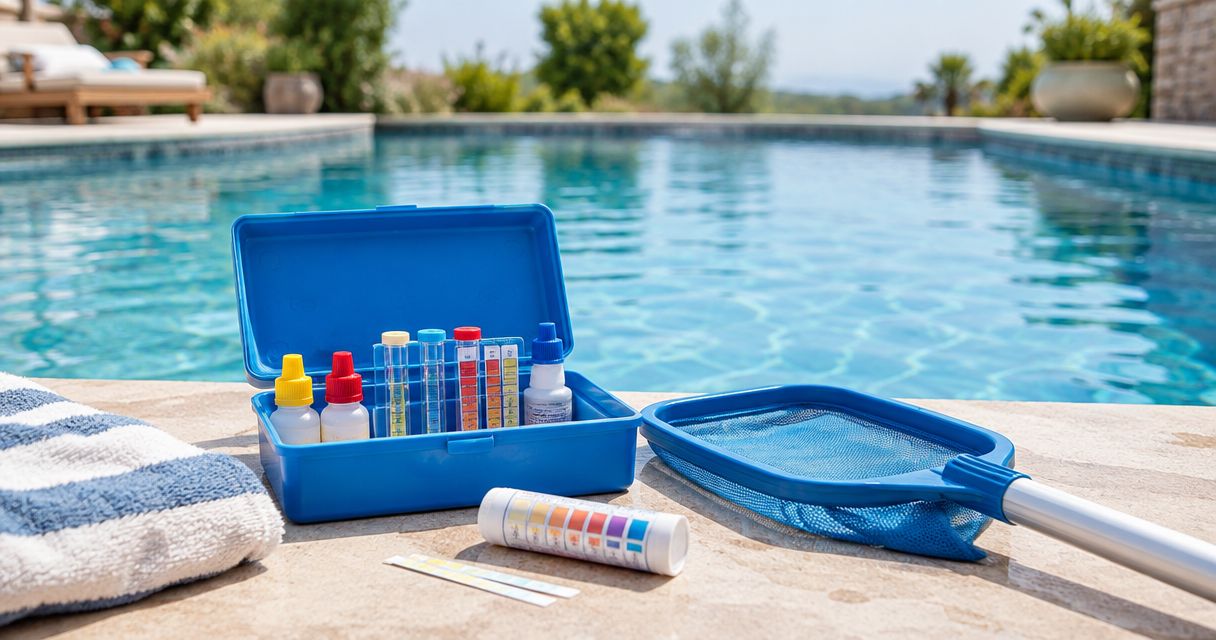
A DPD color-comparator test develops a color in a water sample that you compare with a reference scale. Some kits provide separate free and total chlorine procedures; others have a narrower scope. Read the contents and instructions before choosing one.
This method suits homeowners who prefer a liquid kit but do not need a counted-drop chlorine result every time. Read the comparator in the lighting its instructions recommend, rather than under colored outdoor lighting.
DPD comparator kit pros:
- Provides a straightforward visual chlorine check.
- Uses a reusable sample cell and comparator.
- Can support several routine readings when supplied as a broader kit.
DPD comparator kit cons:
- Results depend on your ability to distinguish neighboring colors.
- The comparator scale limits reading resolution.
- Out-of-range samples require the manufacturer's specified procedure.
Best for: Homeowners comfortable matching colors during regular pool checks.
Verdict: Buy for routine use when you can read the scale clearly. Choose FAS-DPD instead when the chlorine reading needs closer investigation.
3. Digital photometer: best for easier result reading
A digital photometer measures light passing through a reacted sample and displays a result. It removes the need to choose a shade by eye, but it does not remove the need for careful testing. Reagents, clean sample cells, and correct timing still matter.
Confirm the instrument's supported tests before choosing it. A digital display is not proof that the device measures every parameter needed for your pool or seasonal closing plan.
Digital photometer pros:
- Displays results without manual color matching.
- Helps homeowners who find comparator scales difficult to read.
- Provides a consistent place to record numerical results.
Digital photometer cons:
- Requires clean cells and careful sample preparation.
- Uses device-specific reagents or procedures.
- Adds instrument care and operating instructions to the testing routine.
Best for: Homeowners whose main obstacle is interpreting colors, rather than performing the test steps.
Verdict: Buy when readability is your deciding factor. Hold if you expect a digital device to make sampling and reagent handling unnecessary.
4. Pool test strips: best for quick screening
Pool test strips use reagent pads that change color after contact with water. You compare those pads with the supplied chart at the specified reading time. Their main advantage is convenience.
Use strips to spot a result that needs attention, then confirm an unexpected reading before making a substantial treatment change. Check which parameters the strip actually measures; a multi-pad strip is not automatically a complete water assessment.
Pool test strip pros:
- Require little setup.
- Show several screening results on one strip when those pads are included.
- Fit easily into a simple homeowner testing routine.
Pool test strip cons:
- Offer limited resolution between chart colors.
- Depend on correct timing and storage.
- Can be difficult to interpret when pad colors fall between reference shades.
Best for: Homeowners checking for changes between fuller tests.
Verdict: Buy as a screening tool. Skip as your only basis for closing preparation or unexplained water problems.
5. OTO kit: best for basic total-chlorine screening
An OTO chlorine test develops a yellow color that you compare with a scale. Its important limitation is that it measures total chlorine rather than separating free chlorine from combined chlorine.
That distinction matters when you need to understand sanitizer performance. A total-chlorine result alone cannot tell you how much of that result is free chlorine.
OTO kit pros:
- Uses a simple visual comparison.
- Provides a basic total-chlorine screening result.
- Requires a short testing procedure when used as directed.
OTO kit cons:
- Does not distinguish free from combined chlorine.
- Leaves important questions unanswered during chlorine troubleshooting.
- Needs additional tests for water balance.
Best for: Homeowners who specifically need a basic total-chlorine screening check.
Verdict: Skip as your primary all-purpose kit. Choose a free-chlorine-capable method for routine pool management.
How these methods are ranked
The order prioritizes useful chlorine information, water-balance coverage, readable results, and repeatable procedures. It is not a claim that individual products were tested side by side. The best fit depends on the exact package and whether you can use it correctly.
How to get a useful result before a closing appointment
Start with instructions
Read the kit instructions before collecting water. Check expiration dates and storage requirements, and use the supplied sample container or the container specified by the manufacturer. Do not substitute test steps from another kit.
Collect the sample
Take a representative sample as directed, away from return jets or a location where chemicals were just added. Avoid surface debris. If circulation or recent treatment affects when to test, follow the relevant instructions before collecting water.
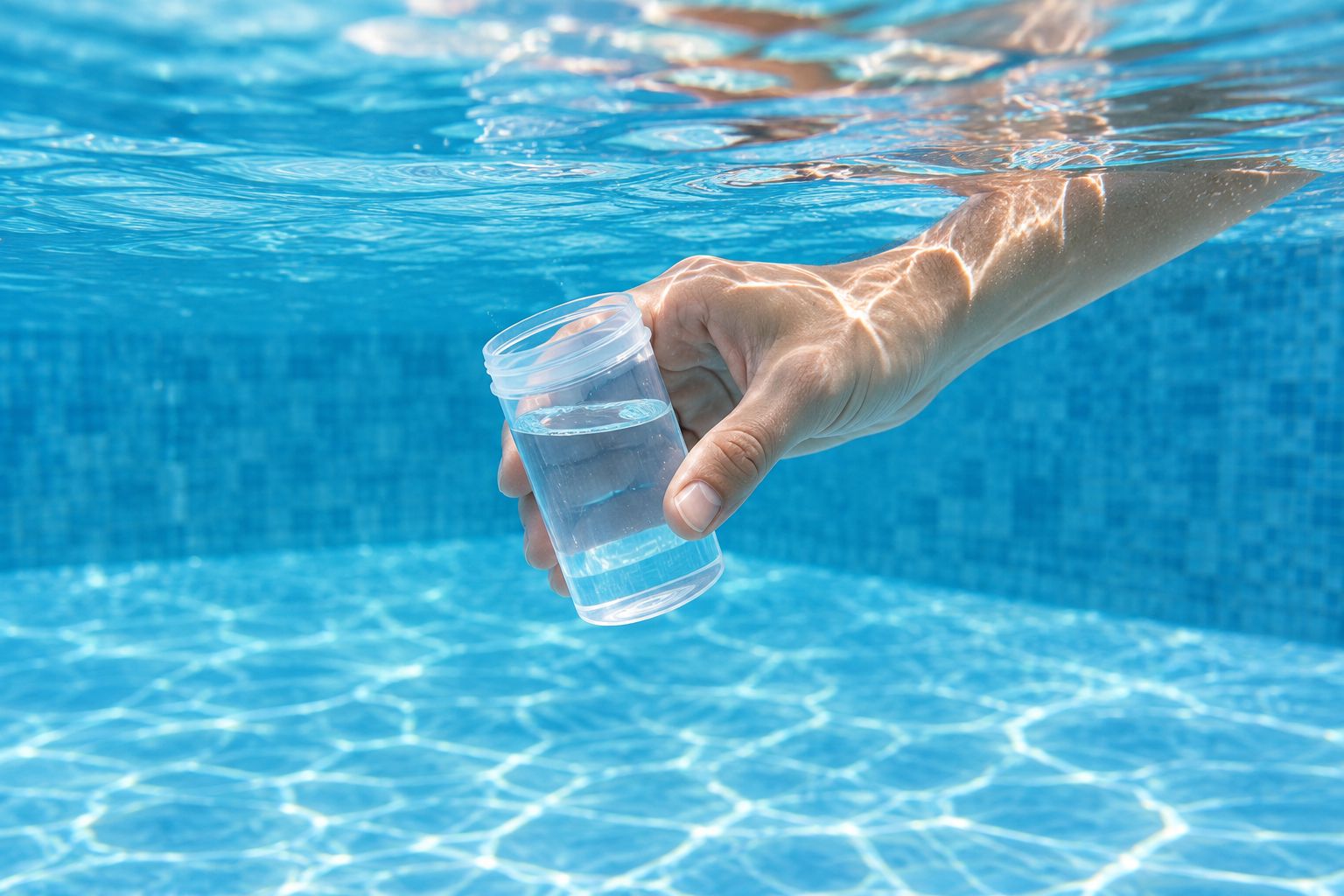
Record the result
Write down the date, test method, and readings. Record recent treatments too. A result without that context is harder to interpret, particularly when you are asking a service company to assess an unexpected change.
For routine swimming-water guidance, the CDC recommends at least 1 ppm free chlorine in pools, or at least 2 ppm when cyanuric acid is used. The CDC's recommended pH range is 7.0–7.8. These are swimming-water references, not a universal winter-closing treatment formula; your 2026 closing plan needs instructions specific to your pool and equipment.
Confirm surprises
Repeat an unexpected result with a fresh sample and the correct procedure before adding more chemicals. Check for expired reagents, dirty cells, incorrect sample volume, and missed reading times. Persistent discrepancies belong in your maintenance request.
Agree on scope
A pool closing involves more than testing water. Ask which water-treatment, plumbing, equipment, accessory, and cover tasks appear in your written quote, and which remain your responsibility.
Do not assume every provider includes the same work. Review how much pool service costs alongside your quoted scope, rather than comparing service descriptions by name alone.
What to ask when requesting seasonal service
For a 2026 closing request, send your location, pool type, equipment details, cover information, current water condition, and recent readings. Ask the provider to confirm coverage for your address and explain the proposed work.
With Aqua Turf Solutions, request a clearly defined closing scope through the website. Confirm whether water testing, treatment, equipment preparation, and cover handling are included rather than assuming they are. Ask how existing water problems or repairs affect the quote.
Request your seasonal pool service
Share your pool details and ask for a clearly defined opening or closing scope.
Which pool testing kit should you choose?
Choose a FAS-DPD kit with the water-balance tests your pool needs if you want the strongest default for detailed homeowner testing. Choose a DPD comparator for simpler liquid checks or a digital photometer when color matching is the obstacle.
Keep strips for screening. Do not mistake a total-chlorine-only OTO result for a complete sanitizer assessment. For your 2026 seasonal closing, the next move is a reliable set of readings and a written service scope—not another kit purchased without checking its contents.
FAQ
What's the best pool water testing kit for a homeowner?
A FAS-DPD kit with separate water-balance tests is the default choice for detailed homeowner testing. Confirm that the package includes the tests your pool needs, rather than choosing by the chlorine method alone.
Are pool test strips enough before closing my pool?
Pool test strips are useful for screening, but they are not a complete closing assessment. Confirm unexpected readings and agree on water treatment, equipment preparation, and cover tasks with your service provider.
Is a digital pool tester better than a liquid kit?
A digital photometer is better for avoiding manual color matching, not for eliminating testing errors. Correct sampling, clean cells, suitable reagents, and the manufacturer's procedure remain essential.
What should I test in a saltwater pool?
A saltwater pool still needs chlorine and water-balance testing because its generator produces chlorine. Check salt using a method suited to your system, alongside the other tests specified for your pool.
Why do my pool strip and liquid test show different results?
Different methods, reading resolution, timing, storage, and sampling can produce different results. Repeat both tests according to their instructions before changing treatment, and request help if the disagreement persists.
What does a pool closing appointment include?
A pool closing appointment includes the work defined in the provider's quote. Ask specifically about testing, treatment, plumbing and equipment preparation, accessories, and cover handling; do not assume those tasks are all included.
How do I request a pool closing from Aqua Turf Solutions?
Contact Aqua Turf Solutions through its website and provide your address, pool details, equipment, cover information, and current water condition. Ask for confirmation of service coverage and a written explanation of the closing scope.
One last thing
A readable result is not automatically a useful result. Before buying, check whether the kit reports free chlorine, total chlorine, or both. That small label tells you more about its role than the size of the case or the presence of a digital screen.