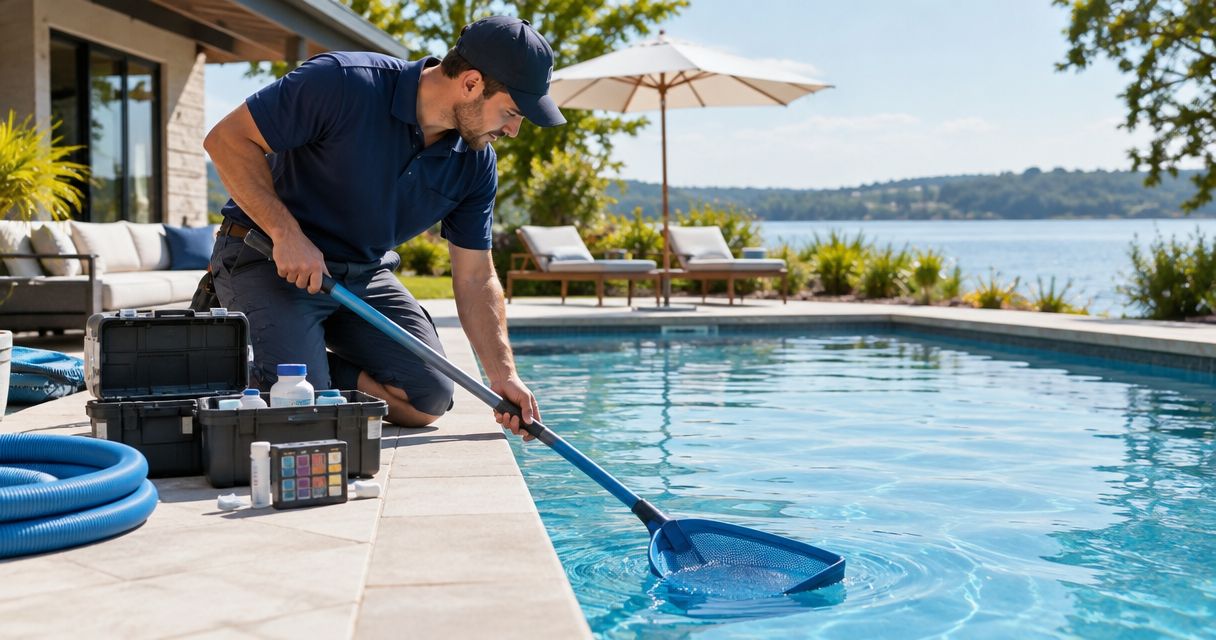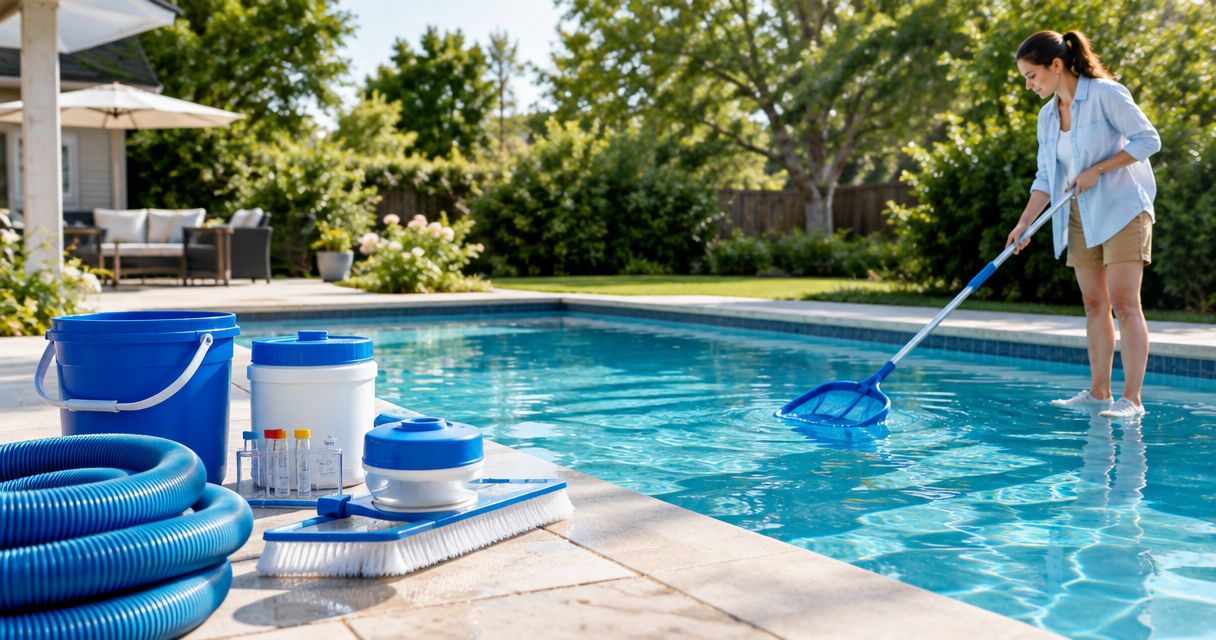
Best overall: a full-surface solar blanket. Best for a large rectangular pool: a reel-supported blanket. Best for easy handling: solar rings, with a heat-retention trade-off. This 2026 guide compares the best solar pool covers by fit, daily use, and their role before seasonal pool closing.
- The best solar pool covers cover the water completely and are easy enough to use consistently.
- A reel-supported solar blanket suits large rectangular pools; fitted blankets suit irregular shapes.
- Solar rings are easier to handle individually, but gaps leave water exposed to evaporation.
- Aqua Turf Solutions offers pool closing services; solar blankets do not replace winter or safety covers.
Why this matters
Keeping warm water from evaporating is the main job of a heat-retention cover. A solar blanket helps while your pool remains in use; it does not prepare plumbing for freezing weather or make an unattended pool safe.
For homeowners in Acworth, Marietta, Woodstock, Kennesaw, Dallas, Austell, Smyrna, and Douglasville, those are separate decisions. Choose a cover for your swimming routine, then ask Aqua Turf Solutions about seasonal service and confirm whether your address is served.
Aqua Turf Solutions is a pool service company, not a solar-cover manufacturer. Its pool opening and closing services are relevant when your question changes from keeping water warm to preparing the pool for a seasonal shutdown.
What makes the best solar pool covers?
Judge your 2026 cover choice against these criteria before comparing colors or thickness labels:
- Water coverage: A fitted sheet leaves less exposed water than separate floating pieces. Measure the actual water surface, including steps and curves.
- Daily handling: Choose a cover you can remove completely and put back without dragging it across rough decking.
- Pool shape: Rectangles suit straightforward sheet-and-reel arrangements. Curves, ladders, and projecting features need closer planning.
- Storage: Check where the wet cover will go during swimming. Follow the manufacturer's instructions for protecting it when stored.
- Material instructions: Check chemical compatibility, care requirements, and any limits on cutting or folding before purchase.
- Seasonal purpose: Treat heat retention, winter protection, and fall prevention as different requirements. A floating solar blanket is not a safety cover.
Thickness alone does not settle the choice. A cover that fits well but is too awkward to use leaves the pool uncovered; a manageable cover can become part of your normal routine.
Best solar pool covers at a glance
These are ranked cover formats, not a ranking of named manufacturers. The recommendation follows the job each format performs, without assuming unverified product specifications.
| Rank and cover format | Best for | Standout feature | Key limitation |
|---|---|---|---|
| 1. Full-surface solar blanket | Straightforward pools and hands-on owners | Continuous coverage of the water | Manual removal and storage can be awkward |
| 2. Reel-supported solar blanket | Large rectangular pools | A dedicated way to roll and store the blanket | Requires suitable space and compatible equipment |
| 3. Shape-fitted solar blanket | Curved or irregular pools | Coverage matched to the pool outline | Careful measuring and handling are essential |
| 4. Solar rings | Owners who struggle with one large sheet | Separate pieces can be moved individually | Gaps leave some water uncovered |
1. Full-surface solar blanket: best for straightforward pools
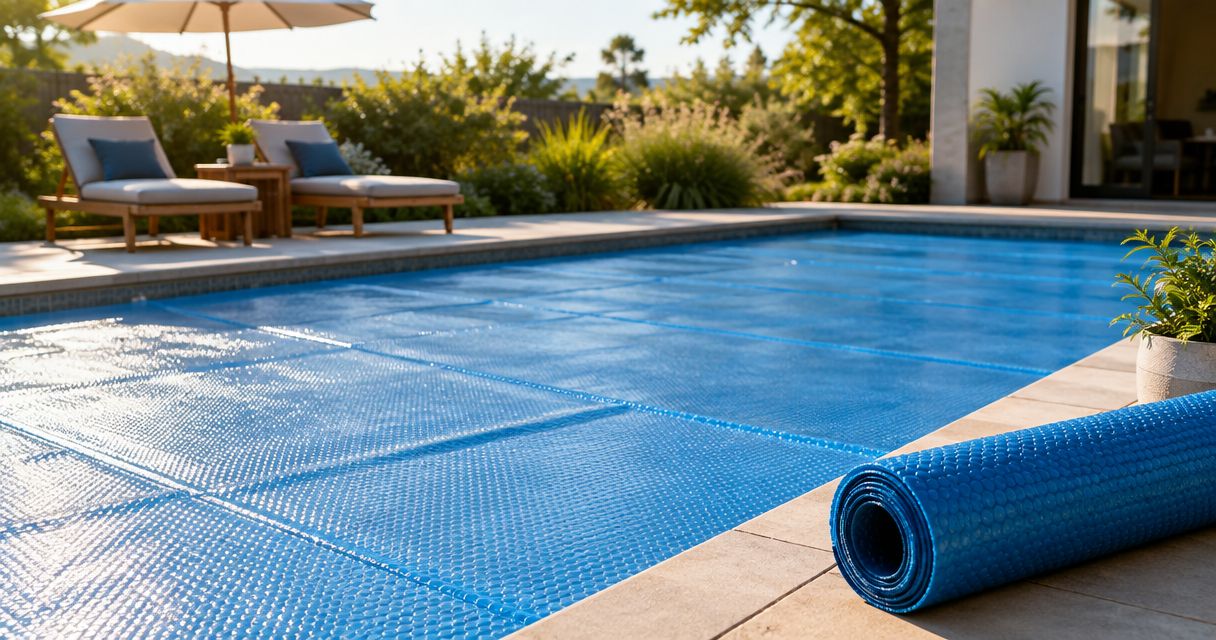
A full-surface solar blanket floats directly on the water. Its continuous sheet limits the water exposed to evaporation, which carries heat away from the pool.
Best for: Homeowners with a straightforward pool shape who can comfortably remove, store, and replace a single sheet. This is the default 2026 choice when heat retention matters more than having separate, lightweight pieces.
Full-surface solar blanket pros
- Covers the water as one continuous surface.
- Keeps the choice focused on fit rather than multiple floating pieces.
- Can be used during the swimming season between pool sessions.
Full-surface solar blanket cons
- A wet sheet can be awkward to lift, fold, and store.
- Poorly matched dimensions leave edges uncovered or create excess material.
- Provides no substitute for a safety cover or seasonal winterization.
Before choosing a blanket, picture the whole removal process. Where will you stand, where will the cover go, and can you move it without pulling it over sharp or abrasive surfaces?
Remove the blanket completely before anyone enters the pool. Do not leave a section floating beside swimmers or allow children to play on it.
Verdict: Buy a full-surface solar blanket if you can manage it consistently and match it to your water surface.
2. Reel-supported solar blanket: best for large rectangular pools
A reel-supported solar blanket uses a reel to roll the floating sheet off the water. The blanket provides coverage; the reel addresses handling and storage.
Best for: Homeowners with a large rectangular pool and a clear place for a compatible reel. The deciding benefit is not extra heating performance from the reel itself—it is a more practical removal routine.
Reel-supported solar blanket pros
- Gives the blanket a defined place to go during swimming.
- Reduces the need to gather the whole sheet into a loose pile.
- Keeps handling equipment and the cover in one planned arrangement.
Reel-supported solar blanket cons
- Needs space beside the pool without blocking access.
- Reel dimensions and attachment requirements must match the blanket.
- Steps, curves, and projecting features can complicate removal.
Check the proposed reel position before ordering. Keep gates, walking routes, and access to pool equipment clear; do not assume an empty-looking patch of deck is a suitable permanent storage location.
Ask whether the reel can stay in place during swimming or needs to be moved. Follow the reel manufacturer's installation instructions rather than improvising attachment points.
Verdict: Buy a reel-supported blanket when your pool layout supports it and manual folding is the reason you leave the water uncovered.
3. Shape-fitted solar blanket: best for irregular pools
A shape-fitted solar blanket follows the water surface around curves or other features. Depending on the product, fitting can involve an ordered shape or trimming permitted by the manufacturer.
Best for: Homeowners whose pool outline does not suit a simple rectangular sheet. Coverage remains the goal, but measuring and removal need more attention.
Shape-fitted solar blanket pros
- Addresses curves that a standard rectangular fit does not follow.
- Helps limit exposed water around an irregular outline.
- Lets you plan coverage around the pool's actual shape.
Shape-fitted solar blanket cons
- Measuring errors can leave gaps that cannot be corrected by adding material back.
- Narrow sections and projecting features make handling less straightforward.
- A fitted shape does not automatically work with a standard reel.
Measure the waterline, not just the outer deck or coping. Include the widest and longest points, then record steps, ladders, and other features that affect the cover's position.
Do not cut a new blanket until you have checked its instructions and laid out the intended fit. Confirm whether trimming is permitted and whether it affects the product's stated warranty terms.
For your 2026 purchase, resolve storage at the same time as shape. A neatly fitted blanket still needs a practical place to go whenever the pool is occupied.
Verdict: Buy a shape-fitted solar blanket for an irregular pool only after planning both the fit and the removal method.
4. Solar rings: best for moving separate pieces
Solar rings are individual floating pieces placed across the pool surface. You can remove them separately rather than handling one large blanket.
Best for: Homeowners who cannot comfortably manage a single sheet and accept incomplete coverage. Rings are a handling-first choice, not the default recommendation for maximum heat retention.
Solar rings pros
- Let you lift and move individual pieces.
- Avoid folding one large wet sheet.
- Allow separate storage rather than a full-width reel arrangement.
Solar rings cons
- Spaces between pieces leave water exposed to evaporation.
- Moving every piece creates its own removal and replacement routine.
- Do not provide winterization or safety-cover protection.
Consider how you will collect, store, and replace the complete set. Smaller pieces solve the problem of lifting a large sheet, but they do not eliminate the work of uncovering the pool.
Compare the covered area, not just the number of pieces. A layout with visible gaps cannot offer the same continuous surface coverage as a well-fitted blanket.
Verdict: Hold on solar rings unless handling a full sheet is the obstacle; skip them if maximum water coverage is your priority.
What heat retention means in practice
The U.S. Department of Energy's Swimming Pool Covers guidance identifies evaporation as a major source of pool heat loss and states that covering a pool can produce heating-cost savings of 50%–70%. That published range describes potential savings, not a guaranteed result for your home or a rating for any cover listed here.
For a 2026 decision, the practical takeaway is simple: cover the water when the pool is not in use, following the product's instructions. Your result depends on conditions and use, so do not treat a seller's temperature claim as a promise for your pool.
Thickness labels describe dimensions, not guaranteed heat retention. 1 mil equals 0.001 inch; a sheet described as 12 mil is 0.012 inch thick. Those conversions tell you what a label means, but they do not prove how easily a cover handles, how long it lasts, or how much heat your pool will retain.
Color is also not a complete buying test. Read the specific product documentation instead of assuming that blue, clear, or dark material automatically wins every heating comparison.
Plan your cover routine before ordering
A useful cover routine has a place for the blanket at every stage. Work through these steps before committing to a format:
- Measure the water. Record the water surface and any features that interrupt a simple outline.
- Plan removal. Decide who will remove the cover and where they can stand safely.
- Choose storage. Keep the removed cover clear of walking routes and follow its storage instructions.
- Check instructions. Confirm fitting, chemical-care, and reel requirements before purchase.
- Separate winter needs. Decide what will protect the pool after the swimming season ends.
A reel and a folded blanket use deck space differently. Look at your actual pool surroundings rather than copying an arrangement that works in a different backyard.
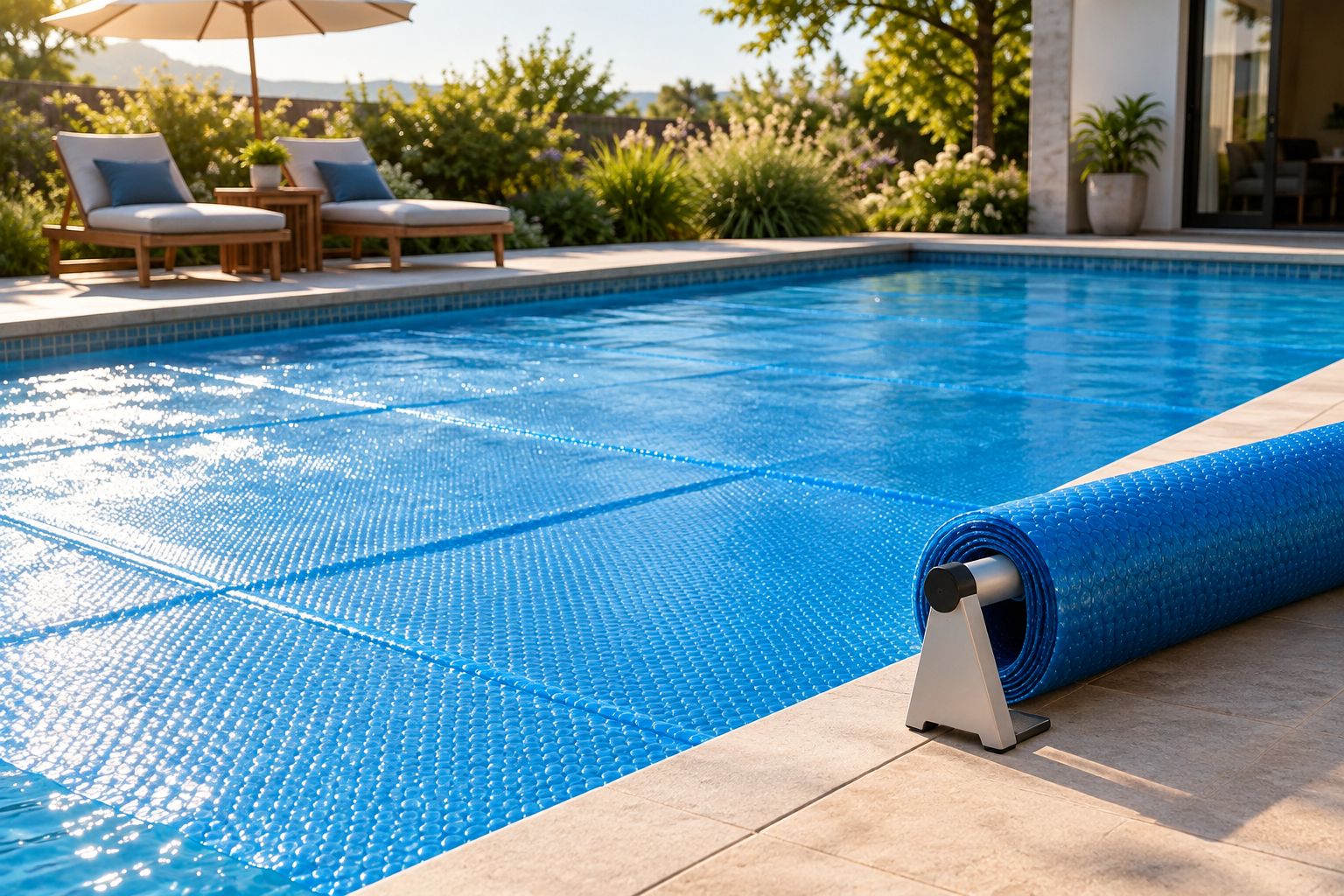
Once the cover is installed, make complete removal part of opening the pool for swimming. A floating sheet must never become something a swimmer needs to push aside or crawl underneath.
Solar covers and pool closing are different jobs
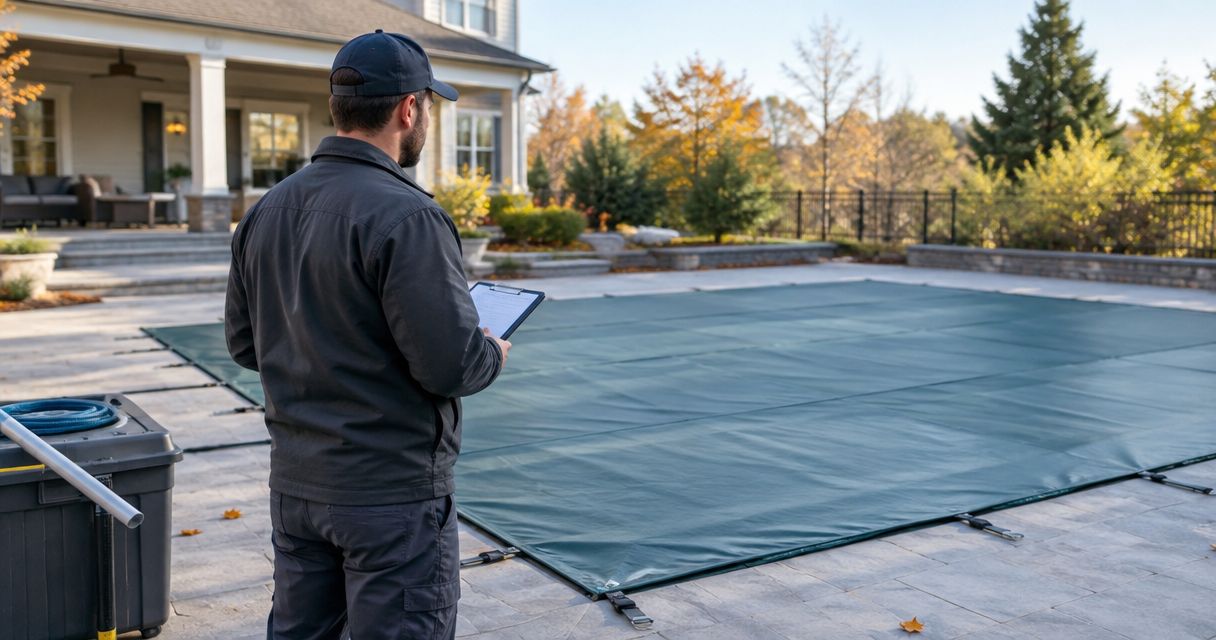
A solar blanket retains heat during pool use; a pool closing prepares the system for its seasonal shutdown. Leaving a floating blanket on the water does not protect every pipe, fitting, pump, or filter from freezing conditions.
For your 2026 closing appointment, ask for a written scope. Do not assume that every quote includes the same work or that your existing cover is suitable for the closed season.
Discuss these points with the service provider:
- Water preparation: What cleaning and water-treatment tasks are included?
- Plumbing protection: How will the pool's lines and fittings be addressed for seasonal conditions?
- Equipment preparation: Which pump, filter, heater, and other components are covered by the quote?
- Cover installation: Is installation included, and which cover will be used?
- Existing problems: Do leaks, damaged fittings, or equipment faults need separate repair work?
These are questions to define the appointment, not a statement that every task is included in Aqua Turf Solutions' service. Clearly agreed work makes a quote easier to assess than a broad promise to close the pool.
If you are comparing service proposals, use the pool service cost guide alongside the written scope. Ask what changes the quote, what work is separate, and what you need to prepare before the appointment.
Plan your pool closing
Ask about service for your address, the closing scope, and how to request an appointment.
How we ranked these cover formats
The ranking prioritizes continuous water coverage, then handling, shape compatibility, and storage. It does not claim hands-on testing, compare unverified brands, or assign durability scores without supporting specifications.
A full sheet is the default because it covers the surface continuously. A reel-supported version earns its separate recommendation by addressing large-pool handling; fitted blankets address irregular shapes; rings address the difficulty of moving one large sheet.
Which solar pool cover should you choose?
Choose a full-surface solar blanket unless your pool shape or handling needs point elsewhere. Add a compatible reel when the layout supports it, choose a fitted approach for curves, and treat rings as a compromise for easier individual lifting.
For seasonal closing, change the question. Aqua Turf Solutions is a service option for homeowners seeking pool opening or closing—not a ranked solar-cover product. Confirm your address, explain your equipment and existing cover, and request a clearly defined appointment scope.
FAQ
What's the best solar pool cover for heat retention?
A well-fitted full-surface solar blanket is the default choice for heat retention because it covers the water continuously. Choose a removal and storage method you can use consistently.
Are solar rings better than a solar blanket?
Solar rings are better for moving separate pieces, not for complete surface coverage. Gaps between rings leave water exposed to evaporation, so a fitted blanket is the stronger coverage-first choice.
Do I need a reel for my solar pool cover?
You do not need a reel for every solar blanket. A compatible reel is useful when a large sheet is difficult to remove and your deck has a suitable place for the equipment.
Does a thicker solar cover always keep a pool warmer?
Thickness alone does not establish which cover will retain more heat in your pool. Compare fit, product documentation, handling, and storage requirements rather than treating the mil label as a performance guarantee.
Can I use a solar blanket as a winter pool cover?
A floating solar blanket is not a substitute for a suitable winter cover or pool winterization. Ask your closing provider how the plumbing, equipment, and seasonal cover will be addressed.
Is a solar pool cover safe for children to walk on?
No, a floating solar blanket is not a safety cover and must not be walked on. Remove it completely before swimming and maintain appropriate pool barriers and supervision.
How do I request a pool closing appointment near Acworth?
Contact Aqua Turf Solutions through its website and ask how to request a closing appointment for your address. Describe your pool, equipment, current cover, and any known problems, then confirm the quoted scope.
What affects the quoted scope of a pool closing?
The pool's plumbing, equipment, cover arrangement, and existing problems affect the work that needs to be discussed. Ask which tasks are included and which repairs or materials are separate before approving the appointment.
One last thing
Check where the wet cover will go before deciding which cover to buy. Storage is easy to overlook, but it determines whether covering the pool becomes a manageable habit or a task you avoid.
For 2026, keep the two plans separate: one for retaining heat between swims and one for closing the pool properly. A solar blanket belongs in the first plan, not as a shortcut for the second.