Best overall for surface leaves: a shallow manual skimmer net. Best for heavy leaf cleanup: a deep-bag leaf rake. Best for pollen: a fine-mesh net. This 2026 guide compares the best pool skimmers by cleanup task and explains what skimming does—and does not—replace before a seasonal pool closing.
- The best pool skimmers match the debris: shallow nets for surface leaves, deep leaf rakes for larger loads.
- Fine-mesh nets collect smaller floating debris but need frequent emptying during heavy cleanup.
- Aqua Turf Solutions offers residential pool maintenance and seasonal opening and closing services.
- Skimming removes debris; it does not replace water treatment, equipment checks, or winterization.
Why this matters before pool closing
Leaves are easier to collect while floating than after they settle across the pool floor. A useful skimmer helps you keep up with that cleanup, but buying another tool does not resolve cloudy water, equipment trouble, or an unclear closing plan.
For homeowners in Acworth, Marietta, Woodstock, Kennesaw, Dallas, Austell, Smyrna, and Douglasville, the practical question is: do you need a better cleanup tool, or help preparing the pool for the season? Contact Aqua Turf Solutions to request an appointment and confirm service for your address. Ask for the proposed closing scope rather than assuming every preparation task is included.
What makes the best pool skimmers?
Use these criteria to choose your skimmer in 2026. The right design depends on where debris collects and how you intend to remove it.
- Debris size: Leaves need room in the bag; pollen and small particles need tighter mesh.
- Debris location: Floating leaves suit a shallow net. Settled leaves call for a leaf rake designed for underwater collection.
- Handling: Choose a frame and pole combination you can control from the deck without overreaching.
- Pool-surface compatibility: Check the manufacturer's instructions for your liner or pool finish, especially before working along the floor.
- Equipment fit: Wall-mounted and powered options require compatibility checks that a manual net does not.
- Emptying and upkeep: A skimmer is useful only if you can clear its net, basket, or collection tray without unnecessary difficulty.
Best pool skimmers at a glance
These are ranked skimmer types, not endorsements of individual models. Each type solves a different cleanup problem; none handles every part of pool care.
| Rank and option | Best for | Standout feature | Key limitation |
|---|---|---|---|
| 1. Shallow manual skimmer net | Everyday floating leaves | Direct control over surface cleanup | Limited capacity for heavy leaf loads |
| 2. Deep-bag leaf rake | Bulk leaves and settled debris | Deeper bag holds larger collections | A full bag becomes harder to lift |
| 3. Fine-mesh skimmer net | Pollen and small floating particles | Tighter mesh captures smaller debris | Mesh loads up during dense cleanup |
| 4. Wall-mounted pool skimmer | Routine collection through existing equipment | Collects surface debris through pool circulation | Performance depends on water level and circulation |
| 5. Floating robotic skimmer | Reducing hands-on surface passes | Moves across the surface to collect debris | Does not replace floor cleaning or seasonal preparation |
1. Shallow manual skimmer net: best for everyday surface leaves
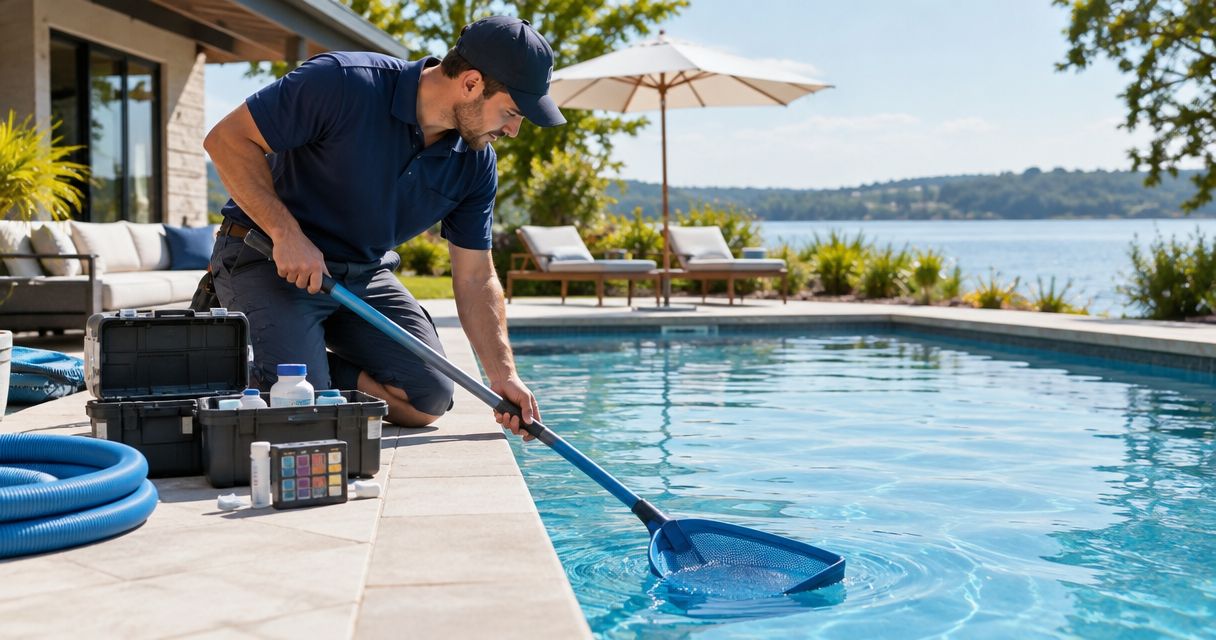
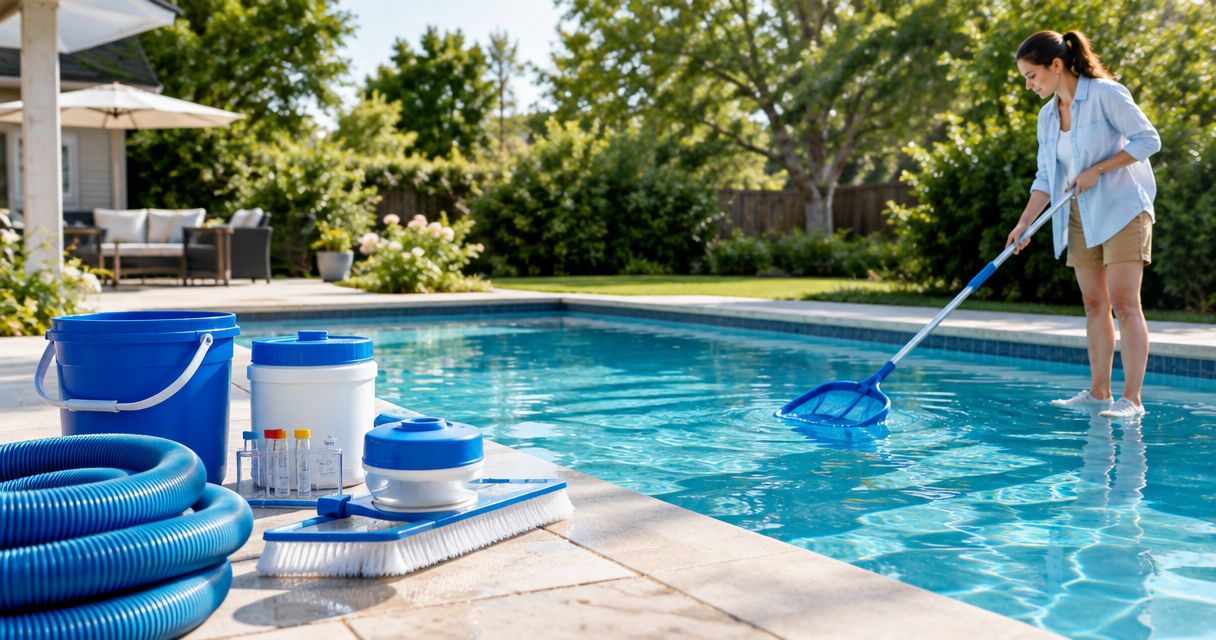
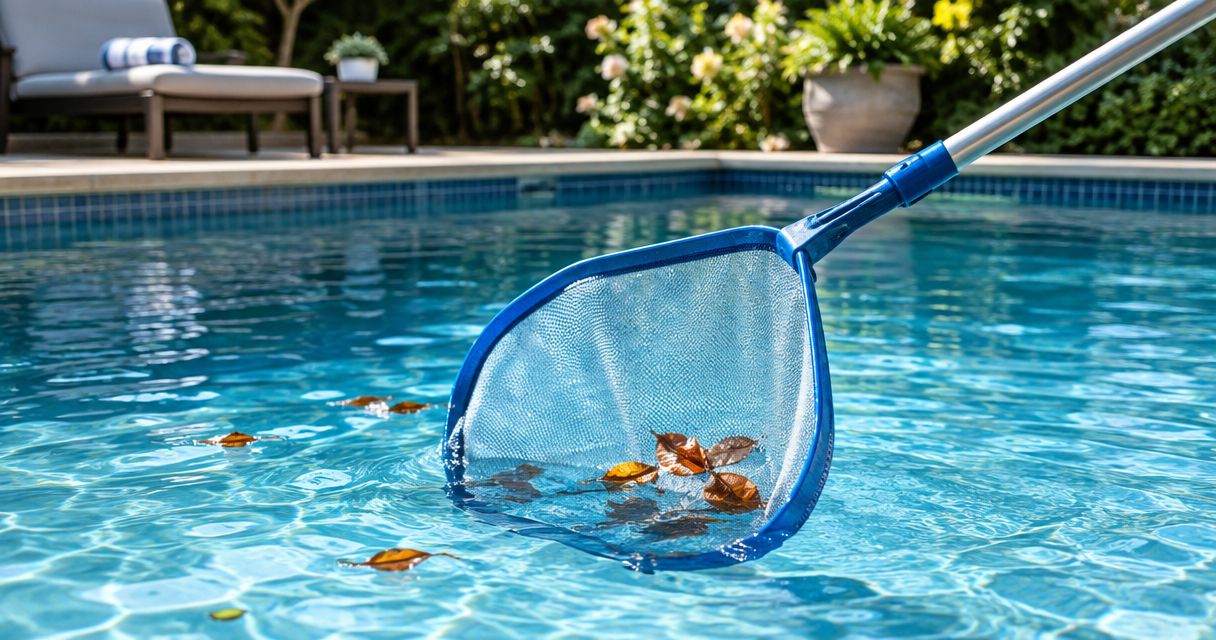
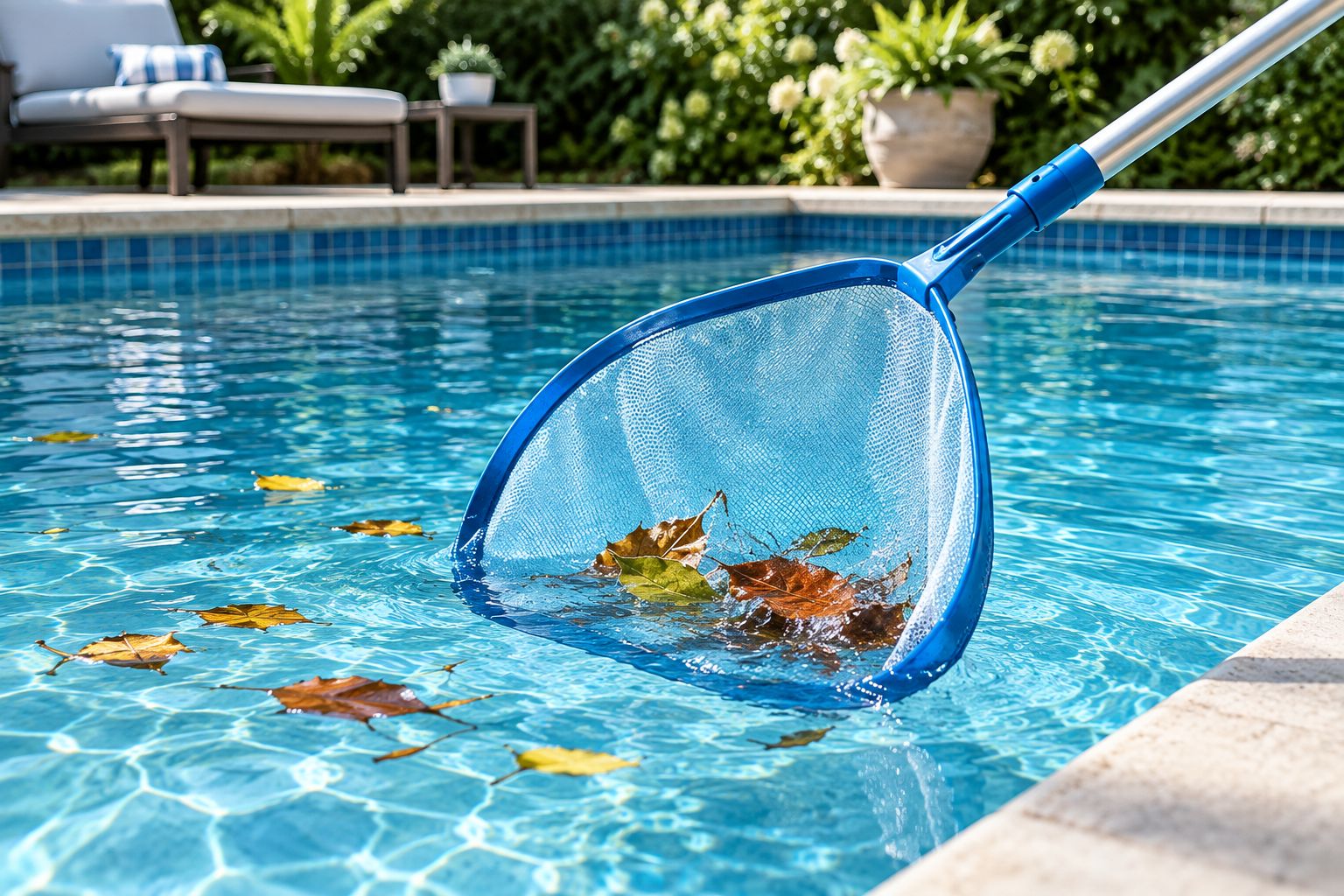
A shallow manual skimmer net lets you collect floating leaves directly from the pool edge. Its relatively flat shape makes it straightforward to sweep the surface and tip debris out between passes.
This is the default choice when your main problem is scattered leaves, insects, or other visible floating debris. Check the net's attachment against your pole before choosing a replacement head.
Shallow manual skimmer net pros:
- Gives you direct control around steps and edges.
- Works without a powered cleaning system.
- Makes collected debris easy to see and empty.
Shallow manual skimmer net cons:
- Requires hands-on cleanup.
- Holds less bulky debris than a deep leaf rake.
- Does not scrub surfaces or treat pool water.
Best for: Homeowners who want a simple tool for regular surface passes.
Verdict: Buy a shallow manual net when floating leaves are your main cleanup problem. Skip it as your only tool if the pool floor is already covered with leaves.
2. Deep-bag leaf rake: best for heavy leaf cleanup
A deep-bag leaf rake collects bulkier loads than a shallow net. Designs intended for floor use let you gather settled leaves as well as floating debris, subject to the manufacturer's surface-compatibility instructions.
The bag is the advantage—and the handling trade-off. Lift collected debris carefully rather than dragging a loaded frame across the pool finish or forcing the pole through resistance.
Deep-bag leaf rake pros:
- Provides more collection space for bulky leaves.
- Helps gather settled debris with a suitable design.
- Lets you remove leaves before tackling finer cleanup.
Deep-bag leaf rake cons:
- Becomes harder to handle as the bag fills.
- Requires careful use near liners, steps, and fittings.
- Is less convenient for a quick surface sweep.
Best for: Homeowners dealing with substantial leaf accumulation before opening or closing.
Verdict: Buy a deep leaf rake for bulk removal. Empty it before the load becomes difficult to control; capacity is not a reason to lift an overloaded bag.
3. Fine-mesh skimmer net: best for pollen and small debris
A fine-mesh net targets floating particles that pass through a coarser net. It is useful when the pool surface looks dusty even after you have removed the larger leaves.
Mesh size varies by product, so inspect the stated purpose rather than relying on a fine-mesh label alone. Removing visible particles is cleanup, not a substitute for checking water chemistry or filtration.
Fine-mesh skimmer net pros:
- Collects smaller floating debris than a coarse net.
- Helps finish cleanup after bulk leaf removal.
- Allows targeted passes across visible surface patches.
Fine-mesh skimmer net cons:
- Needs frequent clearing when debris is dense.
- Is inefficient for large piles of leaves.
- Does not resolve every cause of cloudy water.
Best for: Homeowners whose main complaint is pollen or small floating particles.
Verdict: Buy fine mesh for fine debris. Skip it as the first tool for a leaf-covered pool; remove the bulky material first.
4. Wall-mounted pool skimmer: best for routine collection
A wall-mounted skimmer draws surface water into the pool's circulation system and catches debris in a basket. It is part of the equipment setup, not simply another handheld accessory.
For an existing pool, start by checking the basket, water level, and visible obstructions. A cracked housing, damaged fitting, or continuing suction problem belongs in an equipment assessment rather than a blind replacement purchase.
Wall-mounted pool skimmer pros:
- Collects floating debris while suitable circulation operates.
- Uses a basket that can be removed for cleaning.
- Complements manual cleanup between maintenance tasks.
Wall-mounted pool skimmer cons:
- Depends on appropriate water level and circulation.
- Cannot reliably collect every leaf across the pool.
- Replacement requires matching the pool and plumbing arrangement.
Best for: Homeowners maintaining a pool's existing surface-collection system.
Verdict: Hold on replacement until the problem is identified. A blocked basket and a damaged skimmer require different responses.
5. Floating robotic skimmer: best for reducing manual passes
A floating robotic skimmer travels across the water surface and collects debris in an onboard compartment. Power source, navigation, collection design, and operating requirements differ by model.
Consider this category when you want less hands-on surface work, not because you expect a machine to complete a pool closing. Verify how a model interacts with your pool's steps, fittings, and cover before choosing it.
Floating robotic skimmer pros:
- Reduces the need for repeated manual surface passes.
- Collects debris in a removable compartment.
- Targets floating material rather than settled dirt.
Floating robotic skimmer cons:
- Still requires emptying and maintenance.
- Does not replace floor or wall cleaning.
- Compatibility and operating limits vary by model.
Best for: Homeowners prioritizing reduced hands-on surface cleanup.
Verdict: Hold until you confirm the model fits your pool and routine. Buy for a defined surface-cleaning task, not as a replacement for complete maintenance.
How these skimmer types are ranked
The 2026 ranking prioritizes task fit, straightforward handling, compatibility, and upkeep. The shallow manual net takes the default position because it directly addresses everyday floating leaves without depending on powered equipment.
The other positions are use-case choices, not claims that one category outperforms every alternative. Heavy leaves, pollen, circulation problems, and reduced manual effort each call for a different decision.
Clear debris before your closing appointment
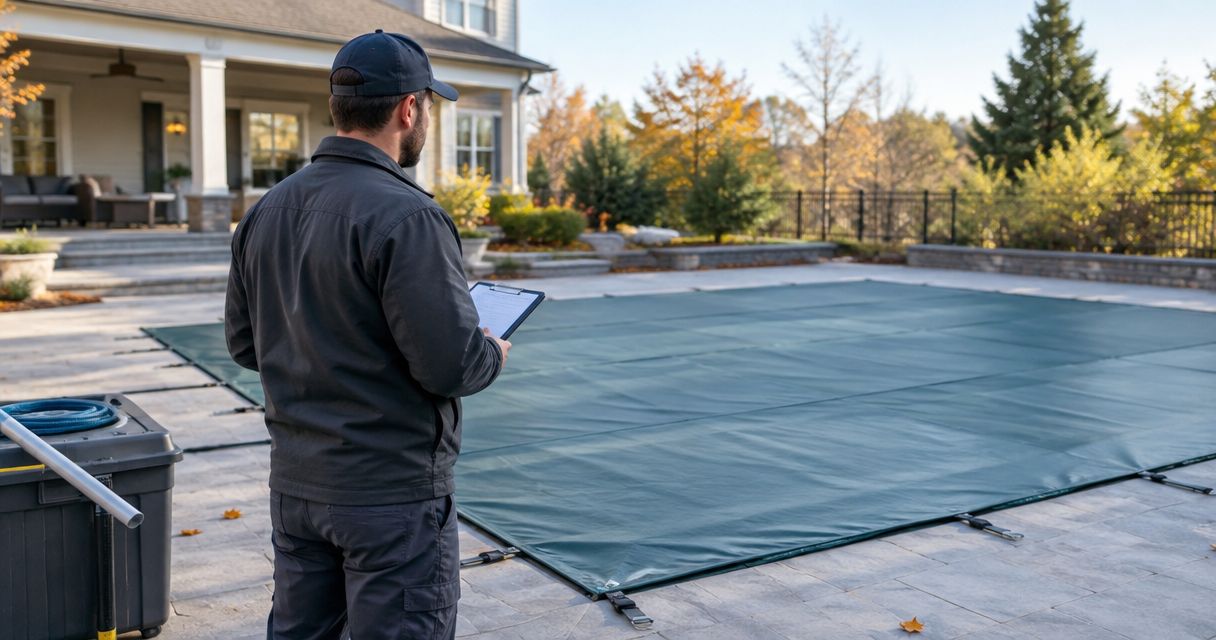
A clean-looking surface does not mean the pool is ready to close. Use this sequence to organize cleanup, then confirm which tasks belong to you and which belong in the quoted service.
Collect leaves
Remove floating leaves with a shallow net, or use a deep leaf rake when the load is bulky. Gather settled leaves only with a tool suitable for your pool surface.
Work from stable footing on the deck. Do not stretch beyond a controlled reach just to finish a pass.
Clear baskets
Follow the equipment instructions before opening or removing baskets. Inspect accessible skimmer baskets for leaves and visible damage, and report anything that does not fit or seat correctly.
Do not reach into equipment that is operating or open a pressurized filter. If you are unsure about shutdown procedures, leave that work to a qualified pool professional.
Report problems
Tell the service provider about leaks, unusual equipment noise, damaged cover hardware, or recurring cloudy water. Describe what you observed rather than guessing at the repair.
Aqua Turf Solutions offers pool repair, maintenance, and seasonal opening and closing. Ask whether an identified repair needs a separate assessment before the closing work begins.
Confirm scope
For your 2026 closing request, ask whether the proposed work addresses water preparation, equipment winterization, plumbing protection, accessories, and cover installation. These are scope questions, not a statement that every task is included.
Confirm who supplies any required materials and what preparation you must finish beforehand. Keep that written scope with the appointment details.
What affects the pool-closing quote?
The useful comparison is the work proposed, not a vague promise of a complete closing. Pool design, equipment configuration, cover condition, cleanup needs, and separate repairs all help define the job you are asking a provider to quote.
Use the pool service cost guide to frame your questions, then request a scope for your own pool. Ask what is included, what is excluded, and how additional work would be approved.
Aqua Turf Solutions is a residential pool service option for homeowners who need maintenance or seasonal opening and closing. For a 2026 appointment request, provide your town, pool type, equipment concerns, cover details, and current debris condition; confirm service for your address before making plans.
Request your pool-closing scope
Describe your pool, debris conditions, and equipment concerns when requesting an appointment.
Which pool skimmer should you choose?
Choose a shallow manual net if you are undecided and mainly need to remove floating leaves. Choose a deep leaf rake for bulk cleanup, and fine mesh for smaller particles after the leaves are gone.
Check existing wall-mounted equipment before replacing it. Consider a floating robotic skimmer only when reducing manual surface work is your specific goal. None of these choices replaces a defined seasonal closing plan.
FAQ
What's the best pool skimmer for everyday leaves?
A shallow manual skimmer net is the default choice for everyday floating leaves. A deep-bag leaf rake is better suited to bulk leaf collection or settled leaves when its design is compatible with your pool surface.
Is a leaf rake better than a flat skimmer net?
A deep leaf rake is better for bulky leaf loads; a flat skimmer net is more convenient for routine surface passes. Choose by debris volume and location rather than treating either design as universally better.
What pool skimmer should I use for pollen?
Use a fine-mesh skimmer net for visible floating pollen and small debris. Remove larger leaves first and clear the mesh as it fills; persistent water problems also need chemistry and filtration checks.
Does a robotic skimmer clean the pool floor?
A floating robotic skimmer targets surface debris, not pool-floor cleaning. Check the model's stated function and do not confuse a surface skimmer with a robotic floor cleaner.
Should I remove leaves before closing my pool?
Yes, remove leaves as part of preparing the pool for closing. Confirm whether cleanup is included in your appointment or must be completed beforehand; skimming alone does not winterize the pool.
What should I ask about a pool-closing quote?
Ask for the included tasks, exclusions, required materials, and homeowner preparation in writing. Clarify how equipment concerns, cover work, and additional cleanup will be handled before approving the scope.
How do I request a pool-closing appointment near Acworth?
Contact Aqua Turf Solutions through its website to request a seasonal pool-closing appointment. Provide your address and pool details, then confirm service for your location, the proposed scope, and appointment arrangements.
One last thing
Before requesting your 2026 closing appointment, photograph the equipment area and any damaged cover hardware from a safe position. Those details give the provider something concrete to discuss—and help separate a routine closing request from a repair that needs attention first.