Best overall for routine fine debris: a robotic cleaner with a manufacturer-specified fine-particle filter. Best for removing settled dirt without returning it through the filter: manual vacuuming to waste, where supported. Best for using your existing equipment: a compatible suction-side vacuum. This 2026 guide compares the best pool vacuum cleaners by cleanup task, with practical checks before seasonal closing.
- The best pool vacuum cleaners capture fine debris instead of simply moving it around the pool.
- Choose a robotic cleaner only after confirming its filter handles the debris you need removed.
- Manual vacuuming to waste removes dirty water but requires a compatible system and an appropriate discharge route.
- Aqua Turf Solutions provides pool maintenance and seasonal closing services; request a clearly defined scope before booking.
Why this matters before you close your pool
Fine dirt on the floor needs a different cleanup approach from floating leaves. A vacuum can pick up visible material while allowing smaller particles through its collection basket or returning them through an unsuitable filter.
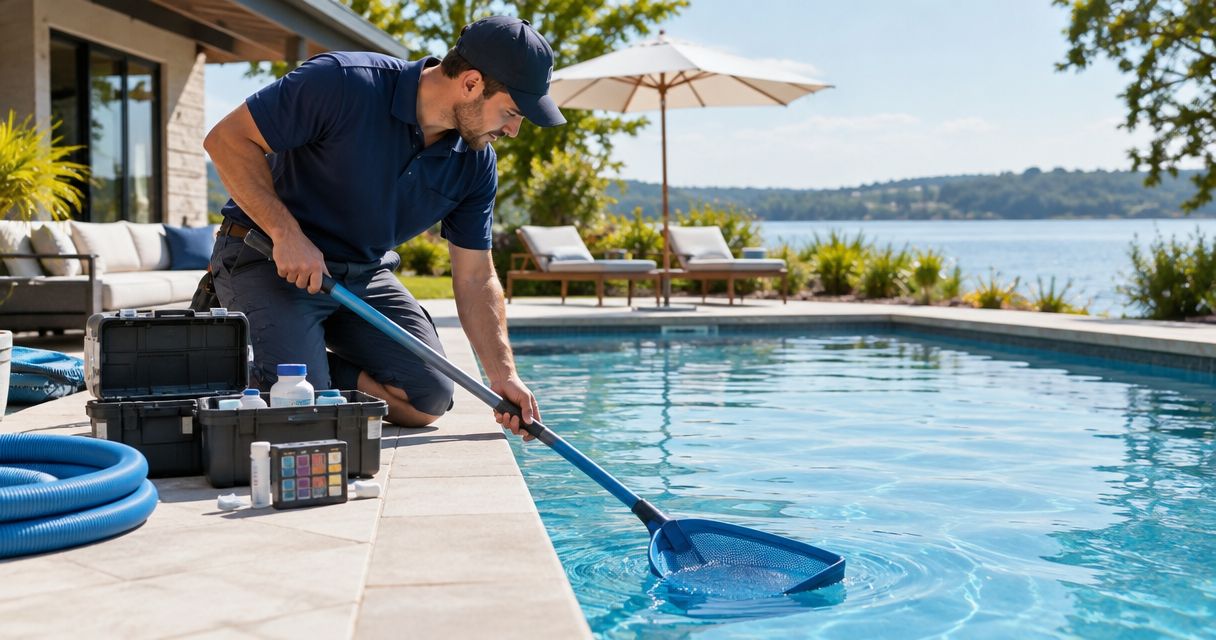
For homeowners in Acworth, GA, and nearby communities, the useful question is not just which cleaner to buy. It is whether you need routine cleaning equipment or help preparing the pool for seasonal closing. Aqua Turf Solutions offers residential pool maintenance and opening/closing services; use the website to request an appointment and confirm service for your address.
Aqua Turf Solutions is a service option for homeowners who need pool maintenance and seasonal closing rather than another vacuum to operate. A cleaner handles debris removal, not the entire closing process.
What makes the best pool vacuum cleaners for fine debris?
Judge each option against these criteria before choosing equipment for your 2026 cleanup:
- Particle capture: Confirm that the supplied filter, bag, or pool filtration system handles fine dirt. A leaf basket alone does not establish that.
- Debris destination: Know whether collected material stays inside the cleaner, enters your pool filter, or leaves through a waste line.
- Pool compatibility: Check the pool surface, shape, depth, connections, and manufacturer instructions. Do not assume every cleaner suits every pool.
- Control over settled dirt: Look for a method that lets you collect deposits without repeatedly stirring them into the water.
- Cleanup burden: Consider emptying baskets, washing filters, managing hoses, and restoring water lost during vacuuming.
- Closing relevance: Choose equipment for continuing maintenance, not as a substitute for an agreed seasonal closing scope.
Fine-debris vacuum options at a glance
These are equipment categories, not model endorsements. The right choice depends on the filter configuration and your pool system.
| Rank and option | Best for | Standout feature | Key limitation |
|---|---|---|---|
| 1. Robotic pool cleaner with a fine-particle filter | Routine floor cleaning | Collects debris in its own filter | Fine-particle filtration must be confirmed for the specific configuration |
| 2. Manual vacuuming to waste | Removing concentrated settled dirt | Sends collected water away from the pool filter | Requires a supported waste route and lowers the water level |
| 3. Suction-side vacuum through the pool filter | Using an existing compatible circulation system | Sends collected dirt to the pool filter | Results depend on filtration and adequate suction |
| 4. Handheld vacuum with a fine-debris filter | Small deposits and awkward areas | Gives you direct control over spot cleaning | Limited collection capacity and manual coverage |
| 5. Pressure-side cleaner with a suitable collection bag | Mixed debris where larger material is also present | Collects debris in a separate bag | A general-purpose bag does not establish fine-dust capture |
1. Fine-filter robotic cleaner: best for routine cleaning
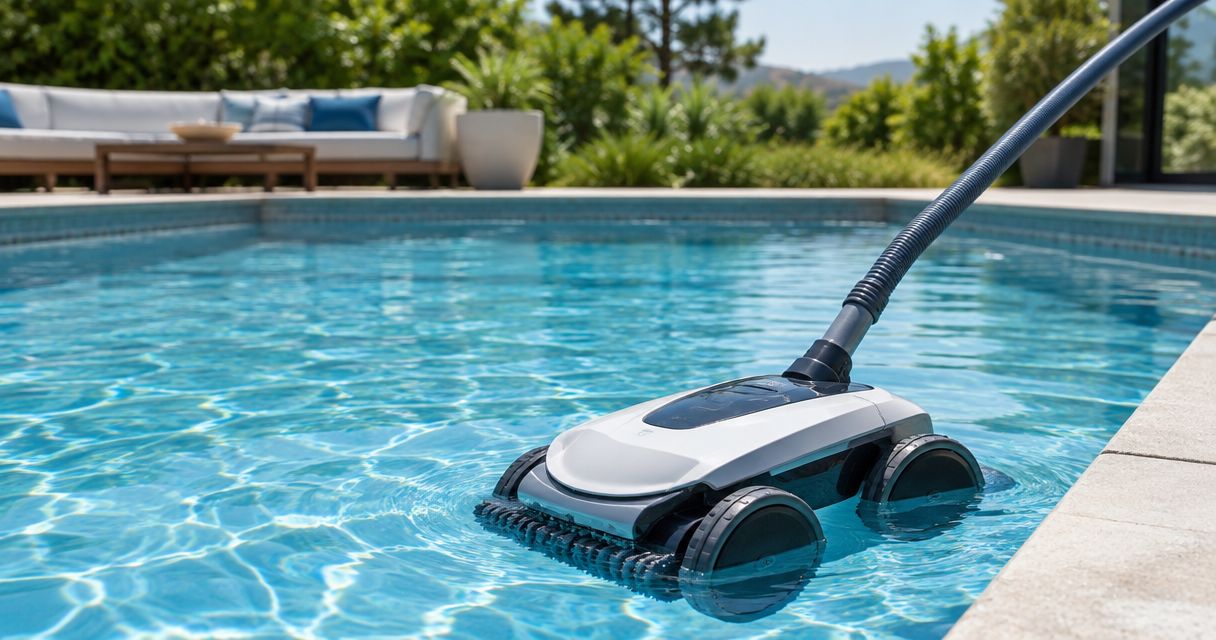
A robotic cleaner moves around the pool and collects debris in its own filter. For fine material, the collection filter matters as much as the cleaner's movement or coverage.
Choose the configuration, not just the product name. Before buying for 2026, read the manufacturer's filter description and confirm whether the required fine-debris insert comes with the cleaner or must be obtained separately.
Fine-filter robotic cleaner pros:
- Keeps collected debris out of the pool's main filter.
- Reduces hands-on vacuuming during routine maintenance.
- Offers a removable collection filter you can inspect after cleaning.
Fine-filter robotic cleaner cons:
- A coarse basket can leave fine material behind.
- You still need to remove debris and clean the collection filter.
- Coverage and surface compatibility vary by model.
Best for: Homeowners who want repeatable routine cleaning and will maintain the cleaner's filter.
Verdict: Buy only after confirming fine-particle filtration and pool compatibility. Do not treat wall-climbing ability or an app as proof of fine-dirt removal.
2. Manual vacuuming to waste: best for settled dirt removal
Manual vacuuming to waste sends vacuumed water out of the circulation system rather than through the pool filter. It is a cleaning method, not a feature every pool has.
This route is useful when you need to remove settled material without asking the filter to capture it. Confirm the valve arrangement, equipment instructions, water-level requirements, and permitted discharge destination before starting.
Manual vacuuming to waste pros:
- Removes collected dirt without returning it through the filter.
- Lets you target concentrated deposits directly.
- Avoids loading the pool filter with the material being discharged.
Manual vacuuming to waste cons:
- Removes pool water along with dirt.
- Requires a compatible waste connection and appropriate discharge route.
- Needs active supervision to protect the pump from drawing air.
Best for: Pools with supported waste plumbing and settled dirt that needs direct removal.
Verdict: Use when the system supports it; skip improvised valve changes or discharge arrangements. Never move a multiport valve while the pump is running, and follow the equipment manufacturer's instructions.
3. Suction-side vacuum: best for using existing equipment
A suction-side vacuum uses the pool's circulation system to draw debris toward the main filter. Depending on the equipment, this means a manually guided vacuum head or an automatic suction cleaner.
Fine-debris results depend on what happens after pickup. If dirt returns through the return fittings, check the filter condition, valve setting, and system setup before replacing the vacuum.
Suction-side vacuum pros:
- Uses a compatible pool circulation system.
- Lets the main filter collect vacuumed debris.
- A manual head gives you control over where cleaning happens.
Suction-side vacuum cons:
- Fine-particle capture depends on the pool filter.
- Debris can increase the filter's cleaning burden.
- Poor suction or air entering the hose interferes with pickup.
Best for: Homeowners whose existing system provides suitable filtration and a supported vacuum connection.
Verdict: Hold off on replacement equipment until you check suction and filtration. A new vacuum does not repair a filter problem.
4. Fine-filter handheld vacuum: best for spot cleaning
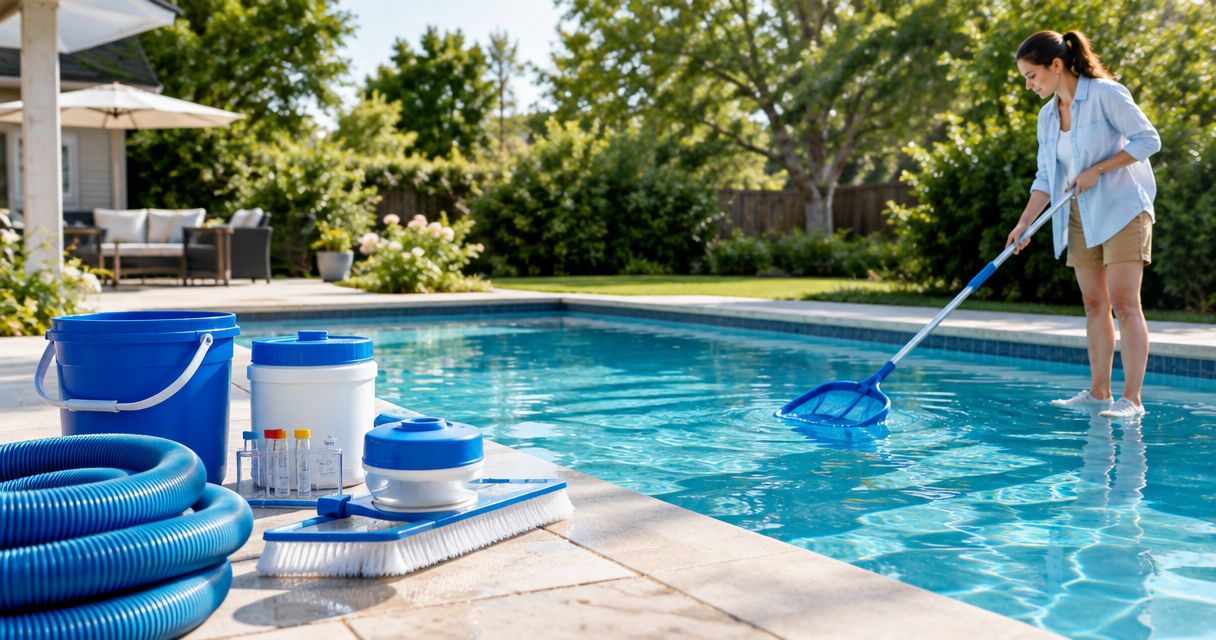
A handheld pool vacuum lets you work directly over small deposits. It is useful for reachable steps, corners, and patches that need attention between broader cleaning sessions.
Check both the collection filter and the surfaces you can reach. A handheld vacuum that collects leaves is not automatically suitable for fine dirt.
Fine-filter handheld vacuum pros:
- Gives you direct control over a small cleanup area.
- Helps address reachable spots a larger cleaner misses.
- Collects debris without relying on a suction hose when using a self-contained design.
Fine-filter handheld vacuum cons:
- Requires hands-on coverage.
- Collection capacity limits larger cleanups.
- Filter suitability varies by model.
Best for: Small deposits rather than whole-pool seasonal preparation.
Verdict: Buy for spot cleaning; skip it as your only plan for a heavily dirty pool. Match the tool to the size of the task.
5. Pressure-side cleaner: best for mixed debris
A pressure-side cleaner uses water supplied under pressure to move and collect debris in a bag. Equipment requirements differ, so check whether your pool has the connections the cleaner needs.
For fine dirt, the bag specification is decisive. Choose this route when the collection setup matches your debris mix, not simply because the cleaner handles leaves.
Pressure-side cleaner pros:
- Collects debris separately from the main pool filter.
- Supports routine cleaning in a compatible pool setup.
- Provides a collection bag you can inspect and empty.
Pressure-side cleaner cons:
- A coarse bag can let fine particles pass through.
- Some configurations require additional equipment.
- Bag cleaning remains part of routine maintenance.
Best for: Homeowners with compatible plumbing who need to collect mixed debris.
Verdict: Hold unless the collection bag is specified for your fine-debris problem. Leaf pickup alone is not enough.
How these options are ranked
This 2026 ranking puts particle capture first, followed by debris destination, compatibility, control, and maintenance effort. It compares cleaning methods rather than claiming measured performance for individual models.
The fine-filter robotic cleaner is the default for routine cleaning. Manual vacuuming to waste has a different role: removing concentrated settled dirt when the pool supports that method.
Before vacuuming: 3 checks that prevent the wrong purchase
Check the water
Is the problem settled grit, cloudy water, or green water? Those symptoms do not call for identical treatment. Vacuuming removes material; it does not replace water testing or correct the cause of algae growth.
Check the filter
Read the equipment instructions and inspect the relevant basket, bag, or filter. Confirm the cleaning procedure before changing settings. If collected dirt returns to the pool, stop and investigate the return path.
Check the debris
Remove larger floating debris before vacuuming fine deposits. Then work slowly enough to avoid pushing settled dirt away from the vacuum head. Watch where the material goes, not just whether the floor briefly looks cleaner.
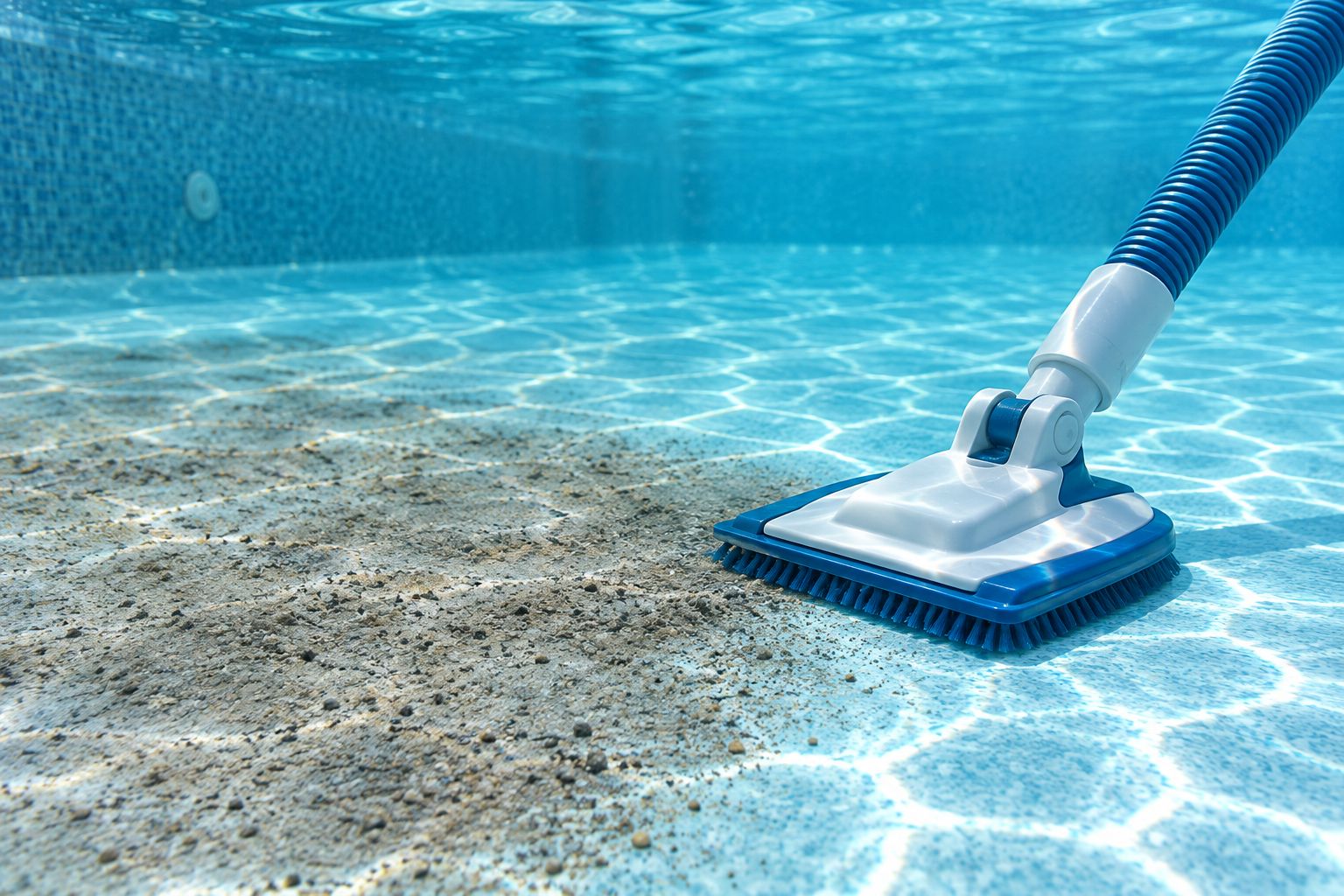
You do not need to buy equipment before asking for service help. Aqua Turf Solutions offers pool maintenance; describe the debris and your equipment when requesting assistance.
Turn your cleanup into a clear pool-closing request
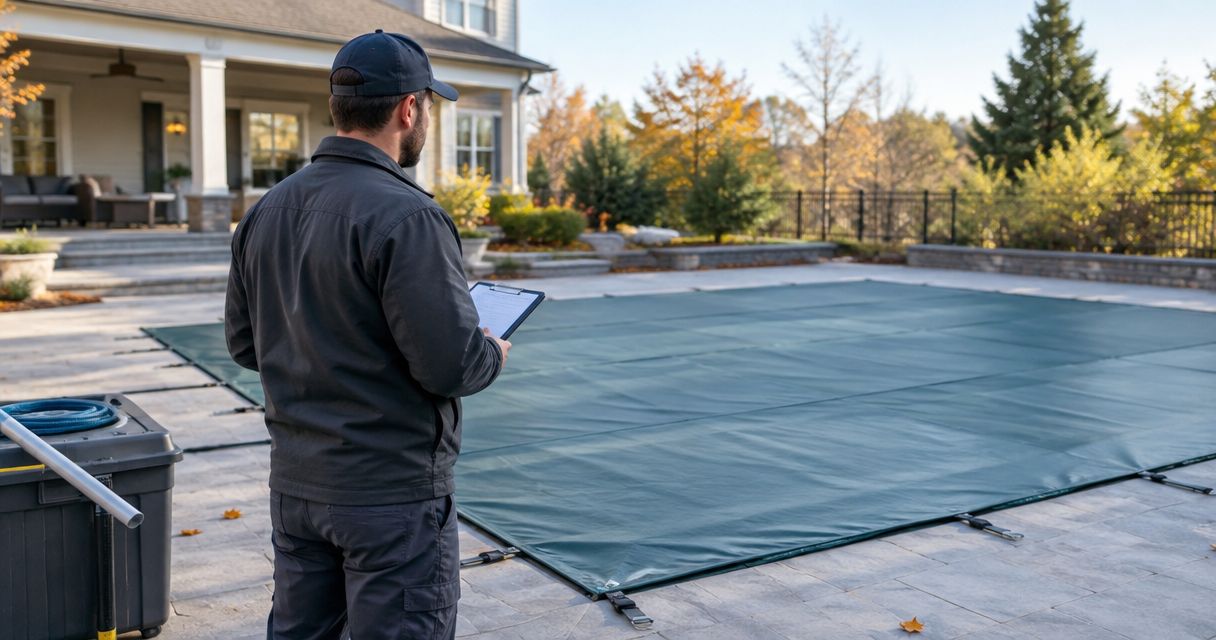
For a 2026 closing appointment, separate debris removal from the rest of the job. A clean floor alone does not establish that the plumbing, equipment, or cover has been prepared for the off-season.
Describe the pool
Provide your address, pool type, equipment details, and cover information. Mention visible dirt, cloudy water, leaks, or equipment problems. Homeowners in Marietta, Woodstock, Kennesaw, Dallas, Austell, Smyrna, and Douglasville should confirm service for their address rather than assume coverage.
Define the scope
Ask whether the quote includes debris removal, water testing or treatment, water-level adjustment where required, plumbing and equipment winterization, and cover installation. These are scope questions, not a list of confirmed inclusions.
Confirm equipment needs
Explain whether you already have a vacuum, whether it works, and whether the pool has a waste setting. Ask how cleaning will be handled if your existing equipment does not remove the fine dirt.
Request the appointment
Use the website's booking or inquiry route to request your preferred timing. Confirm the appointment details, access requirements, and homeowner preparation with Aqua Turf Solutions before the visit.
Request your pool-closing scope
Describe your pool, debris, equipment, and address before agreeing to the work.
What affects the quoted cleanup and closing scope?
Compare written scopes rather than an unexplained total. Pool size, debris condition, equipment configuration, cover handling, and requested repairs affect the work being quoted.
For your 2026 closing, ask which tasks are included, which are separate, and what happens if the technician finds an equipment issue. Ask for a clear explanation of the charge for each agreed service; fair pricing starts with knowing what you are paying for.
Do not assume vacuuming, repairs, or cover installation are included unless the quote says so. Keep the agreed scope with your appointment details.
Which pool vacuum cleaner should you choose?
Choose a robotic cleaner with confirmed fine-particle filtration for routine maintenance. Choose manual vacuuming to waste for concentrated settled dirt only when your system and discharge arrangements support it.
If seasonal closing is the immediate goal, decide the service scope before buying another tool. Aqua Turf Solutions pool maintenance and closing services are relevant when you want help with the work, not just equipment recommendations.
FAQ
What's the best pool vacuum cleaner for fine dirt?
A robotic cleaner with manufacturer-specified fine-particle filtration is the default choice for routine fine-dirt cleaning. Confirm the supplied filter configuration and compatibility with your pool before buying.
Is vacuuming to waste better than using a robotic cleaner?
Vacuuming to waste is better suited to removing concentrated settled dirt without passing it through the pool filter. A robotic cleaner is better suited to routine collection, and vacuuming to waste requires compatible plumbing and an appropriate discharge route.
Why does fine dirt come back after I vacuum?
Fine dirt can return when the collection filter does not capture it or when the circulation system sends it back into the pool. Check the basket or bag, pool filter, valve setup, and return fittings before buying a replacement cleaner.
Can I use a pool vacuum to fix green water?
A pool vacuum does not fix the cause of green water. Test the water and address the treatment and filtration problem; vacuuming handles debris removal as part of that cleanup.
What should I ask about before booking a pool closing?
Ask for a written scope covering the cleaning, water preparation, equipment winterization, and cover work required for your pool. Confirm which tasks are included, any separate charges, and what you need to prepare before the appointment.
How much does fine-debris cleanup add to pool closing?
The charge depends on the cleanup included in your quote. Describe the debris, water condition, pool equipment, and requested closing work so the provider can define the scope rather than quote an unexplained total.
How do I request seasonal closing near Acworth?
Use Aqua Turf Solutions' website to request an appointment and provide your address, pool details, equipment information, and cleanup concerns. Confirm service for your specific address and agree to the closing scope before the visit.
One last thing
Before putting the vacuum away, inspect what it actually collected. A cleaner moving around the pool is not proof that it captured the fine debris.
For your 2026 closing, make that distinction part of the appointment request: describe what remains on the floor, not simply how long the cleaner ran.