Best overall: a solid winter cover matched to your above-ground pool. Best for rain drainage: a mesh winter cover. Best for access protection: a purpose-designed safety cover approved for your pool setup. For your 2026 closing, choose the cover and the winterizing plan together; Aqua Turf Solutions offers seasonal pool closing services for homeowners.
- The best above ground pool covers for winter match your pool dimensions, fastening system, and closing plan.
- Solid winter covers block sunlight and debris but need standing water managed according to the manufacturer's instructions.
- Mesh winter covers drain rainwater but let fine particles through; check their light-blocking specifications.
- Aqua Turf Solutions offers pool closing services; request a defined scope that addresses your existing cover and equipment.
- A leaf net is a cleanup accessory, not a replacement for a winter cover or a safety barrier.
Why this matters before your 2026 closing
A winter cover is only part of closing a pool. Water preparation, equipment protection, and fastening the cover correctly all matter. Buying a cover without checking those details leaves you with an incomplete plan.
For homeowners in Acworth and nearby Marietta, Woodstock, Kennesaw, Dallas, Austell, Smyrna, and Douglasville, start with your actual pool setup rather than a national product ranking. Ask whether your address and above-ground pool configuration fall within the provider's service scope before requesting an appointment.
Aqua Turf Solutions is a pool-closing service option for homeowners who want help planning seasonal maintenance. Confirm above-ground pool work, cover installation, and equipment winterization when discussing your particular job.
What makes the best above-ground winter cover?
Use these criteria before comparing cover types. A cover that fails the fit or fastening check belongs off your shortlist, regardless of its material.
- Correct fit: Match the pool's shape and dimensions to the manufacturer's sizing instructions. Distinguish the advertised pool size from the cover's actual dimensions.
- Compatible fastening: Check how the cover attaches to your pool. Do not improvise attachments to rails, walls, or decking.
- Water management: Decide how rain drains through the cover or is removed from its surface.
- Light and debris control: Check what the material blocks. Mesh construction alone does not establish how much sunlight passes through.
- Access protection: Treat ordinary winter covers as maintenance covers unless the manufacturer explicitly identifies a suitable safety-cover system.
- Manageable upkeep: Choose an arrangement you can inspect during winter without walking on the cover or reaching unsafely over the pool.
Before ordering for 2026, record 3 measurements: pool length, pool width, and the clearance around the perimeter. For a round pool, record the diameter instead of separate length and width measurements. Follow the cover manufacturer's instructions for any additional measurements, overlaps, or attachment details.
Winter cover options at a glance
These are cover categories, not interchangeable products. The leaf net is included because it solves a separate cleanup problem, but it does not close the pool by itself.
| Cover option | Best for | Standout feature | Key limitation |
|---|---|---|---|
| Solid winter cover | General seasonal debris and sunlight control | Solid material separates pool water from falling debris | Rainwater collects on top and needs management |
| Mesh winter cover | Owners prioritizing rain drainage | Water passes through the material | Fine debris passes through; light blocking varies |
| Purpose-designed safety cover | Owners prioritizing access protection | A specified cover-and-attachment system | Requires confirmed compatibility and correct installation |
| Leaf net over a winter cover | Pools beneath shedding trees | Collects leaves separately from the main cover | Supplemental only; not a winter or safety cover |
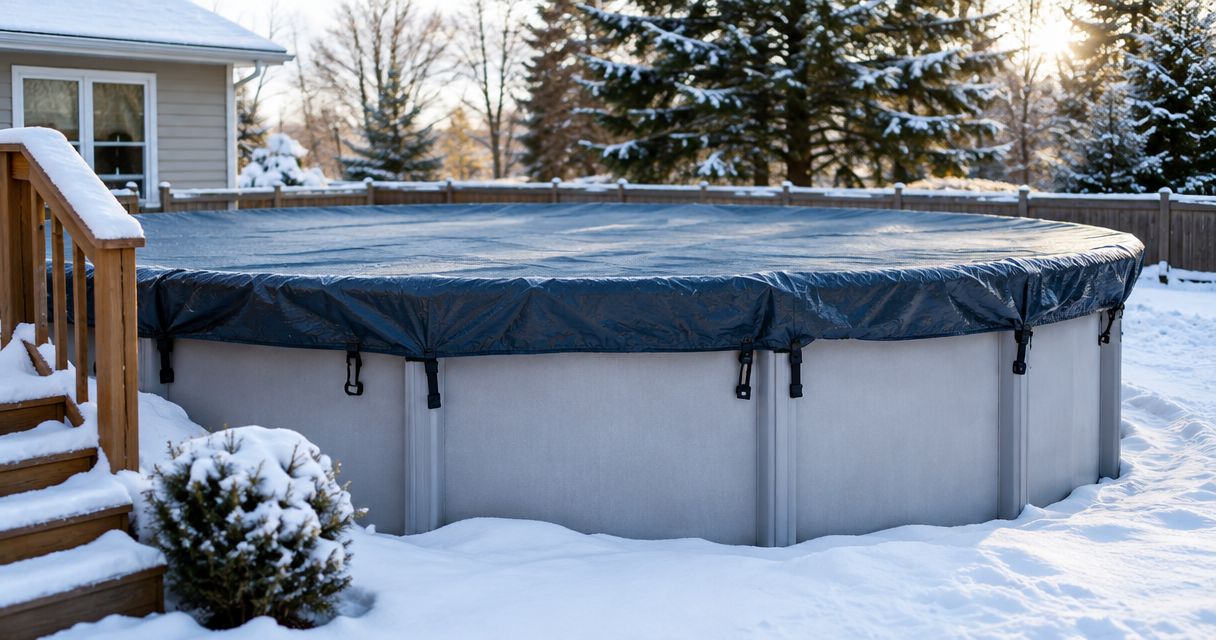
1. Solid winter cover: best for general seasonal closing
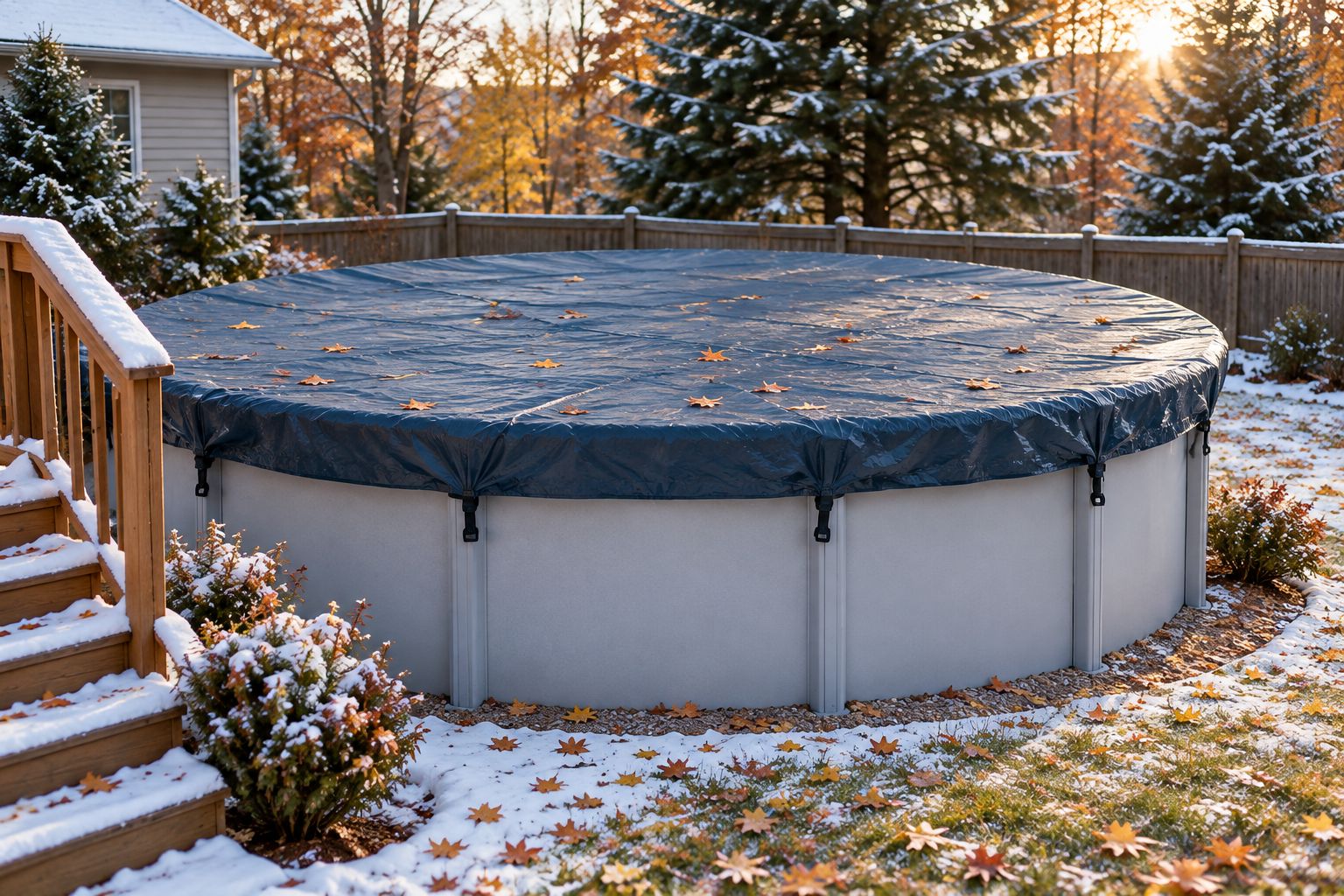
A solid winter cover keeps falling leaves and other debris above the pool water. Its opaque material also blocks sunlight. For a homeowner choosing a straightforward seasonal cover, this is the default category to assess first.
The trade-off is rainwater on the surface. Follow the cover manufacturer's instructions for removing accumulated water and debris, including whether a cover pump is appropriate. Do not let a cover become an unattended collection point all winter.
Solid winter cover pros:
- Blocks sunlight with opaque material.
- Keeps leaves and much of the falling debris out of the water.
- Makes surface debris visible for routine inspection.
Solid winter cover cons:
- Collects rainwater rather than draining it through the material.
- Becomes harder to handle when wet or loaded with debris.
- Does not provide safety protection merely because it looks substantial.
Best for: Homeowners who want general seasonal protection and can arrange winter inspections and surface-water removal.
Verdict: Buy a solid winter cover when its fit, attachments, and water-management instructions match your pool.
2. Mesh winter cover: best for rain drainage
A mesh winter cover allows rainwater to pass into the pool rather than collecting all of it on the surface. It catches larger debris while allowing finer particles through. Check the specific material's light-blocking description before choosing it.
Mesh changes the maintenance task; it does not remove it. You still need to inspect the cover, manage leaves, and check the pool's water level according to the pool and cover instructions. Plan for debris removal when reopening.
Mesh winter cover pros:
- Allows rain to drain through the material.
- Catches larger leaves and debris.
- Avoids the same standing-water pattern as a solid cover.
Mesh winter cover cons:
- Allows fine particles into the pool.
- Requires attention to water levels as rain enters.
- Does not establish safety protection simply by being mesh.
Best for: Homeowners who prioritize rain drainage and accept water-level checks and fine-debris cleanup.
Verdict: Buy a mesh winter cover when drainage is your priority and its specifications fit your closing plan.
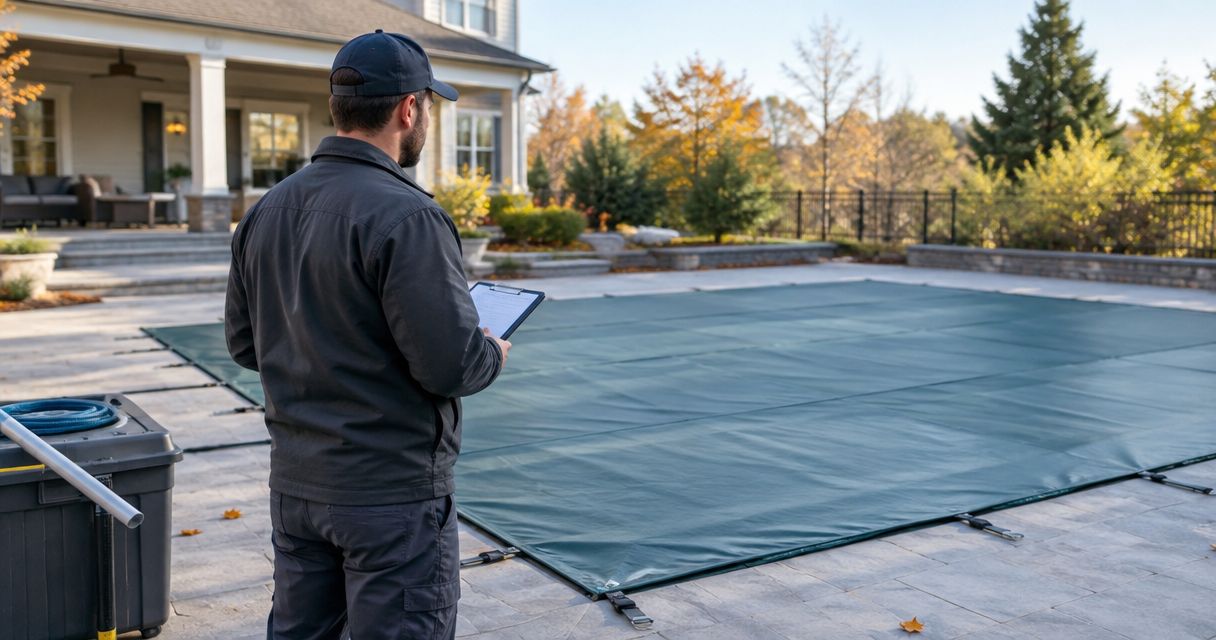
3. Purpose-designed safety cover: best for access protection
A safety cover is a specified system, not just a thicker version of an ordinary winter cover. Its performance depends on the cover, attachments, supporting structure, and correct installation. For an above-ground pool, confirm that the manufacturer approves the exact configuration.
Do not assume a cover made for an inground pool works on an above-ground pool with a surrounding deck. The pool structure and attachment points need explicit approval. Keep required barriers in place and follow applicable local requirements.
Purpose-designed safety cover pros:
- Addresses access protection rather than debris control alone.
- Provides installation requirements for a defined system.
- Makes attachment compatibility a specific purchasing decision.
Purpose-designed safety cover cons:
- Is not suitable for every above-ground pool configuration.
- Requires approved attachment locations and proper installation.
- Still needs inspections and manufacturer-directed maintenance.
Best for: Homeowners seeking access protection who can confirm an approved system for their pool and surrounding structure.
Verdict: Hold until compatibility and installation requirements are confirmed; skip any unapproved substitute.
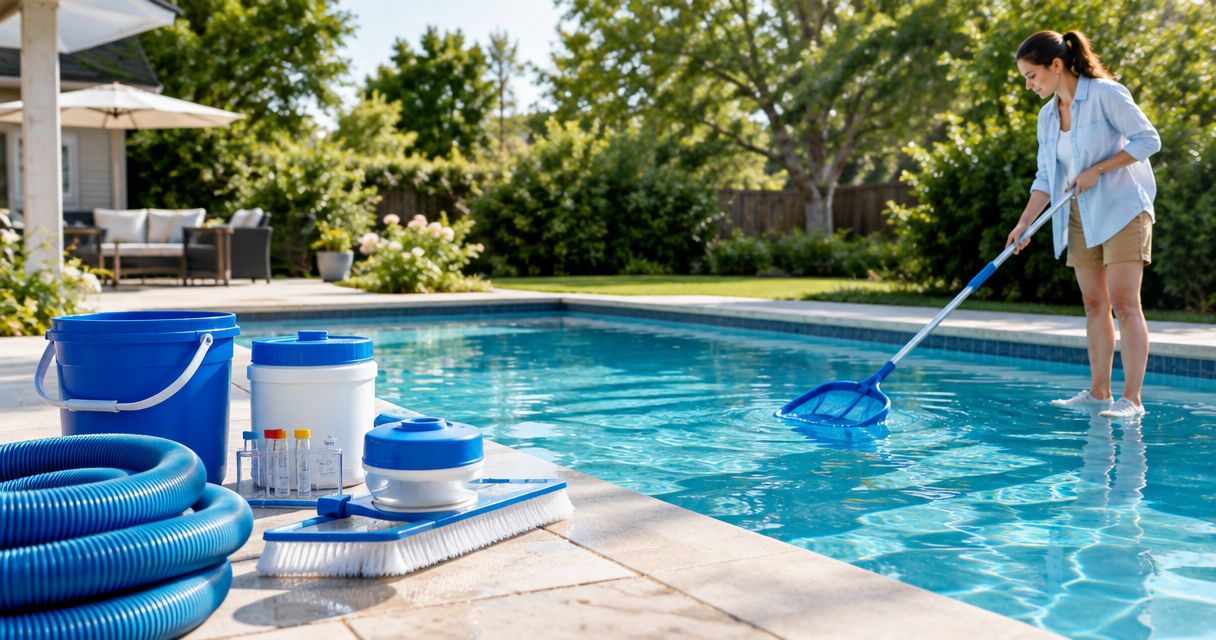
4. Leaf net: best for pools beneath shedding trees
A leaf net sits over a compatible winter cover and collects leaves separately. You remove the leaves before they become a wet mass on the main cover. That makes it a useful accessory where trees create a recurring cleanup task.
This arrangement uses 2 cover layers: the winter cover underneath and the leaf net above. Check both manufacturers' instructions for compatibility and removal. Never treat the net as a winterizing solution on its own.
Leaf net pros:
- Separates much of the leaf buildup from the main cover.
- Helps organize cleanup during heavy leaf fall.
- Adds debris handling without replacing the chosen winter cover.
Leaf net cons:
- Does not block sunlight or fine particles like a solid cover.
- Adds another item to install, remove, and store.
- Is neither a safety barrier nor a substitute for winterization.
Best for: Homeowners with recurring leaf buildup who already have a suitable winter cover.
Verdict: Buy only as a compatible accessory; skip it as a standalone closing cover.
How these options are ranked
The ranking puts general seasonal protection first, then separates drainage, access protection, and leaf handling into distinct needs. Fit and fastening come before material preference. An incompatible cover loses regardless of its advertised features.
For 2026, use the comparison to choose a category, then check the actual manufacturer's documentation. No category recommendation establishes the quality, safety rating, or suitability of an individual product.
What to confirm in a pool-closing appointment
A closing quote should define the work rather than simply promise to winterize the pool. Aqua Turf Solutions pool closing services should be discussed against your pool's equipment, condition, and existing cover. Confirm each task before authorizing the appointment; do not assume the following steps are automatically included.
1. Describe the pool
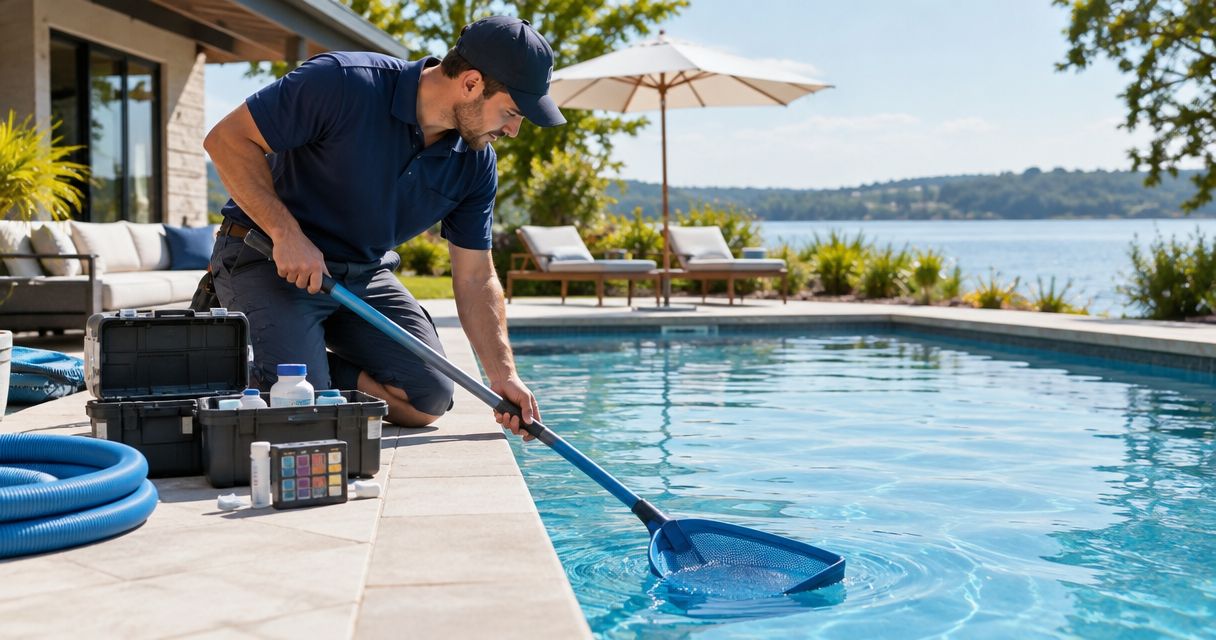
Provide the pool shape, dimensions, filter type, pump details, and any connected heater or other equipment. Mention leaks, damaged fittings, a torn cover, or water that is already cloudy or green. Those conditions affect the work you need quoted.
2. Discuss water preparation
Ask who handles debris removal, water testing, and any treatment before closing. Covering dirty water does not replace cleaning or treatment. Get instructions specific to your pool rather than adding chemicals from a generic checklist.
3. Confirm equipment protection
Ask how the pump, filter, connected plumbing, and accessories will be prepared under their manufacturers' instructions. Water left in vulnerable equipment can cause damage when it freezes. Do not lower the pool water or disconnect equipment without the applicable instructions.
4. Agree on cover work
Confirm whether the appointment includes inspecting, fitting, and fastening your existing cover. Ask what happens if the cover is damaged or incompatible. Separate cover work from any repairs or replacement purchases so the scope stays clear.
5. Set the winter follow-up plan
Ask what you need to inspect after the closing: attachments, debris, surface water, and pool water level. Establish who handles follow-up concerns. A closed pool still needs attention during winter.
What determines the closing quote?
Fair pricing starts with a clearly defined scope. The quote should distinguish seasonal closing work from repairs, cleanup, cover handling, and any materials. Compare written scopes rather than treating every pool-closing appointment as the same job.
Use 4 quote questions before booking your 2026 closing:
- Does the quote address my above-ground pool and all connected equipment?
- Which cleaning, water-preparation, and winterization tasks are included?
- Is fitting my existing cover included, and how are cover problems handled?
- Which additional tasks require approval before work proceeds?
Request an appointment through the website and provide your location, pool details, and existing cover information. Ask Aqua Turf Solutions to confirm service for your address, the proposed scope, and scheduling before treating the appointment as arranged.
Request your pool-closing appointment
Share your pool setup and existing cover, then confirm the closing scope and service for your address.
Which winter cover should you choose?
Choose a correctly fitted solid winter cover as the default for general seasonal protection. Choose mesh when rain drainage is the deciding requirement. If access protection is the priority, investigate a purpose-designed safety system before buying an ordinary maintenance cover.
Add a leaf net only when leaf buildup justifies another cleanup layer. For your 2026 closing, settle the cover choice alongside water preparation and equipment protection—not after the pool is already covered.
FAQ
What's the best above ground pool cover for winter?
A correctly fitted solid winter cover is the default choice for general debris and sunlight control. Choose mesh for rain drainage, or investigate an approved safety-cover system when access protection is the priority.
Is a mesh cover better than a solid cover for an above-ground pool?
Mesh is better for rain drainage; solid material is better for keeping sunlight and fine debris out. The right choice also depends on compatible attachments and the winter maintenance you can manage.
Can I use a solar cover to close my above-ground pool?
Do not substitute a solar cover for a winter cover unless the manufacturer explicitly approves that use. A heat-retention cover does not by itself provide the fastening, debris handling, or equipment protection needed for closing.
Does a winter pool cover keep children and pets safe?
An ordinary winter cover is not a safety cover. Use required barriers and consider only a purpose-designed safety-cover system explicitly approved for your pool configuration.
How much does above-ground pool closing cost?
The closing quote depends on the agreed work, your equipment, the pool's condition, and cover handling. Request an itemized scope that separates closing tasks from repairs, cleanup, and materials.
What should I ask before booking pool closing near Acworth?
Ask the provider to confirm your address, above-ground pool compatibility, included tasks, and scheduling. Give details about your cover and equipment so the quote addresses the actual job.
Should I drain my above-ground pool before winter?
Do not drain an above-ground pool simply because you are closing it. Follow the pool manufacturer's winter water-level instructions and confirm the requirements for your cover and connected equipment.
One last thing
Check the cover's fastening hardware before closing day, not just the fabric. An intact cover still needs compatible attachments in usable condition. Photograph the cover, pool edge, and equipment beforehand so you can ask specific questions when requesting the appointment.