Best overall for an early access warning: a pool gate alarm. Best for a house door leading to the pool: a door alarm. Best for detecting entry into the water: an immersion alarm selected for your pool. The best pool alarms for child safety in 2026 work as extra warning layers—not substitutes for a barrier or adult supervision.
- The best pool alarms for child safety add warnings; they do not replace fences or adult supervision.
- Choose gate alarms for backyard access and door alarms for exits leading directly to the pool.
- Choose an immersion alarm only after checking pool compatibility, testing instructions, and indoor audibility.
- Aqua Turf Solutions is best suited to homeowners seeking residential pool maintenance and seasonal opening or closing services.
Why this matters
A pool alarm tells you something happened. A fence helps prevent access in the first place. That distinction matters when you choose equipment for a backyard pool in Acworth or nearby Marietta, Woodstock, Kennesaw, Dallas, Austell, Smyrna, or Douglasville.
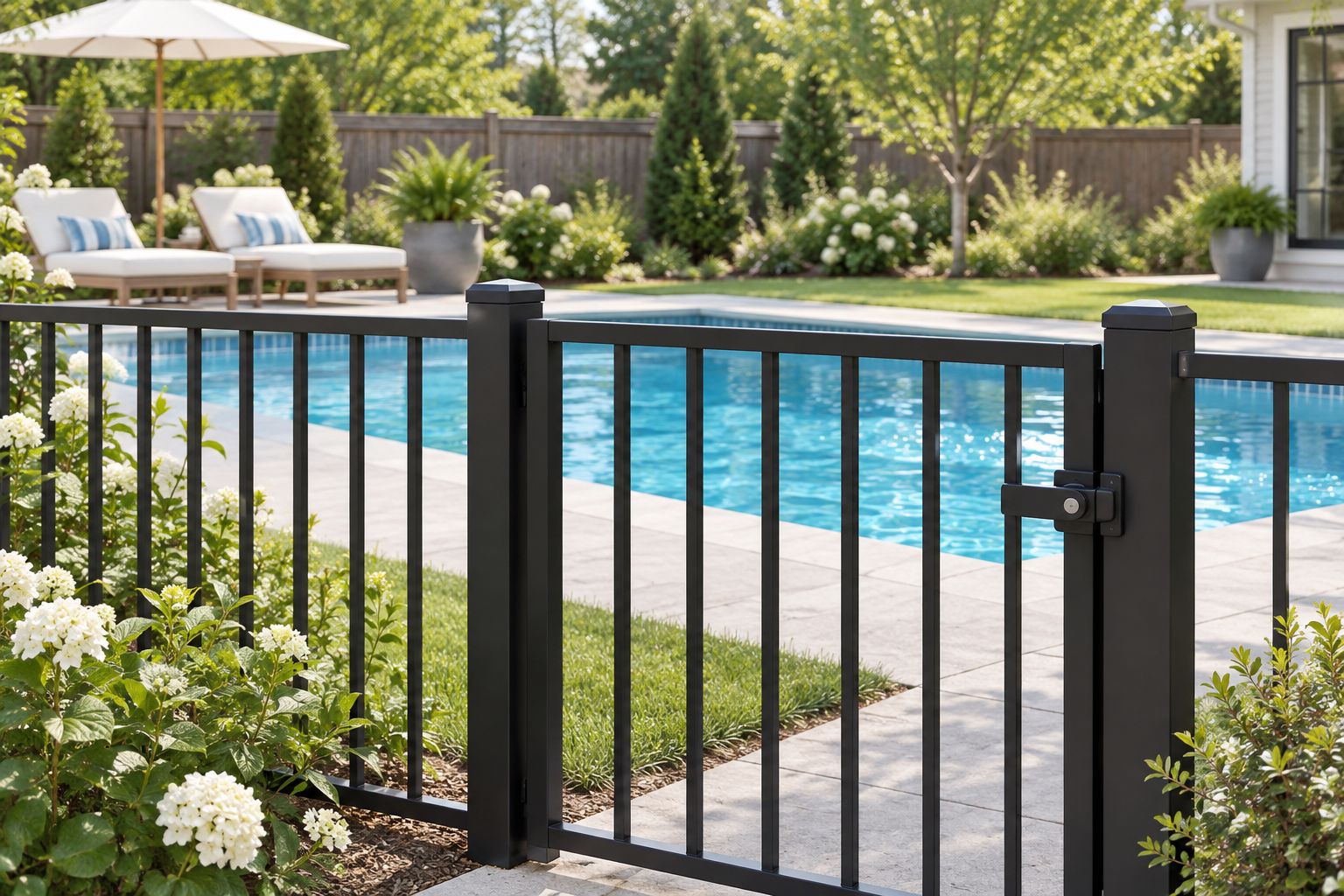
For your 2026 safety plan, start with the route a child can take from the house to the water. Review pool safety fences for backyard pools before treating an alarm as the main safeguard.
Aqua Turf Solutions provides residential pool maintenance, repair, opening, closing, and deck restoration. Alarm installation is a separate scope question: ask about it rather than assuming it comes with a seasonal service appointment.
What makes the best pool alarm for child safety?
Judge an alarm by the warning it provides and the responsibilities it leaves with you. These criteria matter more than a long feature list:
- Warning location: Does the device detect an open door, an open gate, or entry into the water? Those are different events.
- Pool compatibility: Check the manufacturer's requirements for pool shape, construction, covers, equipment, and mounting position.
- Audibility: Confirm that the responsible adult can hear the warning from the places where they spend time, including inside the house.
- Testing and power: Choose equipment with clear functional tests, power checks, and fault indications you can maintain.
- Reset behavior: Understand how swimming mode, temporary bypass, and rearming work before anyone uses the pool.
- Documented performance: For pool-entry alarms, check the manufacturer's documentation for applicable ASTM F2208 testing rather than relying on a child-safety slogan.
Choose the alarm around the access route you need to monitor, not around the longest list of features. No single alarm type covers every route or every household routine.
Pool alarm types at a glance
These are ranked alarm categories, not endorsements of individual models. Each category serves a different purpose, so your best choice depends on the warning you need.
| Rank and alarm type | Best for | Standout function | Key limitation |
|---|---|---|---|
| Gate alarm | Early warning at the pool barrier | Signals when the monitored gate opens | Does not physically stop access or detect every route |
| Door alarm | House exits leading toward the pool | Signals when the monitored door opens | Does not monitor water entry or other exits |
| Subsurface immersion alarm | Detecting water disturbance below the surface | Monitors an event within the water | Requires model-specific installation and testing |
| Surface-wave alarm | Pools compatible with surface monitoring | Detects qualifying movement at the water surface | Suitability depends on the pool and operating conditions |
| Wearable immersion alarm | A supplementary warning for a specific child | Signals when the worn sensor contacts water | Provides no protection when it is not worn correctly |
1. Gate alarms: best for early warning at the pool barrier
A gate alarm monitors the opening of the gate where it is installed. It gives you an access warning before water entry, provided the child uses that monitored route and the alarm is active.
For a fenced backyard pool, check the gate itself before choosing an alarm. A warning device does not correct a gate that fails to close or latch.
Gate alarm pros:
- Monitors a defined access point to the pool enclosure.
- Warns about gate opening rather than waiting for water entry.
- Gives you a specific location to check when it sounds.
Gate alarm cons:
- Does not detect someone using an unmonitored route.
- Does not keep the gate closed or prevent entry.
- Requires correct alignment, power, and routine testing.
Best for: Homeowners whose pool barrier has a gate that needs an additional access warning.
Before buying, check outdoor suitability, mounting instructions, bypass controls, and whether the warning reaches you indoors. Test the installed device using the manufacturer's procedure; opening the gate without checking the receiver is not a complete test.
Verdict: Buy for a monitored pool gate, alongside a functioning barrier—not instead of one.
2. Door alarms: best for house exits leading toward the pool
A door alarm signals when the monitored house door opens. It addresses the route from your living space toward the pool, rather than detecting activity in the water.
This category deserves particular attention when a house wall forms part of the pool enclosure. Review every relevant exit; monitoring one door does not cover another door or an accessible window.
Door alarm pros:
- Warns at a house exit before a child reaches the pool.
- Makes a specific access route easier to monitor.
- Can supplement a separate pool barrier.
Door alarm cons:
- Does not detect pool entry from another route.
- Temporary bypass creates a period without that warning.
- Household activity can lead to repeated alerts that still require attention.
Best for: Homeowners with a house door that opens directly into, or provides access toward, the pool area.
The U.S. Consumer Product Safety Commission's Safety Barrier Guidelines for Residential Pools specifies a door-alarm sound level of at least 85 dBA measured 10 feet away. Use that guidance when reviewing specifications, then confirm audibility in your own home.
Verdict: Buy for a relevant house exit; skip the assumption that a gate alarm covers it.
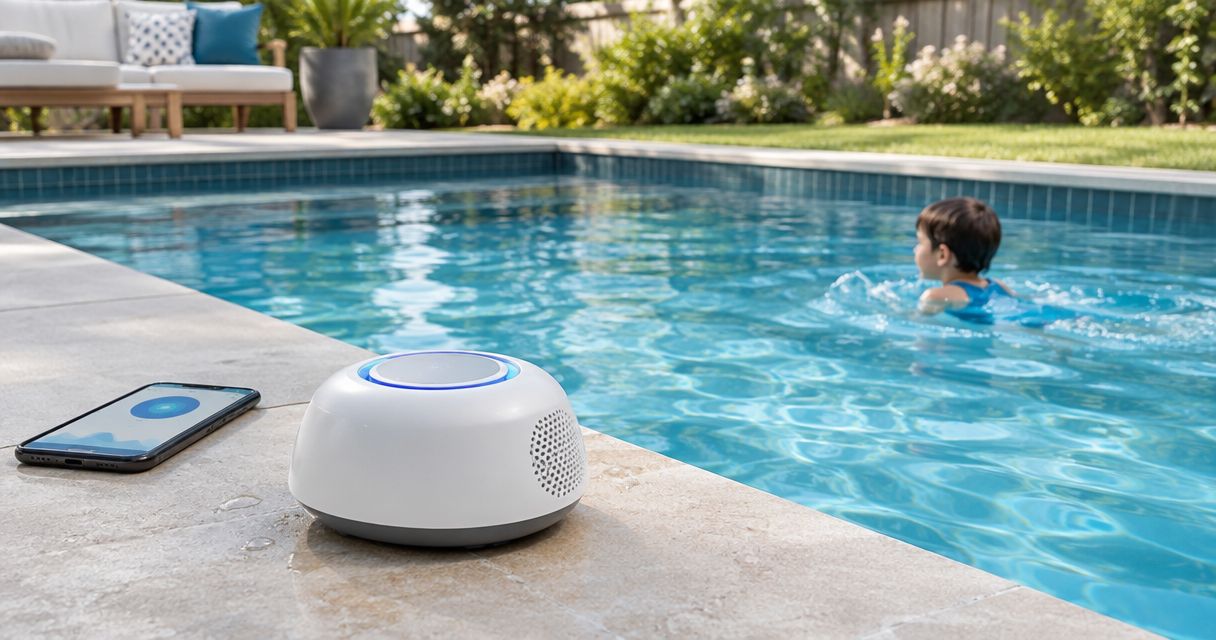
3. Subsurface immersion alarms: best for below-surface monitoring
A subsurface immersion alarm detects qualifying disturbances beneath the water surface. Its purpose is to warn about a water event, not to stop someone from reaching the pool.
Installation and sensitivity requirements are model-specific. Read the manual before purchasing, especially if your pool has steps, an unusual shape, a cover, or equipment that affects water movement.
Subsurface immersion alarm pros:
- Adds a warning layer within the pool itself.
- Does not depend on a child wearing a separate sensor.
- Monitors a different event from a door or gate alarm.
Subsurface immersion alarm cons:
- Sounds after a qualifying disturbance occurs in the water.
- Requires correct installation and functional testing.
- Swimming-mode and rearming instructions need household attention.
Best for: Homeowners seeking an additional water-entry warning from equipment documented as suitable for their pool.
For a 2026 purchase, look for the exact model's documentation—not a general statement about the manufacturer's range. Confirm how to test detection, check the receiver, and restore monitoring after swimming.
Verdict: Buy only after confirming compatibility and a workable testing routine.
4. Surface-wave alarms: best for surface-compatible pool setups
A surface-wave alarm detects qualifying movement at the water surface. Some designs float; installation and operating instructions depend on the model.
Check how the manufacturer addresses wind, water features, circulation, cleaners, and pool covers. Do not assume that a device described simply as a pool alarm will suit every residential pool.
Surface-wave alarm pros:
- Adds monitoring at the water surface.
- Does not require every child to wear a sensor.
- Provides a separate warning from access-point alarms.
Surface-wave alarm cons:
- Water movement and placement require model-specific checks.
- A cover can change the conditions the device monitors.
- Removal or swimming mode leaves a monitoring responsibility to manage.
Best for: Homeowners whose pool configuration meets the surface alarm's documented operating requirements.
Ask how the alarm should behave while your normal pool equipment runs. Then follow the prescribed test; do not invent a test involving a child entering the water.
Verdict: Hold until the manual confirms suitability for your pool and equipment.
5. Wearable immersion alarms: best as a child-specific supplement
A wearable immersion alarm uses a sensor worn by the child to signal contact with water. It is a different approach from monitoring a door, gate, or the pool itself.
Its usefulness depends on the sensor being worn correctly, powered, and connected to a functioning receiver. It does not monitor a child who is not wearing it.
Wearable immersion alarm pros:
- Adds a warning tied to the person wearing the sensor.
- Supplements fixed alarms that monitor access points.
- Provides a distinct water-contact warning.
Wearable immersion alarm cons:
- Depends on correct use every time.
- Does not protect other children without sensors.
- Receiver range, power, and connection need checking.
Best for: Families adding a child-specific warning to an existing barrier and supervision plan.
Check fastening, receiver instructions, and the required test procedure. Never treat wearing a sensor as permission to relax supervision around the pool.
Verdict: Buy only as a supplement; skip it as your sole alarm strategy.
How these alarm types are ranked
The ranking prioritizes the event you need to detect: gate access, house-door access, or water entry. It then considers compatibility, audibility, testing, and the everyday actions needed to keep the alarm working.
It is not a laboratory comparison of individual products. A suitable alarm with a maintained testing routine is a better choice than a feature-heavy device your household leaves disabled.
Set up your 2026 pool safety plan step by step
Check access
Walk the route from the house to the pool and inspect the enclosure. Include gates, relevant doors, and objects that could help a child climb a barrier.
The CPSC's residential-pool barrier guidance recommends a fence at least 4 feet high and spacing between vertical members no greater than 4 inches. Those dimensions are starting points, not a complete installation specification or a substitute for local requirements.
Choose warnings
Match each alarm to an actual route or event. A door alarm watches an exit; a gate alarm watches the barrier opening; an immersion alarm watches a water event.
Avoid buying several devices that all monitor the same route while leaving another route unchecked. More alarms do not automatically mean broader coverage.
Test operation
Follow the manufacturer's instructions for detection, power, receiver function, and audibility. Keep children away from the pool during testing.
Record what a successful test looks and sounds like. Every responsible adult should understand the warning and the action it requires.
Confirm rearming
Review what happens after swimming, cleaning, maintenance, or temporary bypass. Make restoring the alarm part of the same routine as securing access to the pool.
The job is not finished when the work ends; it is finished when the pool's safety layers are restored.
Coordinate alarms with pool opening and closing
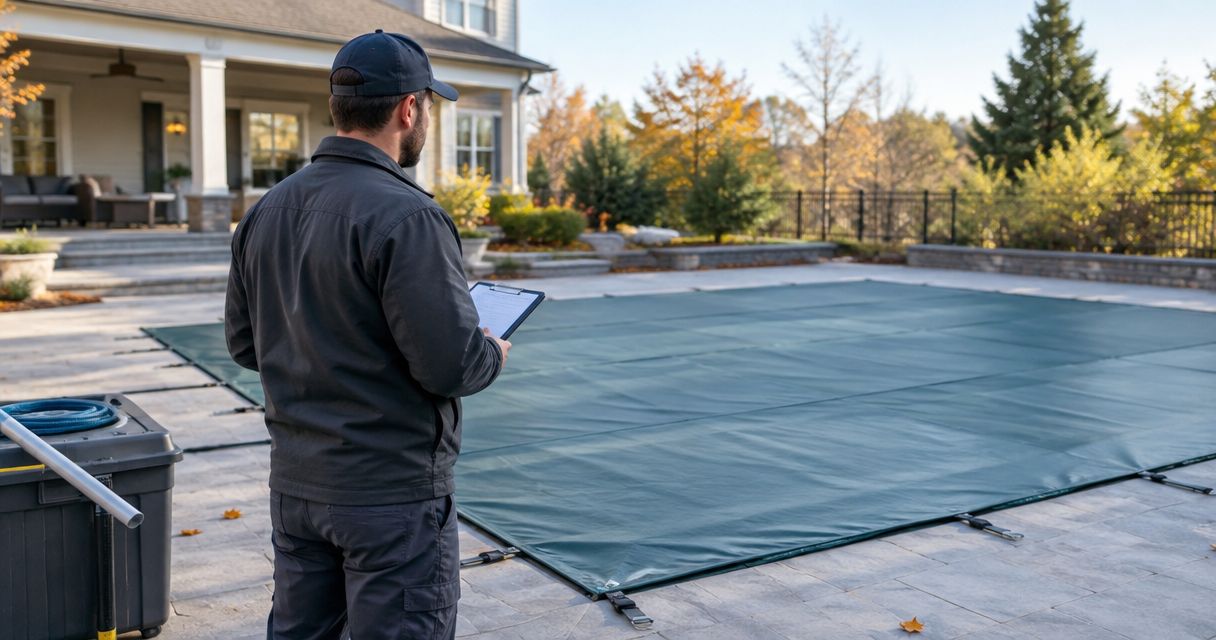
A seasonal appointment changes how your pool is used, but it does not remove the need to control access. For your 2026 closing, discuss what happens to alarm devices when equipment is shut down or a cover is installed.
Aqua Turf Solutions pool closing services should be requested with a clearly defined scope. Ask which tasks the quote includes rather than assuming cleaning, water treatment, equipment winterization, cover handling, or alarm checks are included.
Prepare these details before requesting an appointment:
- Your property address and preferred seasonal timing.
- The pool type and equipment information you have.
- The cover type and any existing alarm instructions.
- Repairs or operating problems that need separate attention.
- Any questions about restoring alarms after service.
For homeowners in Acworth and surrounding communities, confirm service coverage for your address. Request an appointment through the company website, ask for fair pricing tied to the written scope, and confirm the schedule directly.
Request your seasonal pool service
Ask about opening or closing scope, pricing, and service coverage for your address.
Which pool alarm should you choose?
Start with the access point, then add water-entry monitoring where appropriate. Choose a gate alarm for the pool enclosure, a door alarm for a relevant house exit, and an immersion alarm only after confirming pool compatibility.
For an undecided homeowner, that is the practical 2026 default—not a wearable sensor used alone. Keep barriers and active adult supervision at the center of the plan.
Aqua Turf Solutions pool maintenance is a separate service decision from selecting safety equipment. Confirm any alarm-related work explicitly when requesting a seasonal appointment.
FAQ
What's the best pool alarm for child safety in 2026?
The best choice depends on the event you need to monitor: a gate alarm for barrier access, a door alarm for a house exit, or an immersion alarm for a water event. Use alarms alongside a suitable barrier and active adult supervision, never instead of them.
Is a gate alarm better than an alarm in the pool?
A gate alarm and an in-water alarm monitor different events. A gate alarm warns when the monitored gate opens; an immersion alarm warns after a qualifying disturbance occurs in the water.
Can a pool alarm replace a pool fence?
No, a pool alarm cannot replace a pool fence. An alarm provides a warning, while a suitable barrier helps prevent access to the water.
Will a pool alarm work with my winter cover?
Compatibility depends on the alarm and cover instructions. Before closing the pool, confirm whether the device stays installed, requires removal, or needs a different operating procedure.
Should my child wear a pool alarm bracelet?
A wearable immersion alarm is an optional supplementary warning, not a substitute for supervision or a barrier. Its function depends on correct wearing, power, receiver operation, and the manufacturer's instructions.
How do I compare pool-closing quotes fairly?
Compare the written tasks, equipment handling, cover work, and any separately quoted repairs. Ask which tasks are included rather than assuming every closing appointment has the same scope.
How do I request seasonal pool service near Acworth?
Use the Aqua Turf Solutions website to request an appointment and provide your address, pool details, and requested opening or closing work. Confirm service coverage, the quoted scope, and scheduling directly.
One last thing
An alarm can remain installed while no longer providing the warning you expect. After swimming or seasonal work, check its operating mode—not just whether the device is still attached.
Put that check beside your gate-latch check. A visible reminder at the point where adults leave the pool makes the responsibility clear without asking anyone to remember a separate task later.