Best overall for worn concrete: a textured cementitious coating. Best for a surface refresh: a textured acrylic coating. Best for professionally specified grip: an aggregate-broadcast resin coating. This 2026 guide compares the best pool deck coatings for slip resistance and explains what to confirm before scheduling work.
- The best pool deck coatings for slip resistance combine wet traction, barefoot comfort, and compatibility with your existing deck.
- Textured cementitious coatings are the default shortlist for worn concrete that needs resurfacing.
- Textured acrylic coatings suit surface refreshes, but preparation and the finished texture determine the result.
- Aqua Turf Solutions offers pool deck restoration; request a defined scope alongside your seasonal pool-service plans.
Why this matters
A pool deck gets wet where you step out, turn, and carry towels or equipment. Choosing a coating by color alone leaves the most important question unanswered: how does the finished surface behave when wet? Texture matters, but so do drainage, cleaning, and the condition beneath the coating.
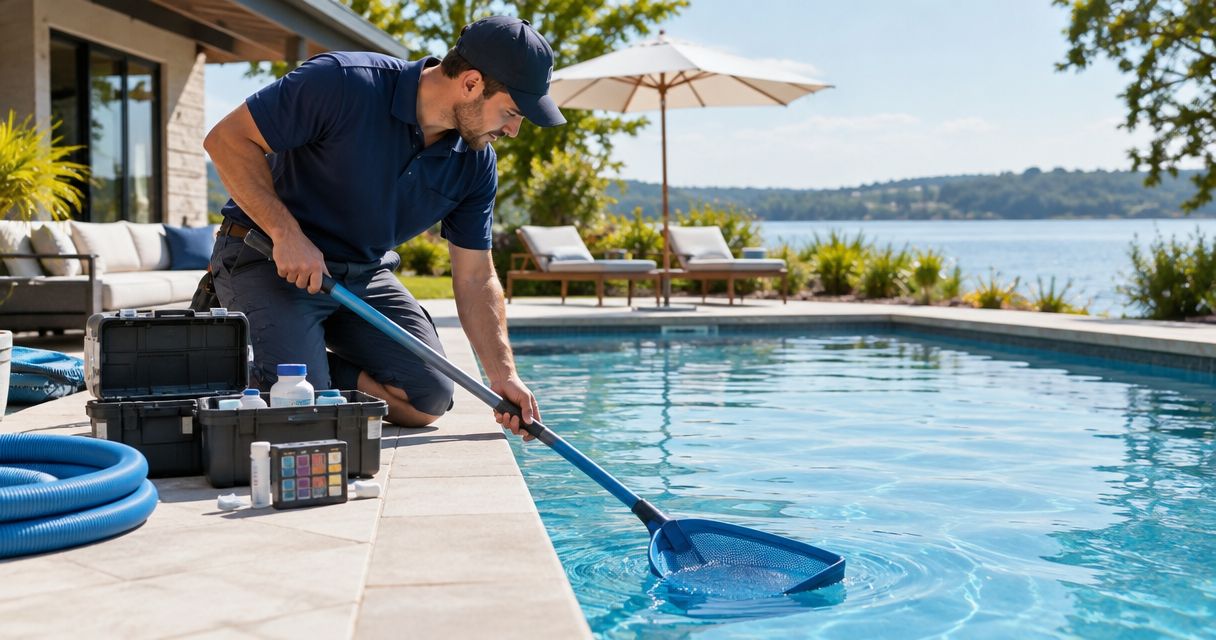
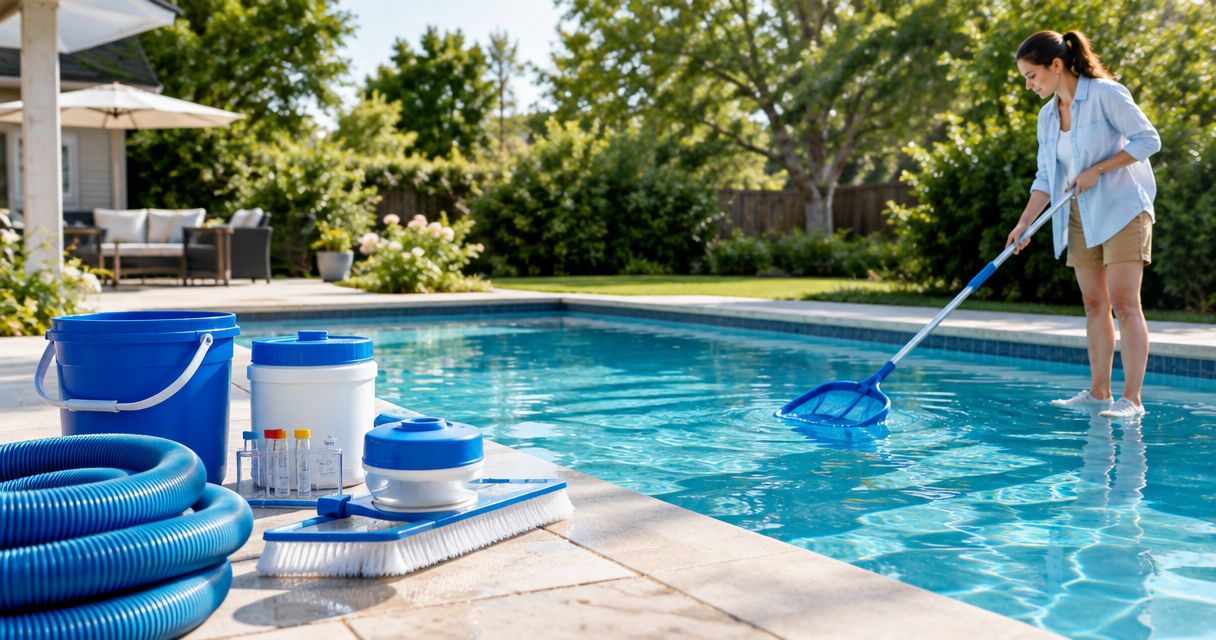
For homeowners in Acworth, GA, and nearby communities, deck restoration also needs to fit around swimming and seasonal pool care. Aqua Turf Solutions offers pool deck restoration, maintenance, and pool opening and closing. Ask about your address, the proposed restoration scope, and appointment arrangements before coordinating those jobs.
This ranking compares coating families, not individual branded products. The right choice depends on your existing deck; no coating turns damaged concrete or standing water into a safe walking surface by itself.
What makes the best pool deck coating?
Use these 5 selection checks when comparing a 2026 proposal. A coating description without answers to these questions is not enough to approve the work.
- Wet traction: Ask for information about the finished coating system under wet conditions, not just a claim about its ingredients.
- Barefoot comfort: Texture needs to provide footing without creating an unnecessarily abrasive surface around steps and seating areas.
- Surface compatibility: Confirm that the system suits the existing concrete, previous finish, and moisture conditions.
- Outdoor suitability: The complete system must be intended for exterior exposure, including its primer and final sealer.
- Maintenance requirements: Understand cleaning instructions, repair options, and restrictions before choosing the finish.
Evaluate the finished system, not the coating bucket. Aggregate, application technique, and a final sealer all affect the surface you actually walk on.
If the concrete needs more than a finish change, compare pool deck resurfacing materials before narrowing the coating choice. Resurfacing and applying a thin coating are different scopes of work.
Pool deck coatings at a glance
These 4 coating families fill different roles. The order below favors correcting a worn concrete surface before considering a lighter refresh or preserving texture that already exists.
| Coating family | Best for | Standout feature | Key limitation |
|---|---|---|---|
| Textured cementitious coating | Worn concrete needing resurfacing | Creates a new textured surface | Does not correct structural movement |
| Textured acrylic coating | Sound concrete needing a finish refresh | Refreshes appearance with a textured finish | Depends heavily on preparation and application |
| Aggregate-broadcast resin coating | Professionally specified traction | Aggregate forms the walking texture | Requires careful exterior-system selection |
| Penetrating sealer | Preserving an already textured deck | Avoids a thick surface film when properly selected | Does not create missing texture |
1. Textured cementitious coating: best for worn concrete
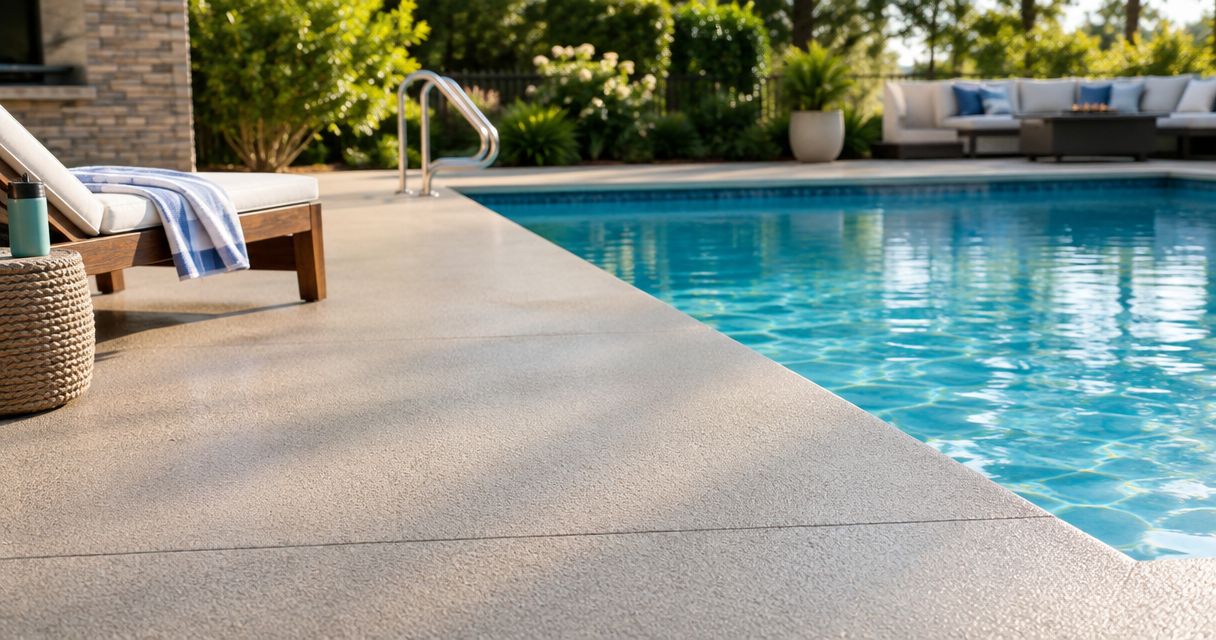
A textured cementitious coating creates a new cement-based surface over properly prepared concrete. Depending on the specified system, the installer applies a textured finish rather than leaving a smooth walking surface. It belongs on your shortlist when the existing deck needs resurfacing, not just a color change.
Textured cementitious coating pros:
- Creates a new texture across a worn concrete surface.
- Allows the proposal to address surface preparation and finishing together.
- Provides an alternative to simply painting over an uneven-looking deck.
Textured cementitious coating cons:
- Existing movement or unstable cracks require separate assessment.
- An aggressive texture can feel rough under bare feet.
- A final sealer can change the feel of the finished surface.
Ask the contractor to describe the proposed texture and explain how cracks will be handled. A sample is more useful than an adjective such as slip-resistant, particularly when children use the deck barefoot.
Best for: Homeowners whose sound concrete needs a new wearing surface.
Verdict: Buy this approach when resurfacing is needed and the substrate is suitable.
2. Textured acrylic coating: best for a surface refresh
A textured acrylic coating refreshes an existing deck with a coating system that includes a textured finish. It is a candidate when the concrete is sound and the work is mainly about the surface. It is not a substitute for repairing loose concrete, correcting drainage, or resolving a failing previous coating.
Textured acrylic coating pros:
- Suits a finish-focused project on compatible concrete.
- Offers a way to refresh appearance without specifying a full cementitious overlay.
- Can incorporate texture when the selected system calls for it.
Textured acrylic coating cons:
- Adhesion depends on preparation and compatibility with the old finish.
- Uneven application can produce inconsistent texture.
- Recoating requires following the system's maintenance instructions.
For your 2026 project, ask whether the proposal describes plain paint or a complete textured deck-coating system. Those are not interchangeable descriptions. Confirm what preparation is included before comparing quotes.
Best for: Homeowners with sound concrete who need a surface refresh rather than resurfacing.
Verdict: Buy for a suitable surface refresh; skip it as a cover-up for damaged concrete.
3. Aggregate-broadcast resin coating: best for specified traction
An aggregate-broadcast resin coating embeds grit or aggregate into a resin-based system. The aggregate creates the walking texture, while the surrounding coating holds it in place. Exterior suitability must be confirmed for the complete system; an indoor floor coating is not automatically suitable beside a pool.
Aggregate-broadcast resin coating pros:
- Makes aggregate selection an explicit part of the traction specification.
- Allows the installer to define the intended texture in the proposal.
- Provides a distinct alternative to a cement-based textured finish.
Aggregate-broadcast resin coating cons:
- Rough aggregate can be uncomfortable for barefoot use.
- Moisture and substrate compatibility need careful assessment.
- Too much topcoat can reduce the exposed texture.
Ask for documentation covering outdoor use and wet walking conditions. Also ask how the selected aggregate and topcoat work together. The word resin does not establish traction, comfort, or suitability on its own.
Best for: Homeowners working with a contractor who can specify and explain an exterior aggregate system.
Verdict: Hold until the complete exterior system and barefoot texture are confirmed.
4. Penetrating sealer: best for keeping existing texture
A penetrating sealer is a preservation option for suitable concrete that already has useful texture. Unlike a thick film-forming finish, an appropriately selected penetrating treatment does not build a new textured walking layer. It therefore belongs in this comparison as an alternative to coating, not as a fix for a smooth deck.
Penetrating sealer pros:
- Preserves the existing surface profile when correctly selected.
- Avoids relying on a thick decorative film for the finish.
- Keeps the project focused on treating suitable existing concrete.
Penetrating sealer cons:
- Does not add the texture a smooth deck lacks.
- Does not hide worn appearance or repair surface damage.
- Compatibility with previous treatments must be checked.
Do not select a sealer solely because it promises protection. Ask what it changes about the walking surface and whether the existing texture is adequate when wet.
Best for: Homeowners preserving sound, already textured concrete.
Verdict: Buy for preservation; skip it when the deck needs new texture.
How to plan the work without creating another problem
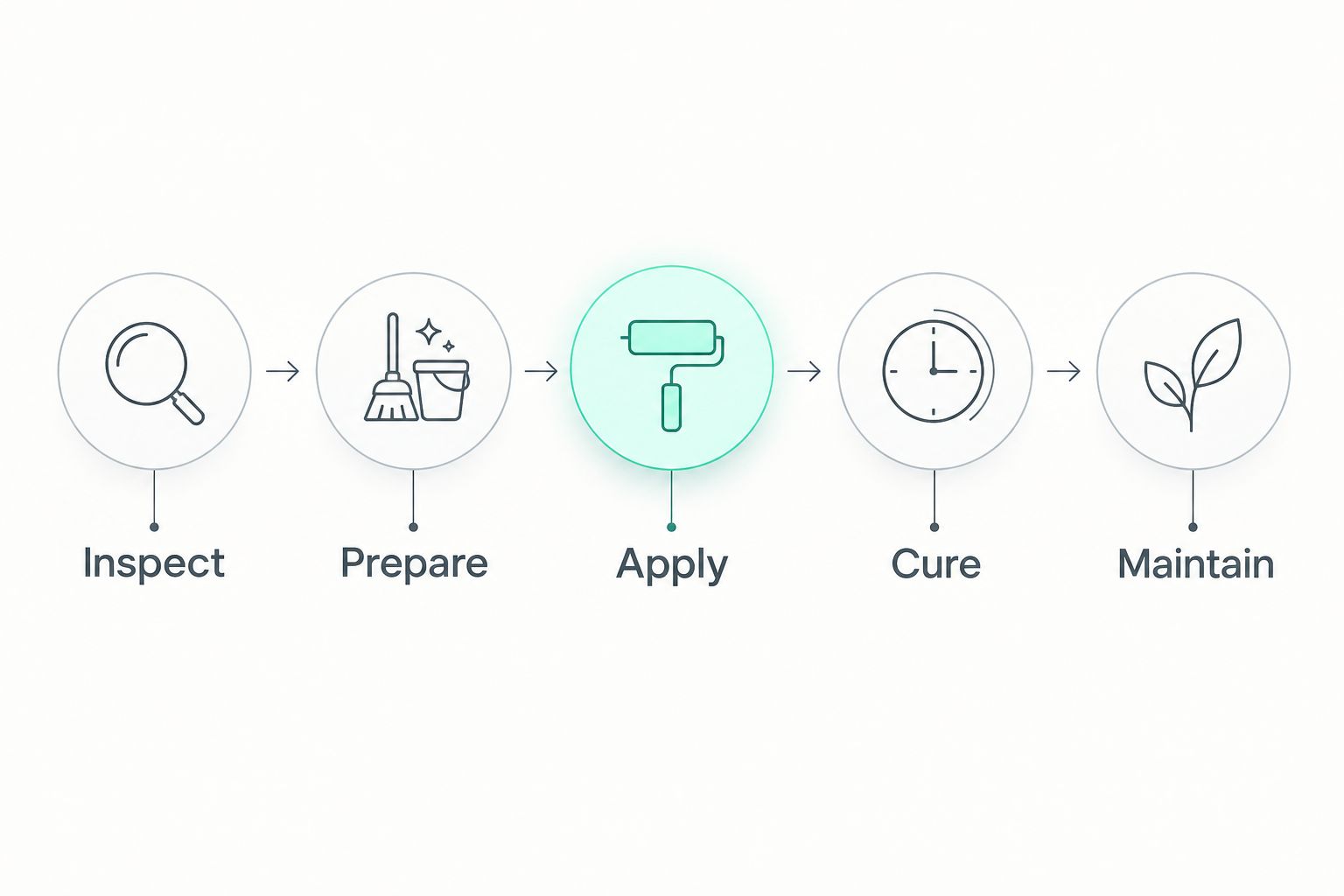
A good 2026 coating project starts with the deck, not the finish sample. Follow this sequence with the person preparing your proposal, and keep the decisions in writing.
1. Inspect
Identify peeling finishes, loose material, cracks, slippery areas, and places where water collects. Point out the route from the pool steps to the house, since that is a useful area to discuss wet footing.
Ask whether each issue falls within the coating scope or needs separate repair. Do not accept coating as an answer to an unexplained drainage problem.
2. Prepare
Confirm how the contractor will clean the surface and handle incompatible or poorly bonded finishes. Preparation requirements come from the chosen system and the actual condition of the deck.
Ask how nearby pool water, coping, landscaping, and equipment will be protected during the work. These are scope questions, not tasks you should assume every quote includes.
3. Apply
Agree on the coating family, texture, and final treatment before application. Request a sample or another clear way to evaluate the intended finish.
Discuss both wet footing and barefoot comfort. A texture that feels acceptable in shoes can be unpleasant where people sit on the edge or walk barefoot.
4. Cure
Get the manufacturer's instructions for returning the deck to use. Dry to the touch does not necessarily mean ready for foot traffic, furniture, or pool water exposure.
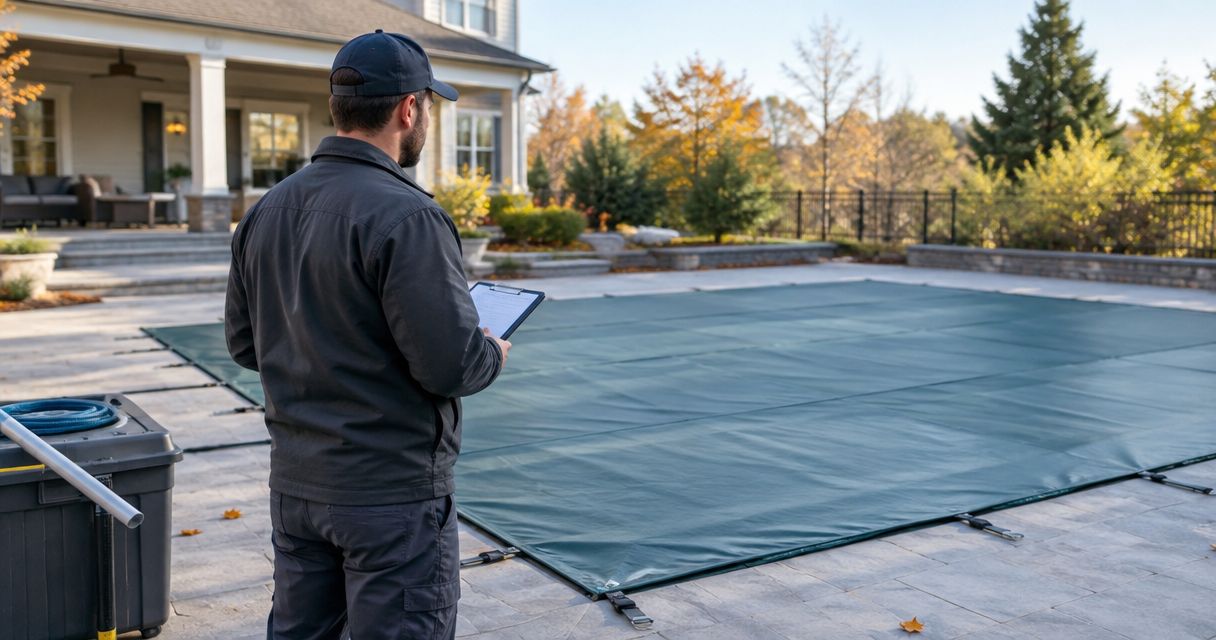
Coordinate access with any pool opening or closing appointment. Do not plan to walk technicians or equipment across a finish that is still curing.
5. Maintain
Request cleaning instructions for the completed surface and its final sealer. Leaves, dirt, and other buildup still need attention on a textured deck.
Keep the coating-system details with your pool records. That makes future cleaning, repairs, and recoating easier to specify.
What should your deck-restoration quote explain?
Fair pricing starts with a clearly defined job. Compare the same scope, not just the final total. A coating-only proposal and a proposal that includes removal, repairs, and resurfacing are different projects.
Ask Aqua Turf Solutions to define the proposed pool deck restoration work for your property. Do not assume a particular coating, crack repair, drainage correction, or sealer is included until the written scope confirms it.
Your quote should explain:
- The deck areas covered by the work.
- Existing finish removal and surface preparation.
- Repairs included and repairs excluded.
- The proposed coating system and texture.
- Any final sealer or protective treatment.
- Access restrictions and return-to-use instructions.
- Cleanup responsibilities and homeowner preparation.
Ask these 3 appointment questions: Is my address within the service area? Can deck work be coordinated with seasonal pool service? What information is needed to request an appointment?
If you live in Marietta, Woodstock, Kennesaw, Dallas, Austell, Smyrna, or Douglasville, confirm service for your address rather than assuming coverage. For a 2026 closing, also ask which pool-closing tasks appear in the separate scope, including any water preparation, equipment winterization, or cover handling that applies to your pool.
Request a defined restoration scope
Discuss your deck condition, address, and seasonal pool-service plans before arranging work.
How this ranking works
This guide ranks coating families by the problem they solve: resurfacing worn concrete, refreshing a sound surface, specifying aggregate texture, or preserving existing texture. It does not present product testing or a universal traction score.
The selection checks remain the deciding factors. A lower-ranked option that suits your deck is a better choice than the first-ranked option applied to an unsuitable surface.
Which pool deck coating should you choose?
Start with textured cementitious resurfacing if your concrete needs a new surface. Choose textured acrylic for a finish refresh on suitable concrete, and consider aggregate-broadcast resin only with a clearly specified exterior system. Keep penetrating sealer for a deck that already has the texture you need.
Aqua Turf Solutions is a pool deck restoration option for homeowners who also need residential pool maintenance, opening, or closing. Request a property-specific scope rather than asking for a coating by name alone.
FAQ
What's the best pool deck coating for slip resistance?
A textured cementitious coating is the default shortlist for worn concrete that needs resurfacing. The finished system still needs to suit the deck, provide appropriate wet texture, and remain comfortable under bare feet.
Is textured acrylic better than cementitious resurfacing?
Textured acrylic suits a surface refresh, while cementitious resurfacing creates a new wearing surface over suitable concrete. Choose based on the deck's condition rather than treating them as interchangeable finishes.
Will a sealer make my pool deck less slippery?
A sealer alone does not establish better wet traction. Penetrating sealers do not create missing texture, and film-forming treatments can change the feel of an existing textured surface.
Can a coating fix cracks or standing water?
A coating is not a substitute for diagnosing cracks or correcting drainage. Ask which repairs are included and which require separate work before approving the finish.
How much does pool deck coating cost in 2026?
The quote depends on the deck area, preparation, existing finish removal, repairs, and selected coating system. Compare written scopes before comparing totals, and request a property-specific quote.
Can I arrange deck restoration with my pool closing?
Ask whether the work can be coordinated and what access each job requires. Coating cure instructions and pool-closing tasks must be accounted for before appointments are arranged.
How do I request an appointment with Aqua Turf Solutions?
Use Aqua Turf Solutions' website to start an appointment inquiry. Provide your address, describe the deck condition, and ask for confirmation of service coverage and the proposed scope.
One last thing
The final sealer belongs in your traction discussion, even when the underlying coating is textured. Ask how it affects the finished surface, not just how it protects the coating. Approve the complete system before work starts.