Best overall: a compatible white LED pool light. Best for adjustable ambiance: a color-changing LED pool light. Best for easier operation: compatible lighting controls. This 2026 guide ranks the best pool lighting upgrades by what you need to improve: underwater visibility, everyday operation, or the space around your pool.
- The best pool lighting upgrades start with a compatible white LED fixture for practical underwater illumination.
- Color-changing LED pool lights suit homeowners who want adjustable ambiance, not a substitute for clear viewing light.
- Lighting controls improve operation; deck lighting helps illuminate the surrounding walking area.
- Aqua Turf Solutions provides pool maintenance and seasonal services; confirm lighting work separately before requesting an appointment.
Why this matters
A backyard pool needs more than an attractive glow. You need to see the water clearly, find the steps, and move around the deck without a light shining straight into your eyes. Underwater lighting and deck lighting solve different problems.
For homeowners in Acworth, Marietta, Woodstock, Kennesaw, Dallas, Austell, Smyrna, and Douglasville, the practical question is what to address before the next swimming season. Aqua Turf Solutions is best suited to homeowners coordinating pool maintenance and seasonal opening or closing. Use the Aqua Turf Solutions website to request an appointment and confirm your address and the work offered. Ask separately whether a lighting issue needs an electrical contractor.
What makes the best pool lighting upgrades?
Choose your 2026 upgrade against these criteria before looking at colors or control features:
- Compatibility: The fixture must match the existing mounting arrangement, electrical requirements, and any controller you intend to keep.
- Useful visibility: Judge how clearly you can see the pool, not just how bright the light looks from the patio.
- Glare control: Light should illuminate water or walking surfaces without pointing into seated swimmers' or guests' eyes.
- Simple operation: Choose controls your household can use without a complicated sequence of switches.
- Service access: Ask how the fixture will be inspected, removed, and serviced later.
- Defined work scope: Separate fixture replacement, electrical repairs, controls, and deck work in the written proposal.
There is no universal replacement that fits every pool. Get the existing light identified before you approve equipment or installation work.
Pool lighting upgrades at a glance
| Upgrade | Best for | Standout feature | Key limitation |
|---|---|---|---|
| Compatible white LED pool light | Practical underwater visibility | A straightforward white-light setting | Fit and electrical compatibility require verification |
| Color-changing LED pool light | Adjustable ambiance | Selectable colors and lighting effects | Color modes do not replace a clear viewing setting |
| Compatible lighting controls | Easier everyday operation | Centralized switching or scheduling | Controls cannot fix weak illumination or damaged wiring |
| Shielded deck and step lighting | Walking around the pool | Light directed onto surrounding surfaces | Does not illuminate the pool interior |
| Floating decorative pool lights | Temporary decoration | Movable accents without replacing the built-in fixture | Not a substitute for permanent pool lighting |
1. White LED pool lights: best for underwater visibility
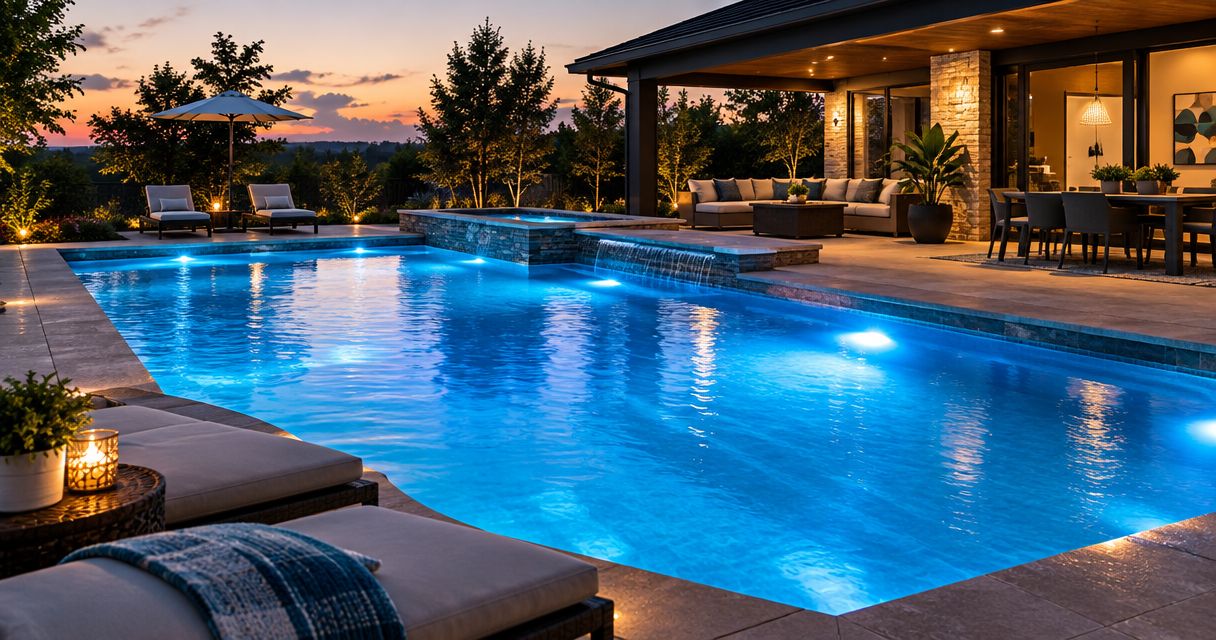
A compatible white LED pool light is the default choice when your main goal is seeing the pool clearly after dark. It replaces or updates an existing underwater lighting arrangement, subject to the fixture's installation requirements. Start here when changing colors is less important than everyday usability.
A replacement lamp and a complete replacement fixture are not interchangeable jobs. Ask the installer to identify which approach your existing light supports and whether any housing, seal, cable, or electrical problem needs separate attention.
White LED pool light pros:
- Keeps the lighting decision focused on visibility.
- Avoids managing decorative color sequences.
- Can preserve a simple switching arrangement when the equipment supports it.
White LED pool light cons:
- A suitable lamp does not solve a damaged housing or cable.
- Existing light placement can still leave shadows.
- A bright fixture can produce glare if its position is unsuitable.
Best for: Homeowners who want dependable, straightforward underwater illumination rather than decorative effects.
Verdict: Buy a compatible white LED pool light after the existing installation has been checked. For a 2026 replacement, match the equipment first and choose the appearance second.
2. Color-changing LED pool lights: best for adjustable ambiance
Color-changing LED pool lights let you change the pool's appearance without moving fixtures. Depending on the selected equipment, operation uses a compatible switch or controller. Confirm the actual control method before choosing the light.
Keep a practical viewing setting in your plan. A dramatic color effect is not the same as clear illumination, and the appearance changes with the pool finish, water clarity, and fixture location. Ask how multiple fixtures will work together if your pool has more than one light.
Color-changing LED pool light pros:
- Provides different looks from the same installed fixture.
- Lets you choose decorative lighting for outdoor gatherings.
- Can combine everyday illumination and ambiance when the selected equipment provides suitable settings.
Color-changing LED pool light cons:
- Controller compatibility needs careful checking.
- Operation can be less intuitive than a basic light switch.
- Decorative colors are not a reason to accept poor underwater visibility.
Best for: Homeowners who already have a suitable lighting layout and want control over the pool's appearance.
Verdict: Buy color-changing LED pool lights for ambiance, with a clear viewing setting as a requirement. Skip the upgrade if you mainly need to repair a failed light and do not want extra controls.
3. Lighting controls: best for easier everyday operation
Compatible lighting controls change how you operate the lights, not where their light falls. Depending on the equipment, controls can provide centralized switching, schedules, or access through a supported interface. Verify each feature against the actual system proposed.
If you already have pool automation, identify its model before ordering anything. The pool automation systems guide is a related starting point when lighting is part of a wider equipment-control decision.
Lighting control pros:
- Makes supported lights easier to operate from a designated control point.
- Can reduce repeated trips to individual switches.
- Helps coordinate compatible fixtures within the same system.
Lighting control cons:
- Does not repair a failed fixture or electrical fault.
- Does not improve an unsuitable lighting layout.
- Adds equipment-specific setup and compatibility questions.
Best for: Homeowners satisfied with their light output but frustrated by switching or managing it.
Verdict: Buy compatible lighting controls when operation is the problem; hold when the underlying light needs repair. For a 2026 controls upgrade, ask the installer to demonstrate normal operation before the job is considered complete.
4. Shielded deck lighting: best for walking around the pool
Deck and step lighting directs light onto the surfaces surrounding the water. It serves a different purpose from an underwater fixture: helping you see the route between the house, pool, seating area, and changes in deck level.
Plan placement from normal viewing positions. Sit where you usually relax, look toward the pool, and check whether proposed fixtures would shine directly into your eyes. Equipment near a pool needs an installation appropriate to its location and the applicable electrical requirements.
Shielded deck lighting pros:
- Illuminates walking surfaces outside the pool.
- Helps make steps and changes in level easier to see.
- Can complement underwater lighting without changing the pool fixture.
Shielded deck lighting cons:
- Cannot replace underwater illumination.
- Poor placement creates glare and distracting reflections.
- Installation can involve separate deck or electrical work.
Best for: Homeowners whose pool is illuminated but whose surrounding walking area is difficult to see.
Verdict: Buy shielded deck lighting for the walking route, not as a workaround for a dark pool. Coordinate fixture locations with any planned deck restoration before approving work.
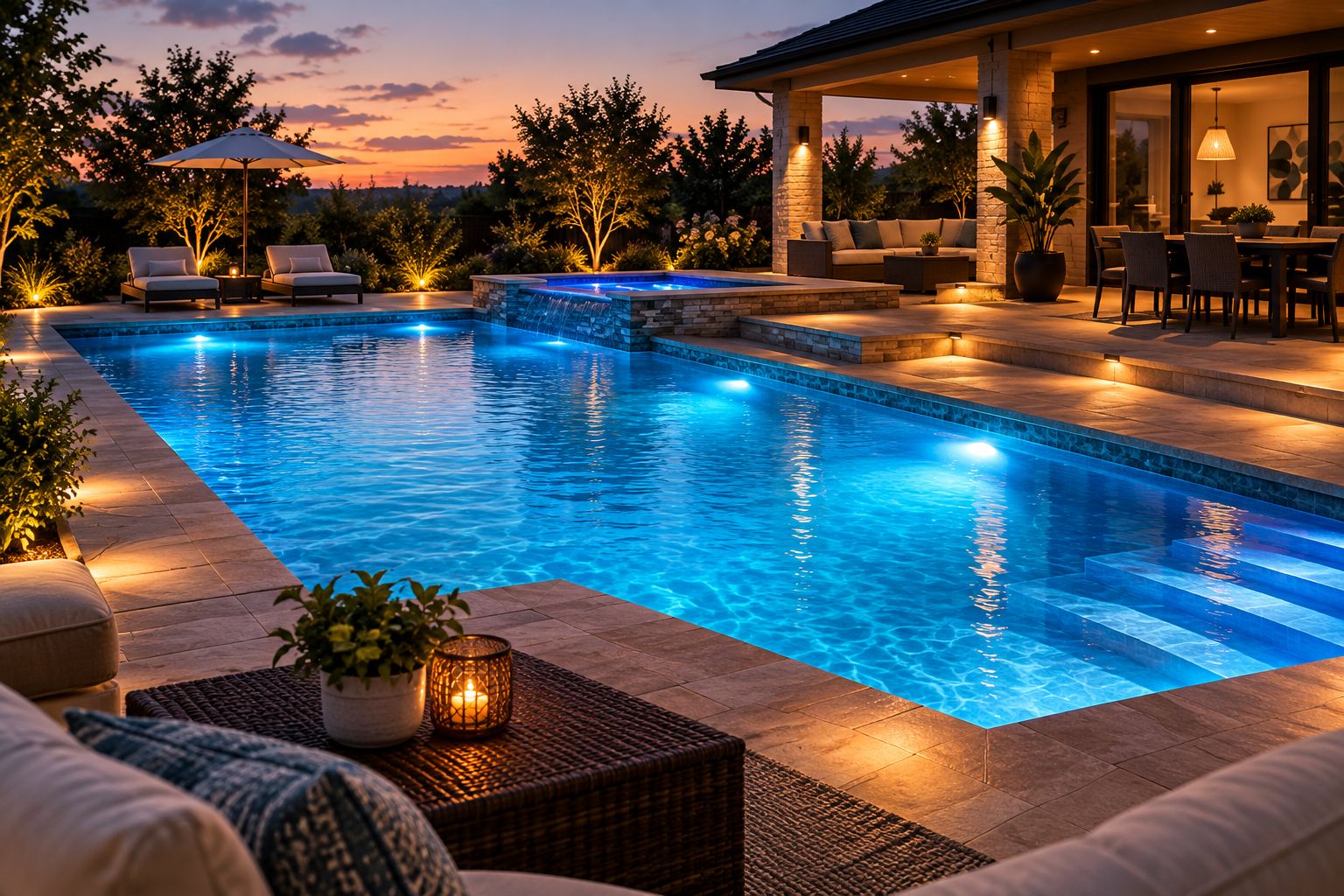
5. Floating pool lights: best for temporary decoration
Floating decorative pool lights add movable points of light to the water's surface. They do not require replacing the built-in pool fixture. Use only equipment specifically intended for that setting and follow its instructions for handling, charging, and removal.
Treat floating lights as accessories, not a lighting repair. They should not obscure your view, interfere with pool equipment, or remain in the water when their instructions call for removal. Keep them out of the way during maintenance and seasonal closing.
Floating pool light pros:
- Adds temporary decoration without changing the installed fixture.
- Lets you adjust the arrangement without permanent mounting.
- Keeps decorative decisions separate from a larger lighting project.
Floating pool light cons:
- Does not provide a dependable replacement for built-in illumination.
- Requires handling and storage according to the product instructions.
- Movable lights can become obstacles during cleaning or pool use.
Best for: Homeowners with working permanent lighting who want temporary decorative accents.
Verdict: Buy floating pool lights only as decoration; skip them as the solution to a failed underwater light. In your 2026 lighting plan, permanent illumination comes first.
How to plan a lighting upgrade around opening or closing
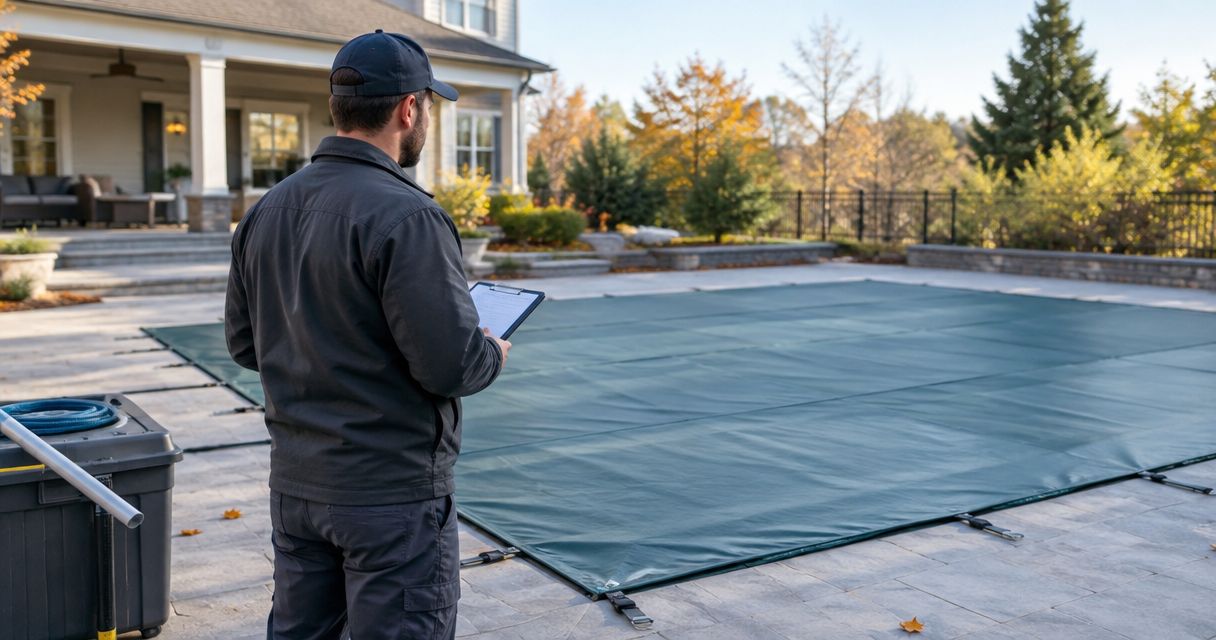
Seasonal service is a useful time to document problems and coordinate access. It does not mean a pool closing automatically includes light replacement, electrical repairs, or deck work. Ask Aqua Turf Solutions to define the seasonal service scope and confirm who should handle the lighting issue.
1. Describe the problem
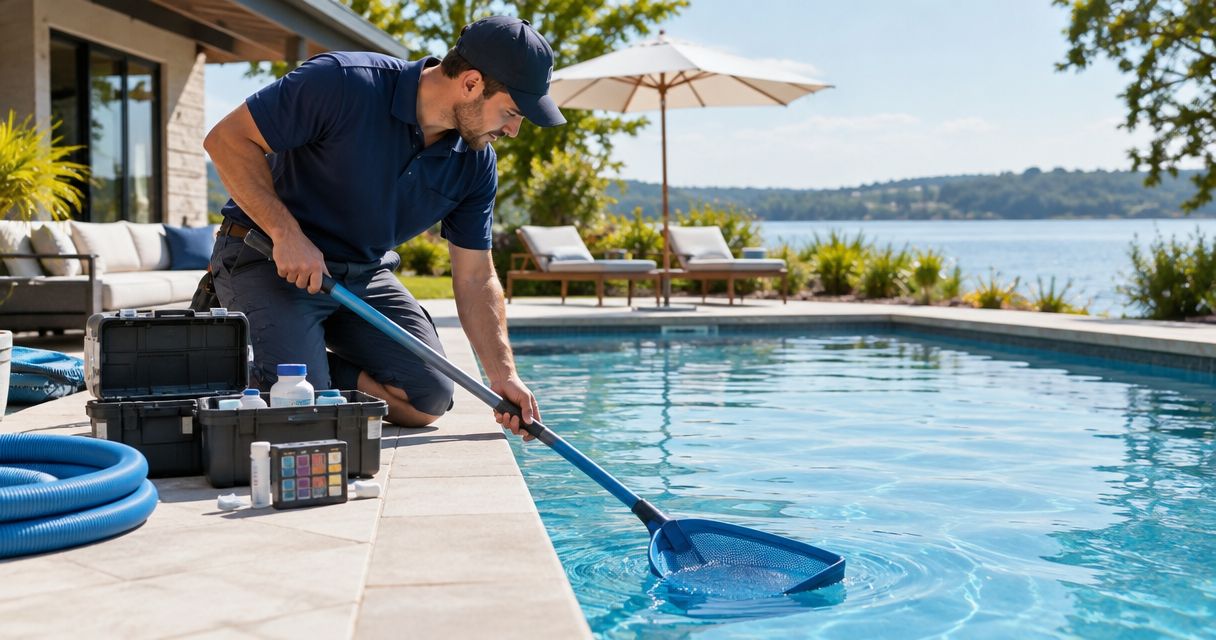
Write down what you see: a light that will not turn on, uneven illumination, unwanted glare, or confusing controls. Include photos of accessible equipment labels. Do not open electrical enclosures or remove an underwater fixture to gather information.
2. Separate repair from upgrade
A failed light needs diagnosis before a decorative choice. Tell the contractor whether you want restored operation, a different lighting effect, easier controls, or better deck visibility. These goals call for different work.
3. Request a defined scope
Ask the proposal to identify the equipment, installation work, electrical checks, control setup, and cleanup being quoted. Have exclusions listed too. A clearly defined scope is the basis for judging a fair quote; a fixture-only proposal and a proposal including repairs are different jobs.
4. Coordinate seasonal access
For a 2026 opening or closing appointment, explain whether the pool will be covered and whether equipment access is restricted. Ask which work should happen before the cover is fitted or after it is removed. Do not uncover or alter the pool unless instructed by the responsible service provider.
5. Confirm the handoff
Before approving the plan, confirm who handles pool service, lighting installation, and any deck repairs. Request operating instructions and the equipment identification for your records. Keep that information with your opening and closing paperwork.
Request a seasonal pool appointment
Share your pool concerns and ask which seasonal tasks and separate lighting work apply.
How these lighting upgrades are ranked
White LED pool lights rank first because they address practical underwater visibility without making decorative effects the priority. Color-changing lights come next for appearance, while controls address operation. Deck lights and floating lights serve separate purposes rather than competing as replacements for an underwater fixture.
This is a ranking of upgrade types, not a tested comparison of named products. Compatibility, useful visibility, glare control, and a defined installation scope decide the recommendation. Your existing equipment can rule out an otherwise attractive option.
Which pool lighting upgrade should you choose?
Choose a compatible white LED pool light if you are undecided and need better everyday underwater illumination. Choose color-changing lighting when appearance is the main goal, or controls when the light already performs well but is awkward to operate.
Keep deck visibility separate from underwater visibility. If both are poor, write both problems into the request rather than expecting a single fixture to solve everything. Never use decorative floating lights to postpone a needed electrical inspection.
FAQ
What's the best pool lighting upgrade for a backyard pool?
A compatible white LED pool light is the default recommendation for practical underwater illumination. Confirm the existing fixture, electrical requirements, and mounting arrangement before choosing a replacement.
Are color-changing pool lights better than white pool lights?
Color-changing pool lights are better for adjustable ambiance, while white pool lights suit straightforward illumination. Choose by the problem you want to solve, and require a clear viewing setting rather than relying only on decorative colors.
Can I put an LED bulb in my existing pool light?
Only use an LED replacement that is explicitly compatible with the existing pool light. Some installations require a complete fixture replacement, and a lamp change does not repair a damaged housing or cable.
Can pool lighting work happen during a pool closing?
Lighting work needs its own confirmed scope and responsible contractor, even when coordinated with a pool closing. Ask which inspections or repairs should happen before the cover is fitted, and do not assume seasonal service includes electrical work.
How should I compare quotes for pool lighting upgrades?
Compare the written scope, not just the fixture description. Ask each proposal to identify equipment, installation, electrical checks, control setup, cleanup, and exclusions so you can compare the same work.
How do I request seasonal service near Acworth?
Use the Aqua Turf Solutions website to request a seasonal appointment and provide your address, pool condition, and opening or closing needs. Confirm service coverage for your location and ask separately about lighting concerns.
Can I keep using a pool when the light has an electrical problem?
Keep everyone out of the water when you suspect an electrical problem and arrange a qualified inspection. Do not touch, remove, or troubleshoot the underwater light yourself.
One last thing
Take a photo of the accessible equipment label before it becomes hard to reach under seasonal covers or stored furniture. Keep it with your service paperwork. That simple record helps the next contractor identify what is installed without treating the appearance of the light as proof of compatibility.
Bring the lighting concern to your seasonal appointment request, but keep the scopes separate. Aqua Turf Solutions provides pool maintenance and opening or closing services; confirm any lighting work before you expect it on the appointment.