Best overall: textured outdoor porcelain. Best for a traditional patio: unglazed quarry tile. Best for a natural stone look: filled, textured travertine. This 2026 guide compares the best pool tile options for deck renovation and explains what to check before coordinating deck work with a seasonal pool closing.
- Textured outdoor porcelain leads the best pool tile options for deck renovation; confirm suitability for wet, barefoot use.
- Unglazed quarry tile suits traditional patios; travertine suits homeowners willing to maintain natural stone.
- Aqua Turf Solutions offers pool deck restoration and seasonal pool closing; request a clearly defined scope before scheduling.
- Fix drainage and substrate problems before selecting a finish; attractive tile does not correct an unsuitable base.
Why this matters
Pool deck tile and waterline tile serve different purposes. A tile designed for the inside of a swimming pool is not automatically suitable for the walking surface around it. Your deck needs a surface suited to outdoor exposure, wet feet, and the base beneath it.
For homeowners in Acworth, GA, planning a renovation also means deciding how the work fits around pool use and seasonal closing. Aqua Turf Solutions is a practical service contact for homeowners coordinating pool deck restoration with seasonal pool closing. Start with Aqua Turf Solutions to request an appointment and describe both needs; confirm the exact restoration work offered before assuming tile installation is included.
If you live in nearby Marietta, Woodstock, Kennesaw, Dallas, Austell, Smyrna, or Douglasville, ask whether your address falls within the service area. A nearby town name is not confirmation of coverage.
What makes the best pool deck tile?
Use these checks for your 2026 shortlist before choosing a color or pattern:
- Wet-foot suitability: Ask for documentation covering the exact tile and finish in an outdoor, wet walking area. Texture alone is not proof of suitability.
- Outdoor durability: Confirm that the manufacturer permits exterior use and the freezing conditions your installation will encounter.
- Sound installation base: Have the existing deck assessed for movement, cracks, drainage, and compatibility with the proposed installation.
- Barefoot comfort: Evaluate texture, edges, and sun exposure. A surface that looks good indoors can feel unpleasant beside a pool.
- Maintenance fit: Understand cleaning, sealing where specified, grout care, and access for repairs before committing.
- Seasonal coordination: Keep equipment access, cover anchors, and closing tasks separate from the deck finish decision.
Choose the installation system and the tile together. Neither the surface material nor the adhesive alone determines whether the finished deck performs properly.
Pool deck tile options at a glance
These 2026 recommendations compare material types, not named products. Each recommendation depends on documentation for the exact tile, its finish, and its installation system.
| Rank and material | Best for | Standout feature | Key limitation |
|---|---|---|---|
| 1. Textured outdoor porcelain | Lower-upkeep everyday decks | Low water absorption and varied finishes | Requires a suitable exterior installation system |
| 2. Unglazed quarry tile | Traditional clay-style patios | Color and texture without a glossy glaze | Exterior and freezing suitability varies by product |
| 3. Filled, textured travertine | Natural stone character | Visible variation and a softer visual pattern | Pores, filling, and stone care need attention |
| 4. Textured granite tile | Durable natural stone surfaces | Dense stone with textured finish options | Rough finishes need a barefoot comfort check |
| 5. Exterior-rated textured slate | Layered, rustic deck designs | Distinctive cleft texture and color variation | Layering and exterior performance vary by stone |
If the existing deck needs a new walking surface rather than a tile installation, compare pool deck coatings for slip resistance before choosing a renovation method.
1. Textured outdoor porcelain: best for lower-upkeep decks
Textured outdoor porcelain is the default shortlist choice for homeowners who want tile without the stone-specific care some natural materials require. Porcelain has low water absorption, but you still need an exterior-rated product and a finish documented for the intended wet application.
Do not substitute polished interior porcelain because the color matches your patio. Ask your installer to identify the tile, setting materials, grout, drainage plan, and movement joints as one compatible system.
Textured outdoor porcelain pros:
- Low water absorption distinguishes porcelain from more absorbent tile bodies.
- Stone-look finishes offer a natural appearance without using natural stone.
- It avoids stone-specific filling and sealing requirements, although grout still needs care.
Textured outdoor porcelain cons:
- An unsuitable base or installation system can undermine the finished deck.
- Some textured surfaces require more brushing to remove trapped dirt.
Best for: Homeowners prioritizing routine cleaning over natural stone character.
Verdict: Buy when the exact product is documented for your outdoor pool deck and the installation plan addresses drainage and movement.
2. Unglazed quarry tile: best for traditional patios
Unglazed quarry tile gives a deck a clay-style appearance without a glossy surface glaze. It suits a traditional patio design when the specific product is approved for exterior conditions and wet walking areas.
Do not treat all quarry tile as interchangeable. Check the manufacturer's application guidance and ask how grout joints, cleaning, and exposed edges will be handled around the pool.
Unglazed quarry tile pros:
- Its clay-style appearance works with traditional outdoor designs.
- The absence of a glossy glaze avoids relying on that finish for the walking surface.
- Repeated tile shapes make a straightforward layout possible.
Unglazed quarry tile cons:
- Exterior and freezing suitability require product-specific confirmation.
- Grout joints add cleaning work, especially where leaves and soil collect.
Best for: Homeowners who want a traditional patio finish rather than a stone-look deck.
Verdict: Hold until you have written confirmation of outdoor suitability and a wet-foot finish assessment.
3. Filled, textured travertine: best for natural stone character
Travertine brings natural variation and visible stone character to a pool surround. Its pores and cavities make the exact surface treatment important; filled and textured material deserves a closer look than polished stone for this application.
Ask what the supplier recommends for filling, sealing, cleaning, and exterior exposure. Stone appearance alone does not tell you how a particular tile will handle your deck conditions.
Filled, textured travertine pros:
- Natural variation gives each tile a different appearance.
- Filled surfaces address the open cavities characteristic of travertine.
- Textured finishes provide an alternative to polished stone.
Filled, textured travertine cons:
- Acidic cleaners can damage this calcium-based stone.
- Filling and manufacturer-recommended stone care add maintenance responsibilities.
Best for: Homeowners who prefer natural stone and accept its care requirements.
Verdict: Buy only after you approve the actual finish underfoot and understand the maintenance instructions.
4. Textured granite tile: best for dense natural stone
Granite is a dense natural stone available with different surface treatments. For a pool deck, focus on an exterior-suitable textured finish rather than polished granite.
Texture requires a balance: it needs to suit wet walking without making the deck uncomfortable for bare feet. Inspect the edges as carefully as the tile face, especially near coping and changes in level.
Textured granite tile pros:
- Granite provides a hard natural stone surface.
- Different surface treatments allow you to compare texture options.
- Natural patterns create a distinct appearance without a printed finish.
Textured granite tile cons:
- Aggressive textures can feel rough under bare feet.
- Stone weight and the proposed installation need a suitable supporting base.
Best for: Homeowners seeking dense natural stone who will evaluate the finish in person.
Verdict: Hold until a sample passes your comfort check and the installer confirms the full exterior assembly.
5. Exterior-rated textured slate: best for rustic designs
Slate has a layered structure and a distinctive cleft appearance. Those characteristics make it attractive for rustic decks, but they also make product selection especially important outdoors.
Ask the supplier to document the specific stone's exterior suitability. Do not assume an indoor slate tile or an attractive sample represents material appropriate for a wet pool surround.
Exterior-rated textured slate pros:
- Cleft texture creates a visibly layered surface.
- Natural color variation suits rustic outdoor spaces.
- Individual tiles provide visual interest without a repeated printed pattern.
Exterior-rated textured slate cons:
- Some slate can flake or separate along its layers.
- Uneven surfaces and edges need a careful barefoot assessment.
Best for: Homeowners whose main priority is a rustic appearance and who accept stone-specific selection and care.
Verdict: Skip any slate without documented exterior suitability; consider qualified material only after checking texture and edges.
Check samples before approving the renovation
A showroom sample answers the color question. Your backyard answers the comfort and exposure questions. For your 2026 project, use this sequence before approving material:
- Check documents. Confirm the exact tile, finish, intended application, and installation requirements.
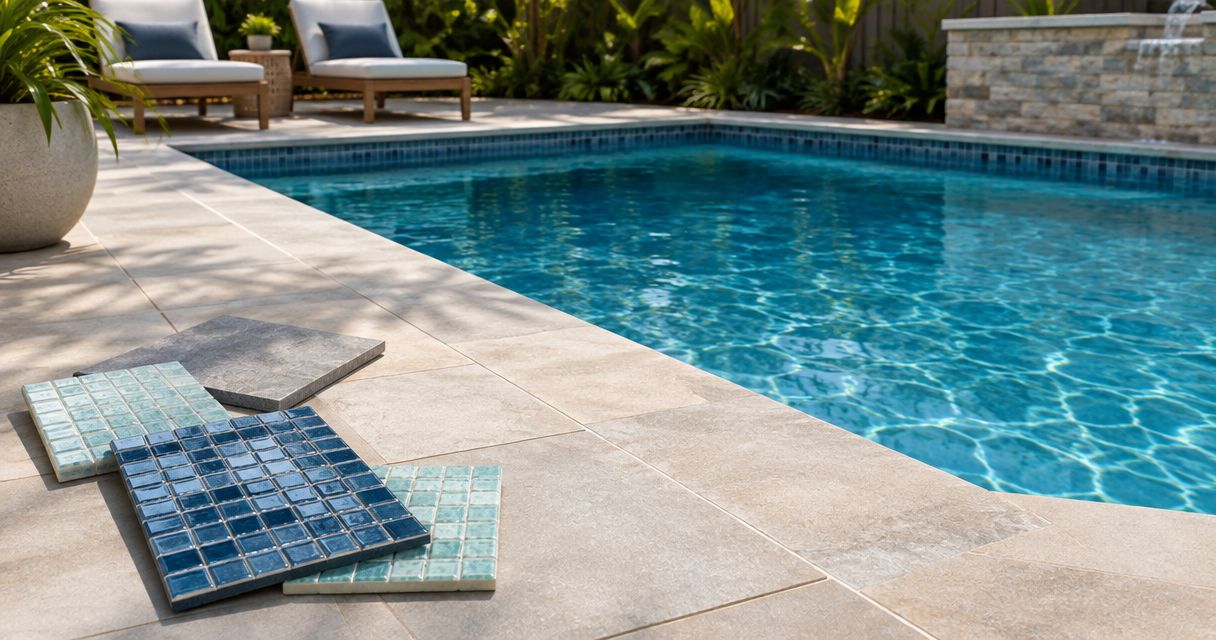
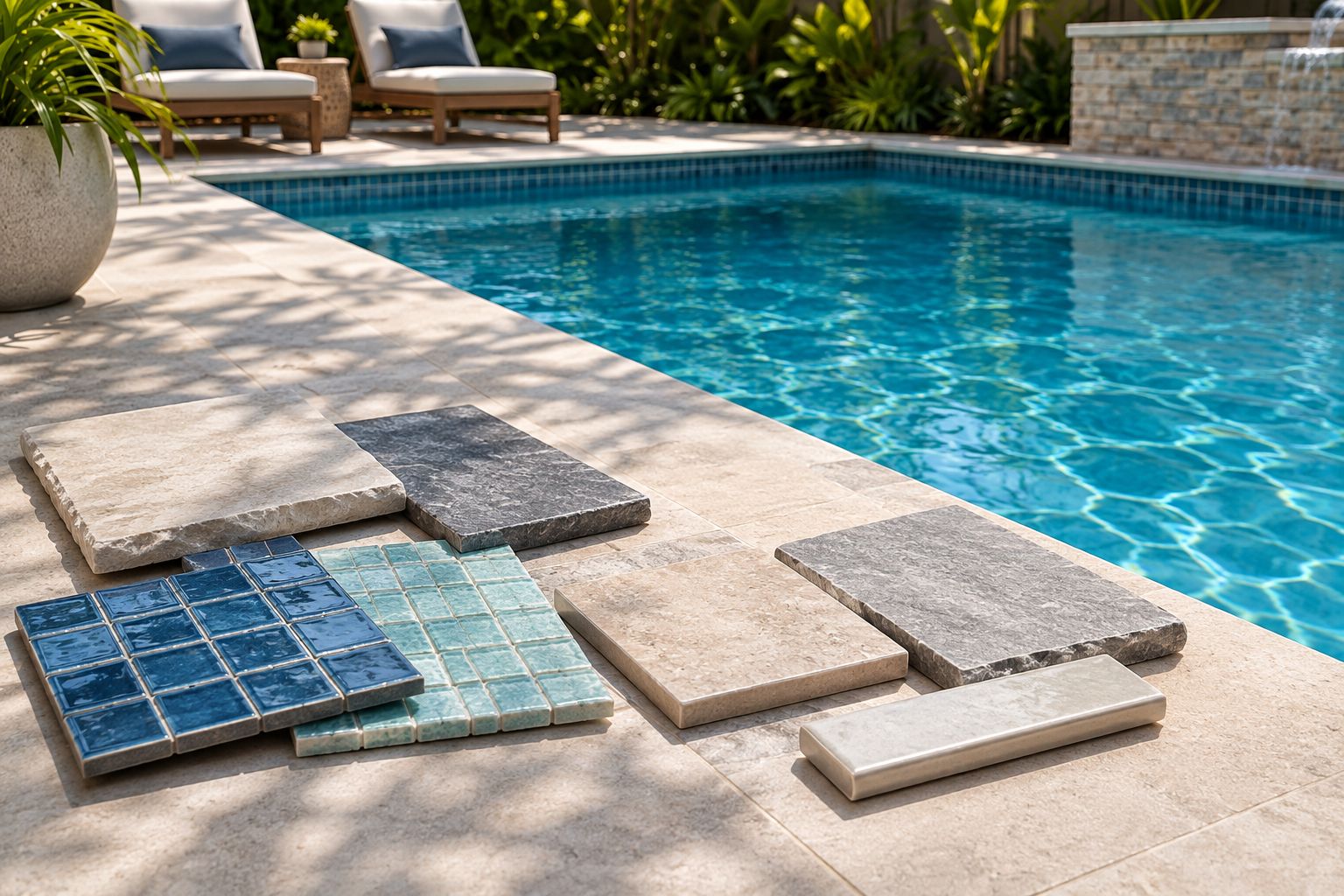
- Compare samples. Examine samples in 3 locations: beside the pool, in direct sun, and in shade. Compare appearance and touch without treating a sample check as a formal slip test.
- Inspect edges. Look for sharp corners, uneven transitions, and details that affect bare feet.
- Review drainage. Have the installer explain how water will leave the surface and how existing problems will be corrected.
- Confirm scope. Put preparation, installation, cleanup, and exclusions in writing.
A sample laid beside the deck is useful for judging color and texture. It does not reproduce the drainage, joints, or support of an installed surface.
Coordinate deck work with pool closing
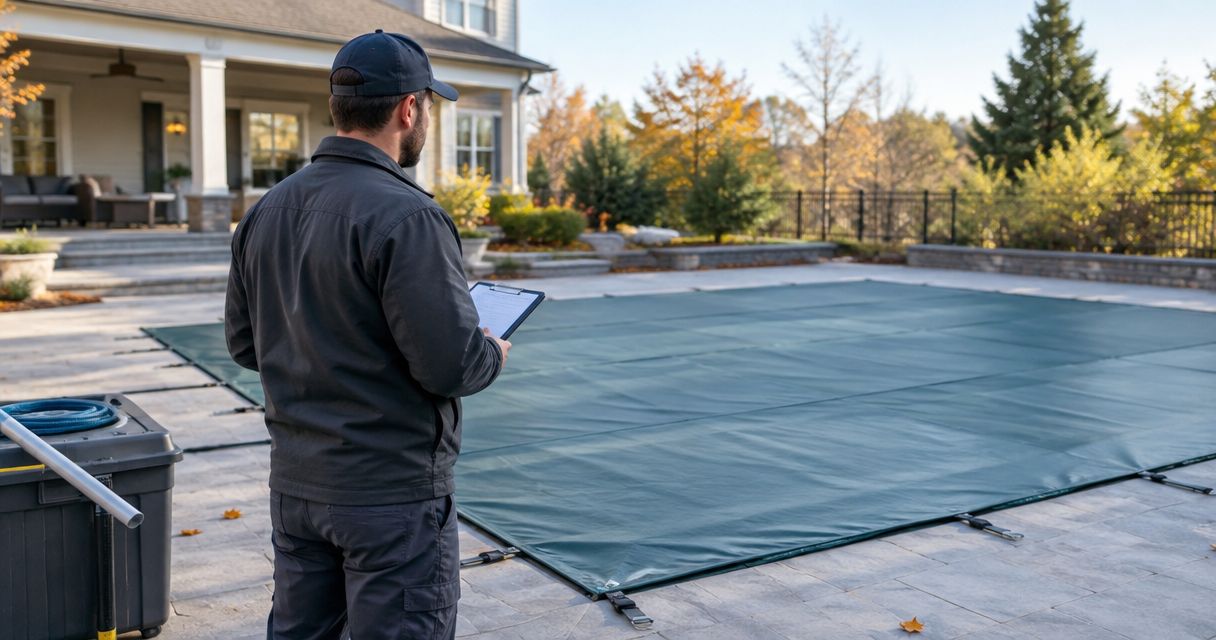
Planning deck work and closing together starts with 2 written scopes: one for the renovation and one for seasonal pool closing. Keep them separate even if you discuss both during the same appointment request.
For Aqua Turf Solutions pool deck restoration, explain what is wrong with the existing surface and ask which restoration methods are offered. Do not assume a restoration service includes removing old tile or installing new tile.
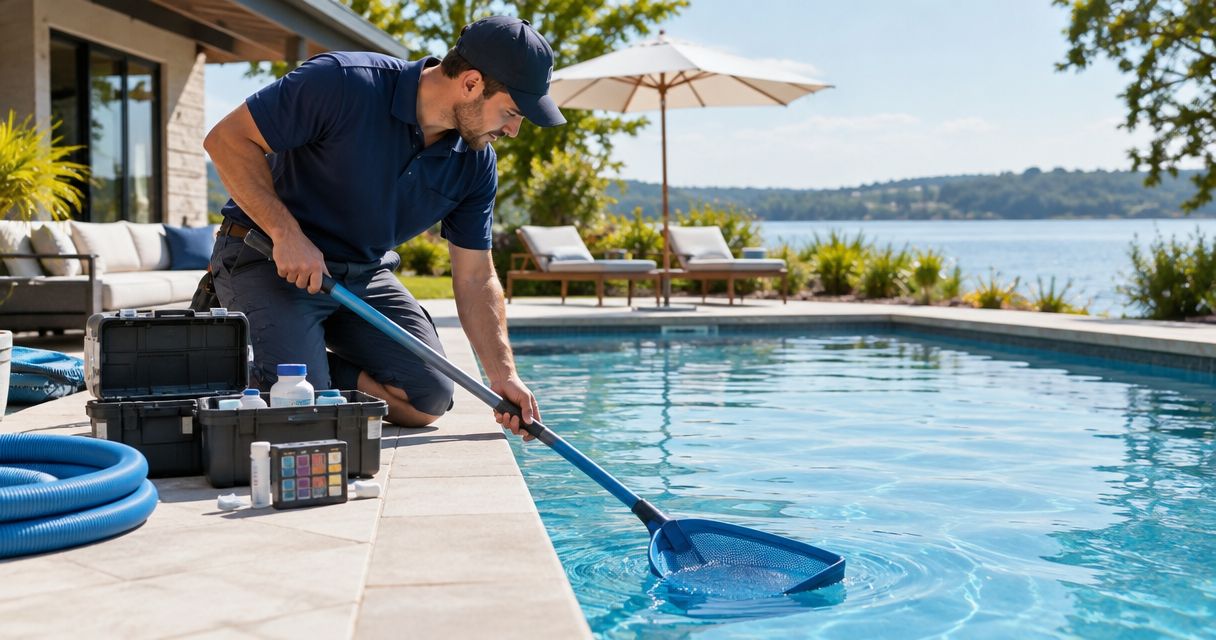
For Aqua Turf Solutions pool closing, ask which tasks your quote includes. A closing discussion should address these areas without assuming every task belongs in the quoted service:
- Water preparation: Testing, adjustments, and any treatment specified for your pool.
- Equipment protection: The plan for pumps, filters, heaters, and plumbing where applicable.
- Accessories: Handling ladders, fittings, and other removable items as agreed.
- Cover work: Whether cover installation, anchor checks, or cover-related repairs are included.
- Follow-up: Any homeowner responsibilities after the appointment.
Your closing cost depends on the quoted scope, your pool and equipment, its condition, and any separately agreed work. Ask for a fair quote with clear inclusions and exclusions, rather than comparing totals for different services.
For a 2026 seasonal project, confirm the sequence before work begins. Ask who keeps equipment accessible, who protects the pool during deck work, and who checks cover-anchor access afterward. Follow the installation manufacturer's instructions before putting the renovated surface into use.
Request your seasonal pool appointment
Describe your pool closing needs and deck concerns, then confirm the quoted scope and service area.
How the options are ranked
This guide ranks material categories by wet-area suitability, outdoor application, maintenance demands, barefoot comfort, and installation requirements. It is not a product test or a promise that every tile within a category meets those criteria.
Porcelain takes the default position because low water absorption and the absence of stone-specific care make it a practical starting point. The other materials earn distinct use-case slots. Product documentation and the site assessment override the category ranking.
Which pool deck tile should you choose?
Start with textured outdoor porcelain for your 2026 deck renovation. Choose quarry tile for a traditional clay-style patio, travertine for natural stone character, granite for dense textured stone, or qualified slate for a rustic design.
If the base, drainage, or existing surface needs substantial correction, settle that scope first. Choosing tile before understanding the repair work leaves the most important decision unresolved.
FAQ
What's the best pool tile for a deck renovation?
Textured outdoor porcelain is the default shortlist choice for a pool deck renovation. Confirm that the exact product and installation system suit exterior exposure and wet, barefoot walking.
Can I use waterline tile on my pool deck?
Waterline tile is not automatically suitable for a pool deck. Use it on a walking surface only when the manufacturer documents that application and the installer confirms a suitable assembly.
Is porcelain better than travertine around a pool?
Porcelain is the better starting point when your priority is avoiding stone-specific maintenance. Travertine suits homeowners who prefer natural stone and accept its filling, cleaning, and care requirements.
Does textured tile mean the pool deck won't be slippery?
No, texture alone does not establish wet-area suitability or eliminate slipping. Review documentation for the exact finish, and address drainage, cleaning, and installation details.
How much does pool deck tile renovation cost?
The cost depends on the quoted material and installation scope. Ask for preparation, repairs, removal, drainage work, finishing details, and cleanup to be identified so you can compare equivalent proposals.
What should I ask about a pool-closing appointment?
Ask which water, equipment, plumbing, accessory, and cover tasks the quote includes. Aqua Turf Solutions offers seasonal pool closing; confirm your address, requested work, and homeowner responsibilities when requesting an appointment.
Should I renovate the deck before or after closing the pool?
Set the sequence with the closing provider and deck contractor before scheduling. The plan must preserve equipment access, protect the pool during work, and account for cover anchors and installation instructions.
One last thing
A new deck finish can change access to existing cover anchors. Before approving the renovation, ask the contractor to identify those anchors and explain how the finished surface will preserve their use. That small planning step connects your material choice to the next pool closing.