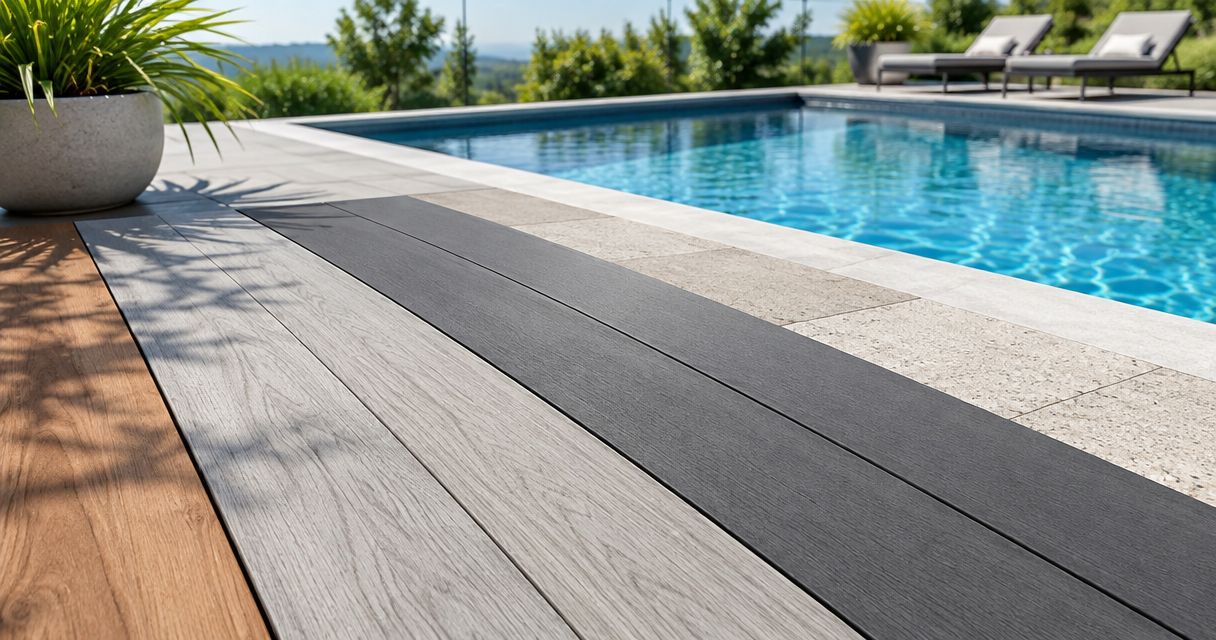
Best overall: concrete pavers. Best for a continuous surface: poured concrete. Best for keeping a sound existing slab: resurfacing. This 2026 guide to pool deck materials ranked by durability helps you compare replacement options and decide when Aqua Turf Solutions' pool deck restoration service is the more relevant next step.
- For pool deck materials ranked by durability, concrete pavers are the default choice when repairability matters.
- Poured concrete suits homeowners who want a continuous deck, but cracks need separate evaluation.
- Natural stone and outdoor porcelain require material-specific checks for wet traction and installation suitability.
- Aqua Turf Solutions offers pool deck restoration; request a defined scope before choosing restoration over replacement.
Why this matters
A pool deck has to handle water, foot traffic, weather, and movement underneath it. A hard surface is not automatically a durable installation. Drainage, support, joints, and maintenance determine whether the deck stays usable.
For homeowners in Acworth, Marietta, Woodstock, Kennesaw, Dallas, Austell, Smyrna, and Douglasville, a seasonal pool-closing appointment is a practical opportunity to flag deck problems. Ask whether a deck assessment is available rather than assuming it is included in closing service. Confirm service coverage for your address when requesting an appointment.
Choose the material around the failure you want to prevent, not just the finish you want to see. A worn coating, a loose paver, and a sinking slab need different responses.
What makes the best pool deck material?
This 2026 ranking prioritizes durability you can maintain, not an unsupported promise about how many years a deck will last.
- Repairability: Can you replace a damaged section without removing the surrounding deck?
- Movement tolerance: What happens when the supporting ground shifts or a joint opens?
- Wet traction: Is the specific finish suitable for barefoot use around a pool?
- Weather suitability: Does the selected material and installation suit exterior exposure?
- Maintenance burden: What cleaning, joint care, sealing, or refinishing does the surface require?
- Existing-deck compatibility: Does the project need a new structure, or only restoration of a sound surface?
Treat traction as a separate decision from strength. A durable material with an unsuitable finish is still the wrong poolside choice. The guide to pool deck coatings for slip resistance helps frame that part of your assessment.
Pool deck durability at a glance
The 2026 order below favors repairable systems and straightforward maintenance. It is a homeowner decision guide, not a laboratory hardness ranking or a measured lifespan comparison.
| Rank and material | Best for | Standout durability feature | Key limitation |
|---|---|---|---|
| 1. Concrete pavers | Replaceable sections | Individual units can be lifted and replaced | Base movement and joint maintenance need attention |
| 2. Poured concrete | A continuous walking surface | Solid surface without separate paving units | Cracks and settlement complicate repairs |
| 3. Dense natural stone | A stone finish with material-specific selection | Selected dense stones resist surface wear | Stone properties and wet traction vary |
| 4. Exterior porcelain pavers | A low-absorption surface | Porcelain has low water absorption | Support, edge protection, and installation matter |
| 5. Deck resurfacing | Retaining sound existing concrete | Renews the wearing surface without replacing the slab | Cannot correct structural movement |
| 6. Wood decking | A raised deck with replaceable boards | Individual boards can be replaced | Moisture exposure demands regular inspection and care |
1. Concrete pavers: best for replaceable sections
Concrete pavers form a deck from separate units rather than a continuous poured slab. Their main durability advantage is repair access: a damaged unit can be replaced, and a settled area can be lifted for base correction.
That does not make pavers maintenance-free. A poorly prepared base still produces uneven surfaces, and joints need care. Ask how the installation will manage drainage and restrain the deck edges.
Concrete pavers pros:
- Individual units are replaceable.
- Localized settlement can be addressed without removing the entire deck.
- Separate units accommodate repairs differently from a continuous slab.
Concrete pavers cons:
- Settlement can create uneven walking surfaces.
- Joints and edge restraints need inspection.
Best for: Homeowners who prioritize localized repairs over a completely continuous appearance.
Before choosing pavers, ask how repairs will be matched to the original installation. Replacement units can differ in appearance from weathered ones. Buy: choose concrete pavers when repairability is your main durability requirement.
2. Poured concrete: best for a continuous walking surface
Poured concrete creates a continuous deck divided by planned joints. It suits homeowners who want a straightforward surface without the repeated joints of individual paving units.
Its weakness is repair visibility. Concrete can crack, and a surface patch does not resolve movement beneath the slab. The finish also matters: smooth concrete is not interchangeable with a textured poolside finish.
Poured concrete pros:
- Provides a continuous walking surface.
- Accepts different surface textures.
- A sound slab can support an appropriate restoration system later.
Poured concrete cons:
- Cracks and repairs can remain visible.
- Settlement requires more than cosmetic resurfacing.
Best for: Homeowners who want a continuous deck and will insist on proper joints, drainage, and texture.
Ask the installer to explain joint placement and how water will leave the deck. Those details belong in the scope, not in a vague promise that concrete is durable. Buy: choose poured concrete for a continuous surface, with installation details documented.
3. Dense natural stone: best for a material-specific stone finish
Natural stone is a broad category, not a single durability grade. Dense granite and other suitable exterior stones have different properties from more porous or layered stone, so the exact selection matters.
Evaluate the actual stone and finish proposed for your deck. A polished surface and a textured surface do not provide the same poolside experience, even when they share a stone name.
Dense natural stone pros:
- Selected dense stones resist surface wear.
- Individual paving pieces allow localized replacement.
- Different finishes let you assess texture alongside appearance.
Dense natural stone cons:
- Porosity, staining behavior, and weather suitability vary by stone.
- Replacement pieces can differ in color and pattern.
Best for: Homeowners who want stone and will review the exact material rather than buying by category name.
Request exterior-use guidance, maintenance instructions, and information about wet traction for the proposed finish. Hold: approve natural stone only after confirming the specific stone and installation are suitable for your pool deck.
4. Exterior porcelain pavers: best for a low-absorption surface
Porcelain is a low-water-absorption ceramic material. Exterior porcelain pavers offer a different installation choice from thin interior tile; the product and supporting system must suit the proposed poolside use.
A hard wearing surface does not eliminate installation risks. Unsupported edges, unsuitable bedding, or the wrong assembly can lead to damage. Confirm that the proposed product is intended for the installation method in the quote.
Exterior porcelain pavers pros:
- Low water absorption is a useful material property.
- Individual units permit localized replacement.
- Exterior products offer different surface textures.
Exterior porcelain pavers cons:
- Edges can chip, and damaged units need replacement.
- Installation requirements vary by product and assembly.
Best for: Homeowners who want porcelain and can verify both the exterior product and its supporting system.
Do not accept an indoor tile sample as proof of pool-deck suitability. Hold: choose exterior porcelain only when product guidance, wet traction, and installation requirements align.
5. Deck resurfacing: best for retaining sound concrete
Deck resurfacing renews an existing deck's wearing surface instead of replacing its underlying slab. It is not a new structural material, so its position in this ranking depends on the concrete beneath it.
Aqua Turf Solutions offers pool deck restoration. For homeowners deciding whether worn concrete needs replacement, a restoration assessment is the relevant service conversation. Compare pool deck resurfacing materials after establishing whether the slab is suitable.
Deck resurfacing pros:
- Retains an existing slab when that slab is sound.
- Addresses surface wear rather than replacing unaffected structure.
- Provides an opportunity to specify an appropriate poolside texture.
Deck resurfacing cons:
- Does not correct sinking concrete or continuing structural movement.
- Preparation and compatibility affect adhesion.
Best for: Homeowners with surface deterioration rather than unresolved structural problems.
Ask whether the quote separates preparation, crack evaluation, surface treatment, and drainage-related work. Do not assume any task is included. Buy: choose resurfacing for a suitable slab; skip it as a cosmetic cover for unresolved movement.
6. Wood decking: best for a raised deck with replaceable boards
Wood decking provides a board-and-framing system rather than a masonry surface. Individual boards are replaceable, but the durability assessment must include the supporting structure, fasteners, and repeated moisture exposure.
Wood sits last here because maintaining the surface is only part of the job. Loose boards, splinters, and deterioration around connections need attention, especially where people walk barefoot.
Wood decking pros:
- Individual damaged boards can be replaced.
- Suits raised deck layouts.
- Repairs can target specific boards or connections.
Wood decking cons:
- Moisture-related deterioration requires inspection.
- Splinters and loose fasteners affect barefoot use.
Best for: Homeowners who need a raised deck and accept ongoing board-and-structure maintenance.
Ask how the design handles drainage, ventilation, and access for inspection. Hold: choose wood for the layout it serves, not as the default low-maintenance pool surround.
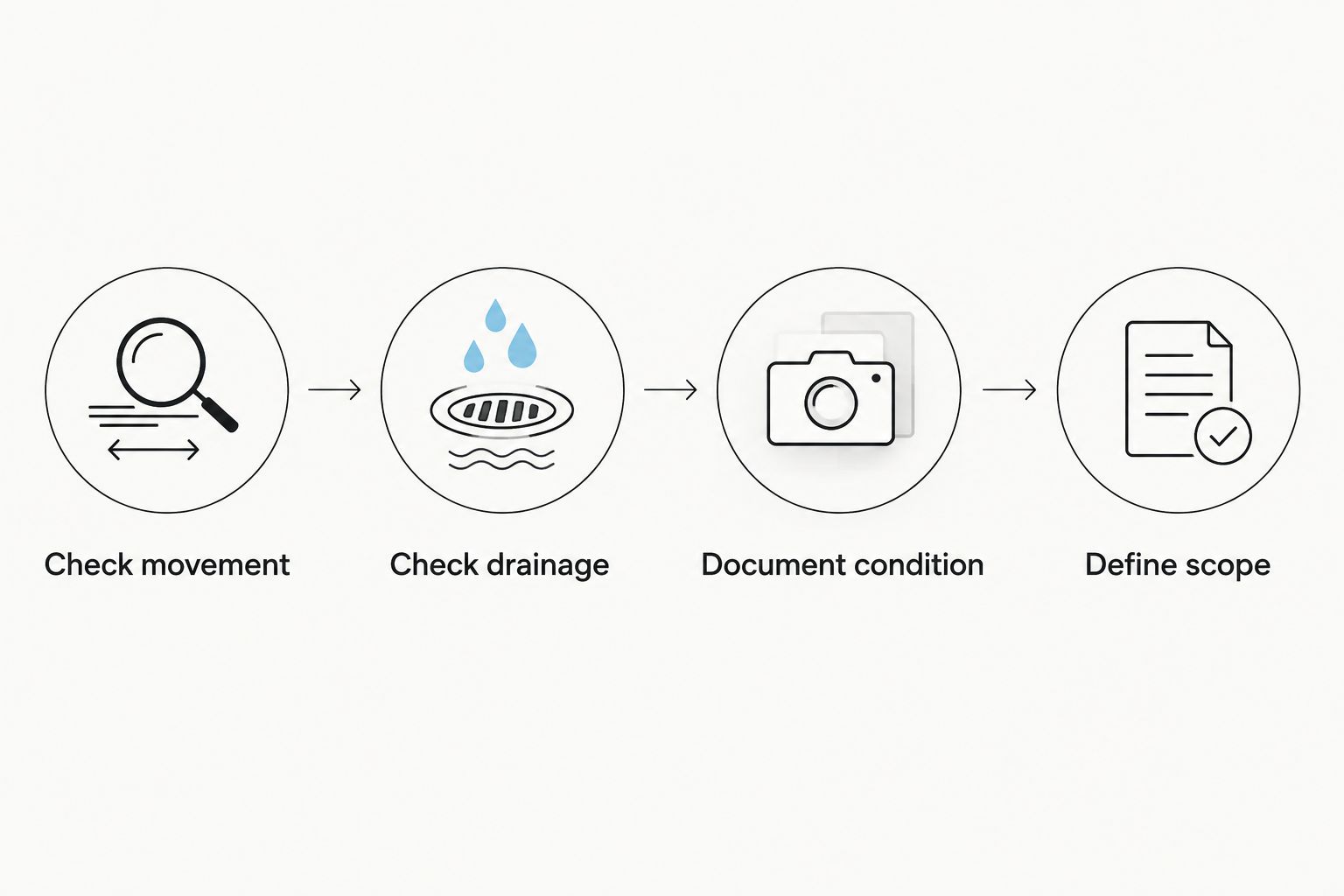
Check your existing deck before requesting work
For your 2026 seasonal closing request, describe the deck problem separately from the pool-closing work. This keeps the appointment request clear and prevents assumptions about what a closing includes.
Check movement
Look for raised edges, uneven sections, loose units, and cracks with a height difference across them. Flag trip hazards promptly. Do not treat movement as a finish-selection problem.
Check drainage
Note where water collects and whether it flows toward the pool, the house, or another unwanted location. Describe what you observe without guessing at the repair. Drainage concerns belong in the assessment before a new finish is selected.
Document condition
Take 3 photos: an overall deck view, a close-up of the damage, and a view showing the nearby pool edge or drainage area. Include peeling, staining, loose pieces, or exposed rough areas in your description.
Define scope
Make 2 separate requests: one for seasonal pool closing and one for deck assessment or restoration. Ask for 1 written scope that makes clear which work the quote covers and which work it excludes.
A closing quote and a restoration quote answer different questions. Ask the provider to define the closing tasks for your pool, any preparation you must complete, and whether deck work requires a separate assessment. Fair pricing starts with a clear scope, not a material name alone.
Request closing and deck assessment details
Describe your pool, deck concerns, and address; ask which tasks the proposed appointment covers.
How this durability ranking works
This 2026 ranking puts repairability first, then considers surface durability, weather suitability, and maintenance. Concrete pavers lead because individual-unit repairs are straightforward; resurfacing belongs only where the existing slab supports it.
There is no universal lifespan attached to these categories. Installation quality, material selection, exposure, and maintenance prevent a defensible years-based ranking without project-specific evidence.
Which pool deck material should you choose?
Choose concrete pavers if you are replacing the deck and want localized repair options. Choose poured concrete if a continuous surface matters more. Evaluate specific stone or porcelain products rather than assuming the category guarantees suitability.
If the existing concrete is sound, assess restoration before deciding on removal. Aqua Turf Solutions is a relevant pool deck restoration option for homeowners evaluating an existing deck rather than shopping for paving products. Confirm your address and requested work when making contact.
FAQ
What's the most durable pool deck material?
Concrete pavers are the default recommendation in this guide because individual units and localized settlement are repairable. The strongest choice for your project still depends on the base, drainage, finish, and maintenance.
Are pavers better than poured concrete around a pool?
Pavers are better for localized repair access; poured concrete is better for a continuous surface. Neither option compensates for poor drainage or inadequate support.
Can a cracked concrete pool deck be resurfaced?
Resurfacing is appropriate only when the existing slab and proposed treatment are suitable. Cracks associated with settlement or continuing movement need evaluation before a cosmetic finish is selected.
Is natural stone slippery around a pool?
Natural stone's wet traction depends on the specific stone and surface finish. Review the proposed material for poolside use rather than judging traction from a dry sample.
How much does pool deck restoration cost?
Pool deck restoration cost depends on the quoted scope. Ask the quote to identify preparation, repairs, surface treatment, access requirements, and exclusions rather than comparing totals alone.
Does pool closing include deck restoration?
Do not assume deck restoration is included in pool closing. Ask for the closing tasks and any deck assessment or restoration work to be identified separately in the quote.
How do I request pool closing and deck help near Acworth?
Contact Aqua Turf Solutions through its website and provide your address, pool details, and deck concerns. Confirm service coverage and ask whether closing and deck assessment require separate appointments.
One last thing
Before approving your 2026 deck project, ask: What problem will remain after this work is finished? A clear answer separates surface improvement from structural repair and makes the quote easier to judge.
Keep the same distinction when booking pool closing. A defined closing scope protects your expectations; a separately defined deck scope keeps needed repairs from disappearing behind a new finish.